June 24, 2026
For executives landing in London at 6 a.m. after an overnight crossing, or families arriving in Tokyo after 12 hours in the air, the difference between a reclining seat and a real bed is not a luxury detail—it is a performance decision. A private plane with beds transforms long-haul travel from something to endure into something that actually supports rest, health, and clear thinking on arrival. Charter rates for jets with bedrooms typically start around $13,500 per hour, while VIP airliners such as Boeing Business Jets (BBJs) and Airbus Corporate Jets (ACJs) command higher rates beginning at about $20,000 per hour. Owning a high-end model like the Gulfstream G650ER involves a significant investment—tens of millions in acquisition costs plus $4 to $6 million annually in operating expenses. Purchase prices for jets with bedrooms generally range from $70 million to over $100 million, with annual operating costs reaching $4 to $10 million depending on size and usage.
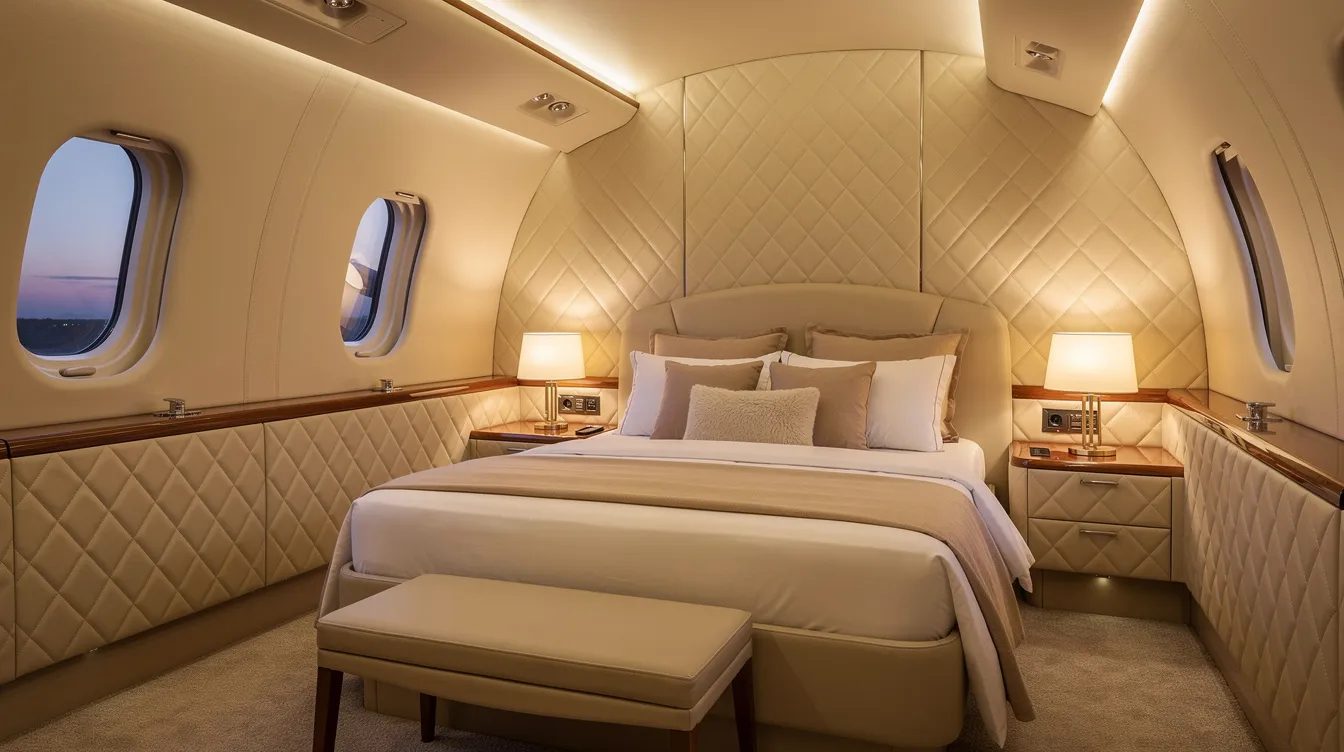
Long-haul flights justify the need for dedicated bedrooms in private jets, as these aircraft reduce travel fatigue by providing comfortable sleeping arrangements far superior to commercial options. Ultra-long-range jets often feature seats that lie flat for sleeping or divans that convert into beds, but the best sleeping accommodations are found on heavy and ultra-long-range jets with dedicated bedrooms. Many long-range jets include full-size beds, en suite bathrooms with showers, and climate control to optimize comfort. These bedrooms typically feature adjustable lighting, soundproofing for better sleep quality, and luxury touches such as high-thread-count linens and quality pillows. Custom bed designs may incorporate storage compartments for added functionality.
Most jets maintain cabin pressure equivalent to 4,000 to 6,000 feet, with models like the Gulfstream G700 achieving even lower cabin altitudes around 2,910 feet, further enhancing passenger rest. Bedroom configurations vary within the same aircraft model, so verification of specific layouts is essential. While midsize jets generally offer convertible seating rather than full bedrooms, and light jets provide only reclining seats, heavy jets and VIP airliners commonly feature full bedrooms. VIP airliners can have multiple bedrooms with king-size beds, en suite bathrooms, and expansive living spaces, making them ideal for large groups or extended intercontinental travel. This guide breaks down which aircraft offer true sleeping arrangements, what those cabins actually look like, and how to access them without purchasing a jet outright.
Full bedrooms with dedicated sleeping areas are primarily found on large cabin jets, ultra-long-range jets, and VIP airliners such as Boeing Business Jets and Airbus Corporate Jets.
Business travelers and families benefit most from private planes with beds on overnight or intercontinental routes exceeding six hours, such as New York–London or Los Angeles–Tokyo.
Smaller light jets and midsize jets rarely have full bedrooms but can offer lie-flat seats or convertible seating for comfortable sleep on flights of three to five hours.
BlackJet Fractional Jet Ownership helps clients access aircraft with dedicated bedrooms or lie-flat beds through fractional ownership and flexible Reserve Fleet programs—without buying a whole jet.
Ensuite bathrooms, low cabin pressure, and adjustable lighting all contribute to more restful sleep and reduced jet lag compared with commercial flights.
Yes. Many long-range jets, heavy jets, and VIP airliners feature real beds—sometimes full bedrooms with doors that close, hotel-grade mattresses, and en suite bathrooms. Private jets enhance privacy compared to commercial flights, turning the cabin into a genuinely personal sleeping environment.
A jet with a bedroom typically refers to an enclosed stateroom with a fixed double bed, queen, or king-size bed, most common on aircraft like the Gulfstream G650ER, Gulfstream G700, Bombardier Global 7500, and Boeing Business Jets. Airbus corporate jets such as the ACJ319neo and ACJ320neo can feature multiple bedrooms and separate living zones for delegations or large families.
That said, bedroom configurations can vary within the same aircraft model. Not every Global 7500 or G650ER will have an identical aft suite. Interior layouts depend on the owner or operator, which is why verification of the specific tail number's cabin setup is always required before booking or selecting a fractional share.
Private jets offer a range of sleeping accommodations—from reclining seats in light jet aircraft to fully enclosed bedroom suites in ultra-long-range aircraft—so understanding what each category provides is essential before committing to a program or charter.
A private jet bedroom is an enclosed or semi-enclosed cabin zone specifically designed for sleep, distinct from a simple reclining seat or sofa in the main cabin. Private jet bedrooms are typically found on ultra-long-range jets and provide a hotel-like experience at altitude. Horizontal beds in private jets improve sleep quality compared to commercial airline seats, where even "flat" business class products rarely match the comfort of a true mattress.
Typical features of private jet bedrooms include:
Solid or sliding doors for a fully enclosed space, separating the sleeping area from the main cabin
Noise insulation and individual climate controls for an optimized sleeping environment
A full or queen bed with memory-foam mattresses and high-thread-count linens
Personal storage, wardrobe space, and often a padded headboard with integrated reading lights
Direct access to an ensuite bathroom, sometimes including a shower
On large cabin jets like the Bombardier Global 7500 or Dassault Falcon 8X, bedrooms are usually located in the aft cabin. Convertible seating and divans in the main cabin can fold into sleeping surfaces, but they lack the same level of privacy, acoustic isolation, and comfort that a dedicated bedroom suite provides.
Sleep comfort depends heavily on aircraft size and range. A business traveler seeking rest on a one-hour hop has very different needs from someone crossing multiple time zones on a 12-hour flight. Cabin pressure, noise levels, and seat design all impact how comfortable sleep feels—even when a true bed is not available.
Here is how sleeping accommodations break down across the main categories of private jets.
Aircraft Category | Typical Flight Duration | Sleeping Accommodations | Examples | Typical Charter Rate (per hour) |
|---|---|---|---|---|
Turboprops, Very Light, Light Jets | Under 2-3 hours | Reclining seats, occasional side-facing divans | Pilatus PC-12, Cessna Citation M2 | $3,000 - $5,000 |
Midsize and Super Midsize Jets | 3-5 hours | Convertible divans, lie-flat seats | Citation Latitude, Challenger 350 | $5,000 - $9,000 |
Heavy and Ultra Long Range Jets | 6+ hours | Full bedrooms with queen beds, en suite bathrooms | Gulfstream G650ER, Bombardier Global 7500 | $13,500 - $16,000 |
VIP Airliners (BBJ, ACJ) | 7+ hours | Multiple bedrooms with king-size beds, showers, and lounges | Boeing Business Jet, Airbus Corporate Jet | $20,000+ |
Aircraft like the Pilatus PC-12, Cessna Citation M2, and Embraer Phenom 100 serve flights under two to three hours with four to eight passengers. Light jets usually provide only reclining seats, not bedrooms. Some offer a small side-facing divan, but there is no room for a fixed bed or private cabins.
Passengers can nap comfortably but remain seated and belted. These light jets prioritize efficiency, speed, and access to shorter runways—extended sleep simply is not the priority on a 90-minute regional flight.
Popular models like the Cessna Citation Latitude, Citation Sovereign+, and Bombardier Challenger 350 cover routes of three to five hours, such as Chicago–San Francisco or Dallas–New York. Midsize jets typically offer convertible divans instead of bedrooms—club seating that reclines significantly and may convert to near-flat sleeping positions.
While super midsize jets usually lack full bedrooms, they can still provide comfortable sleep for overnight legs of five to six hours. For business travelers within North America, these jets balance hourly cost and rest quality effectively.
This is where private jet bedrooms become standard. Aircraft such as the Gulfstream G550, G650ER, and G700, the Bombardier Global 6500 and Global 7500, and the Dassault Falcon 7X and 8X offer ranges from roughly 6,000 to 7,750 nautical miles.
Heavy and ultra-long-range jets often have full bedrooms with queen beds, as well as multiple lie-flat beds in the main cabin for additional sleepers. Ultra-long-range jets typically feature soundproofed bedrooms for better sleep, with cabin noise on models like the Falcon 8X averaging around 49 dB. Low cabin altitude—around 3,000 to 5,000 feet on some models—eases fatigue significantly versus commercial airliners at 6,000 to 8,000 feet.
Selecting heavy jets offers the best sleeping accommodations for missions like New York–London overnight, Los Angeles–Tokyo, or Paris–São Paulo, where travelers arrive refreshed and ready for business.
A Boeing business jet (based on 737 or 787 platforms) and Airbus corporate jets (ACJ319neo, ACJ320neo, ACJ330neo, ACJ350) are essentially flying residences. These VIP airliners can include multiple bedrooms with king-size beds, ensuite bathrooms with full showers, private offices, and lounge areas—comparable to a boutique hotel or upscale city apartment.
Ranges often exceed 6,000 nautical miles, supporting non-stop missions such as Los Angeles–Sydney or New York–Dubai with entire executive teams on board. These aircraft are rare on the charter market, command premium hourly rates, and are more commonly owned or co-owned by corporations, governments, or ultra-high-net-worth individuals.
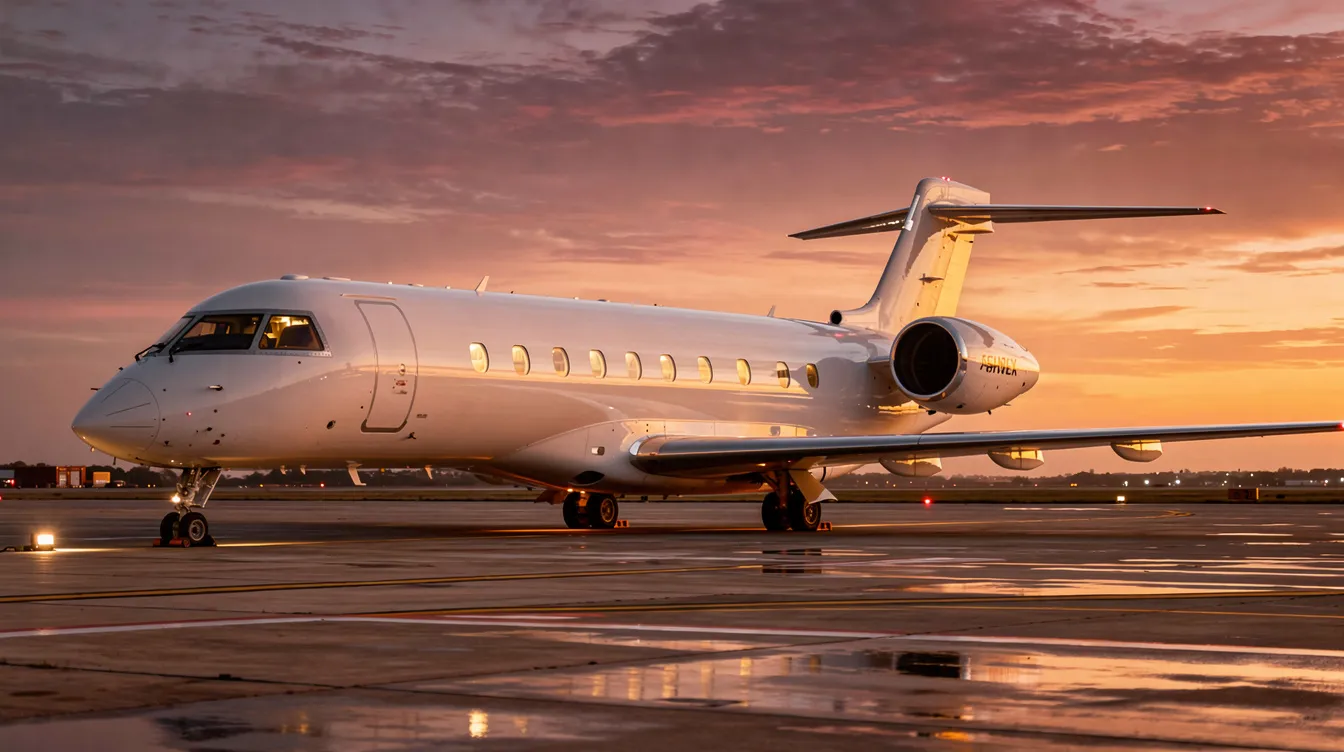
Cabin design in a private plane with beds is centered on creating a hotel-like experience in the air. Private jet bedrooms offer a hotel-like experience at altitude, focusing on ergonomics, quiet, and personalized control. Modern jets with multiple cabin zones allow passengers to dine, work, and rest in separate areas without disturbing each other.
Bed sizes in private jet bedrooms range from a double bed on most long-range jets to king-size beds in many Boeing Business Jets and Airbus Corporate Jets. Fixed beds typically feature hotel-grade mattresses, padded headboards, and integrated reading lights. In the main cabin, divans fold out into single or small double flat beds.
Cabin crew normally convert seats or sofas into beds after takeoff. On aircraft where seats convert electronically, the transition is seamless. Layouts can be configured to match passenger preferences—one large master suite or multiple dedicated sleeping areas for groups.
LED mood lighting—including systems like Bombardier's Soleil or Gulfstream's circadian lighting—can be programmed to mirror destination time zones, enhancing sleep quality and reducing jet lag. Adjustable lighting that transitions from warm amber to cool daylight helps the body adapt when crossing multiple time zones.
Individual climate controls in bedrooms and primary cabin zones typically maintain temperatures around 68–72°F. Many large cabin jets maintain lower cabin pressure altitude (often 4,000–6,000 feet, and as low as approximately 2,910 feet on the Gulfstream G700) than typical commercial airliners, easing fatigue and improving oxygen saturation.
HEPA filtration and frequent air refresh cycles—often every two to three minutes—deliver cleaner air and better sleep quality onboard. Private jets reduce travel fatigue by providing comfortable sleeping arrangements in more generous cabin space with fresher air than any commercial cabin.
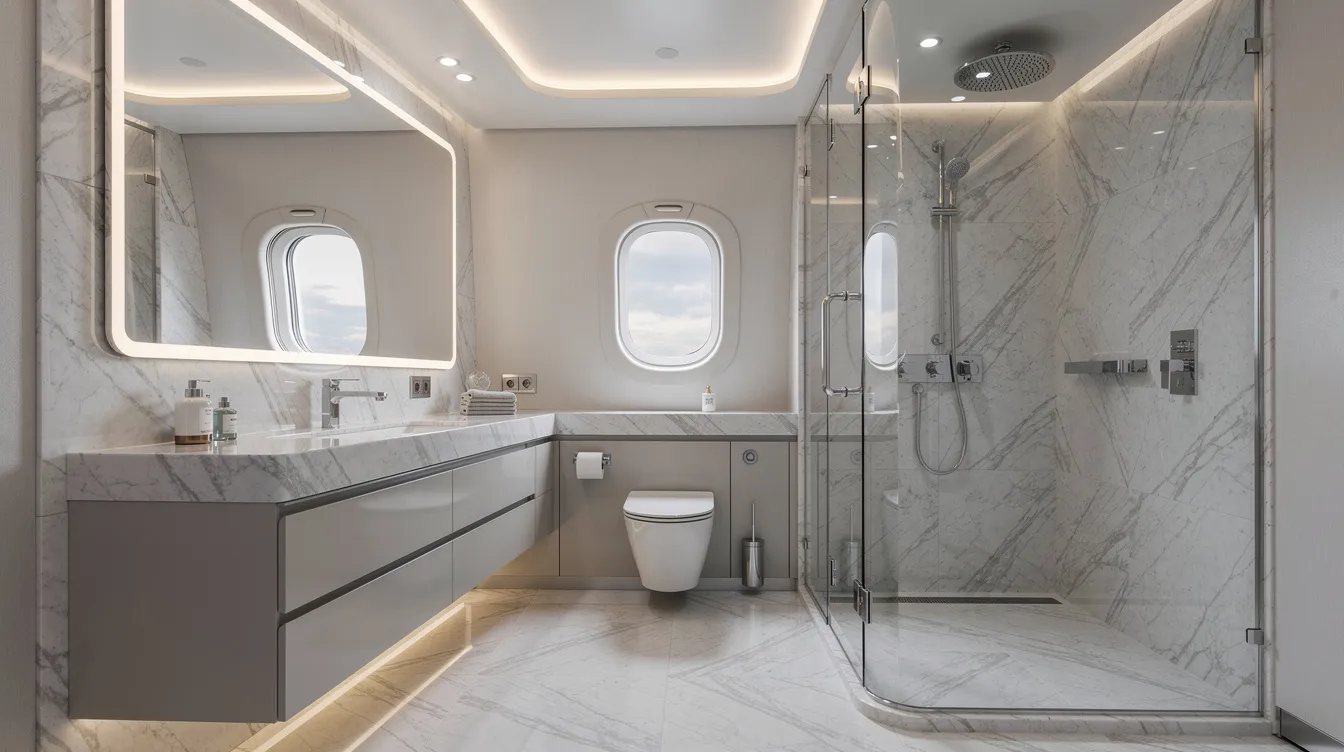
Private jet bedrooms often include en suite bathrooms with showers. On ultra-long-range jets like the Global 7500 and Gulfstream G650ER, and on many Boeing Business Jets, ensuite bathrooms are directly connected to the bedroom.
Typical amenities include a toilet, vanity with storage, high-end fixtures, and, in some cases, full-height showers with limited but sufficient water for short use. Many private jet bedrooms include en suite bathrooms and climate control as standard in the aft suite. Operationally, shower use is typically limited to a few minutes per passenger due to water tank capacity and should be avoided during heavy turbulence.
Adding a fully enclosed bedroom and ensuite bathroom significantly increases aircraft size and cost. The decision is strategic, not indulgent.
For long-haul flights over six to seven hours—New York–London, San Francisco–Honolulu, Miami–Buenos Aires—restful sleep becomes critical. Private jets with beds improve sleep quality on long flights, and dedicated bedrooms can reduce jet lag by up to 30%. Long-haul travel justifies the need for dedicated bedrooms in private jets when arrival performance matters.
Business travelers with early-morning meetings, investor roadshows, or multi-city tours gain measurable productivity by sleeping in a bed instead of a seat. Private jets allow for flexible scheduling and productivity during flights, and replacing one hotel night and a commercial business class ticket with a properly rested arrival can shorten total trip time.
For flights under about three to four hours, lie-flat seats or deeply reclining seats are usually adequate. Families traveling with young children or older relatives may value private bedrooms for privacy, naps, and a peaceful journey separate from main cabin activity—even on shorter legs.
Many long-range jets have dedicated bedrooms with full-size beds. Full bedrooms are concentrated in heavy jets, ultra-long-range jets, and VIP airliners, while most light jets and midsize jets rely on convertible seating. Here are the models that define the category.
The Gulfstream G650ER offers around 7,500 nautical miles of range, enabling non-stop routes like New York–Tokyo or London–Buenos Aires. Many completions include an aft bedroom featuring a queen-size bed and an optional ensuite bathroom with shower, creating a true master suite. Owning a Gulfstream G650ER costs tens of millions in acquisition costs plus $4–6 million annually in operating expenses.
The G700 is an evolution with up to five living areas and a larger master suite option. A Gulfstream G700 maintains a cabin altitude of 2,910 feet—one of the lowest in business aviation—enhancing sleep quality on 12 to 14-hour ultra-long-range flights. Private jet bedrooms often feature full-size beds and soundproofing on both models.
The Global 6500 offers roughly 6,600 nautical miles of range, while the flagship Global 7500 stretches to about 7,700 nautical miles, covering nonstop city pairs like Los Angeles–Hong Kong. The Gulfstream G650 and Bombardier Global 7500 both feature dedicated bedrooms that serve as benchmarks in the category.
The Global 7500's four-zone cabin includes a permanent aft bedroom with a full bed, a dedicated wardrobe, and an optional ensuite with a stand-up shower. Bombardier's Soleil lighting system synchronizes with destination time zones, helping business travelers crossing multiple continents in a single trip to sleep soundly and arrive refreshed.
The Dassault Falcon 7X and Falcon 8X are tri-jet long-range aircraft with customizable cabins that can include aft staterooms and full beds. The range spans roughly 5,950–6,450 nautical miles, suitable for missions such as Paris–Beijing or New York–Athens.
Other large cabin jets like the Embraer Lineage 1000E can feature multi-zone cabins with master bedrooms, showers, and lounge areas for up to 19 passengers. These aircraft are flexible platforms where owners choose between extra seating capacity and more expansive dedicated bedroom suites.
BBJ models based on Boeing 737 and 787, and ACJ variants based on Airbus A319neo, A320neo, A330neo, and A350, feature airliner-sized fuselages. VIP airliners can have multiple bedrooms with king-size beds, ensuite bathrooms with spacious showers, and separate guest rooms or staff cabins. Private jets with bedrooms can cost $70 million to over $100 million for these platforms, with interior completion costs alone sometimes exceeding $50 million.
Their range—often 6,000+ nautical miles—allows non-stop global missions with large delegations. These jets represent the top of the market in terms of cabin volume, generous cabin space, and customization for a full night's rest during ultra-long-range missions.
Private planes with beds deliver a significant difference in comfort and productivity, but they sit at the higher end of the private jet cost spectrum in private aviation.
Charter rates for ultra-long-range jets with full bedrooms—G650ER, Global 7500—start around $13,500 per flight hour, with newer configurations reaching $16,000 or more. VIP airliners like BBJs and ACJs start from about $20,000 per hour due to large cabin crew requirements, fuel burn, and extensive cabin space.
By contrast, midsize and super midsize jets range from roughly $5,000–$9,000 per hour and offer lie-flat seats or divans but not full bedrooms.
Annual operating costs for private jets can reach $4–10 million, depending on aircraft size and usage, not including acquisition costs. This is what drives interest in fractional jet ownership cost structure models for most private jet travel.
The premium for an aircraft with full bedrooms is most defensible when sleep quality has a direct business or personal impact—closing deals, investor roadshows, or multi-country site visits. Replacing one night in a hotel and a commercial business class flight with a restful journey where travelers arrive refreshed can improve decision-making and shorten total trip time.
Families traveling with young children or older relatives may also value private suites for privacy and quieter rest. The key is thinking about annual usage and mission profile rather than individual flight cost, and how fractional jet ownership financing can support that long-term strategy.
BlackJet Fractional Jet Ownership is a specialist in fractional aircraft ownership, providing clarity on fractional jet ownership terminology and shared-use programs—not an ad-hoc charter broker. The focus is on predictable access, structured costs, and matching the right aircraft to each client's actual needs.
BlackJet offers two primary models: Equity Fleet (fractional ownership in specific aircraft types) and Reserve Fleet (on-demand, pay-as-you-go hours without ownership but with program-level benefits). For clients who need private planes with beds—whether lie-flat divans or full bedrooms—BlackJet configures their program around typical routes, passenger loads, and sleep requirements.
BlackJet starts with an analysis of a client's expected 12–36-month flying pattern, including routes, time of day, and importance of comfortable sleeping arrangements. This analysis guides selection between light jets, midsize jets, large cabin jets, or long-range jets—ensuring that aircraft with beds or lie-flat options are available when needed without paying for surplus capacity year-round, and helps identify top fractional jet ownership programs that fit those patterns.
BlackJet's scheduling tools allow members to specify requirements such as "must have lie flat for four" or "dedicated bedroom for primary traveler" at the booking stage. The team verifies interior configurations for specific tail numbers, so clients know in advance whether they will have divans, full bedrooms, or private bathrooms on each mission.
The Reserve Fleet model suits clients flying 25–75 hours per year who want access to a range of cabin classes—including occasional heavy jets or ultra-long-range jets with bedrooms—without capital investment, similar in philosophy to flexible floating fleet options in fractional ownership.
The Equity Fleet model is better suited to 50–150+ hour users who want fractional aircraft ownership, priority access, potential tax benefits, and the option to focus their share on specific cabin classes for longer journeys, aligning with many of the benefits and considerations of fractional jet ownership as an investment. Clients who occasionally require a Boeing Business Jet or Airbus Corporate Jet can use Reserve Fleet access for those rare missions while basing their equity stake in a more frequently used large-cabin jet.
Planning a trip that includes real sleep starts with a few practical considerations: route length, passenger count, time zones crossed, and whether you need to work before or after resting.
Desired sleep duration and preference for an enclosed bedroom vs. convertible seating
Number of passengers who need comfortable sleep simultaneously
Requirements for ensuite bathrooms or showers
Whether the flight crosses multiple time zones, making circadian lighting valuable
What is the typical flight duration and frequency of overnight legs each year?
How many passengers need a restful sleep at the same time?
Does the aircraft offer full bedrooms, lie-flat seats, or both?
Are ensuite bathrooms or showers available on the specific tour being offered?
What is the cabin altitude, and are there limitations on using beds during taxi, takeoff, landing, or expected turbulence?
Consulting BlackJet advisors can help compare the economics of fractional jet ownership vs. ad-hoc charter and evaluate fractional jet ownership vs membership programs for your specific mix of domestic and long-range missions.
Aviation safety rules require passengers to be seated in certified seats with seatbelts fastened during taxi, takeoff, and landing—not in beds or divans. Once at cruise altitude and cleared by the cabin crew, passengers can move to beds or lie flat surfaces. If significant turbulence is anticipated, the crew may ask passengers to return to their seats. Bed installations are certified for in-flight use, and the crew is trained in safe setup and restraint practices.
First-time private flyers do not need to purchase a whole aircraft. Long-range jets with bedrooms are accessible through fractional ownership, including options like 1/8 fractional jet ownership, membership programs, or structured access like BlackJet's Reserve Fleet. Even clients flying 25–50 hours per year can incorporate a few ultra-long-range missions with full bedrooms into their travel mix when the mission justifies it. BlackJet advisors help new private aviation users understand when a large cabin jet is appropriate versus when a midsize jet with reclining seats will suffice.
For intercontinental or ultra-long-range flights involving full bedrooms, planning at least two to four weeks in advance is recommended—especially during peak seasons or major global events, and reviewing essential contract terms in fractional jet ownership early in the process helps avoid surprises. Shorter-notice trips are sometimes possible, but flexibility on departure time, aircraft type, or origin airports may be required. Fractional owners in BlackJet's Equity Fleet typically enjoy higher priority for specific cabin classes, improving the odds of securing bed-equipped aircraft on preferred dates.
Many private jet bedrooms double as quiet workspaces, with fold-out tables, power outlets, and high-speed connectivity supporting laptop use and video calls, which in turn raises questions about appropriate liability coverage in fractional jet ownership when flights are used for both business and personal purposes. Executives often use the early portion of a long flight for confidential work in private cabins and then convert the room to full sleep mode for the remainder of the journey, making it important to understand the tax implications for fractional jet owners when allocating flight time between business and personal use. This dual-use capability is one reason a fully enclosed bedroom can be more productive than simply upgrading seat comfort in the main cabin.
Review your last 12–24 months of travel or projected upcoming trips, focusing on overnight legs and missions longer than five to six hours. Then contact BlackJet Fractional Jet Ownership for a consultation to map those trips against appropriate aircraft categories—light jets, midsize jets, large cabin jets, and long-range jets with bedrooms- and to review an aircraft fractional ownership sample contract tailored to your usage. Visit FractionalJetOwnership.com to explore Reserve Fleet and Equity Fleet options and discover how fractional jet ownership can deliver consistent access to bed-equipped private aircraft, including guidance on selling your fractional jet ownership share if your needs change over time.
Opting for a private plane with beds enhances the travel experience by offering superior comfort, privacy, and functionality—particularly on long-haul flights where quality rest is vital. Whether through fractional jet ownership, jet card programs, or charter, travelers can access aircraft featuring dedicated bedrooms, lie-flat beds, and ensuite bathrooms that significantly reduce fatigue and jet lag. BlackJet Fractional Jet Ownership offers tailored solutions to match sleep preferences and travel patterns, ensuring predictable access to the right aircraft without the full costs of ownership. For executives, families, and frequent flyers seeking a seamless blend of luxury and efficiency, private jets with beds provide a smarter, healthier way to fly. Ready to transform your journeys? Visit FractionalJetOwnership.com to learn more and start planning your next restful flight.
