July 7, 2026
Flying private does not always mean a large cabin jet and a coast-to-coast itinerary. For hundreds of regional routes across the United States, a small aircraft charter can be the fastest, most practical way to get from point A to point B without the hassle of commercial airlines. This guide breaks down how small charter works, what it costs, and when it makes sense to move beyond one-off bookings toward fractional jet ownership with BlackJet.
Yes, you can charter small aircraft for regional private flights, but it is a more specialized segment of private aviation than most people realize. Here is what to know up front:
Small aircraft charter is fully legal and regulated in the United States under FAA Part 135 rules, which govern commercial on-demand air travel using aircraft with 30 or fewer seats. The Federal Aviation Administration requires operators to meet strict pilot experience, maintenance, insurance, and safety management standards.
Piston aircraft like the Cessna 172, Cessna 206 Stationair, and Beechcraft Bonanza G36, along with turboprops such as the Pilatus PC-12, are commonly used for short-haul charter flights covering 150 to 500 miles.
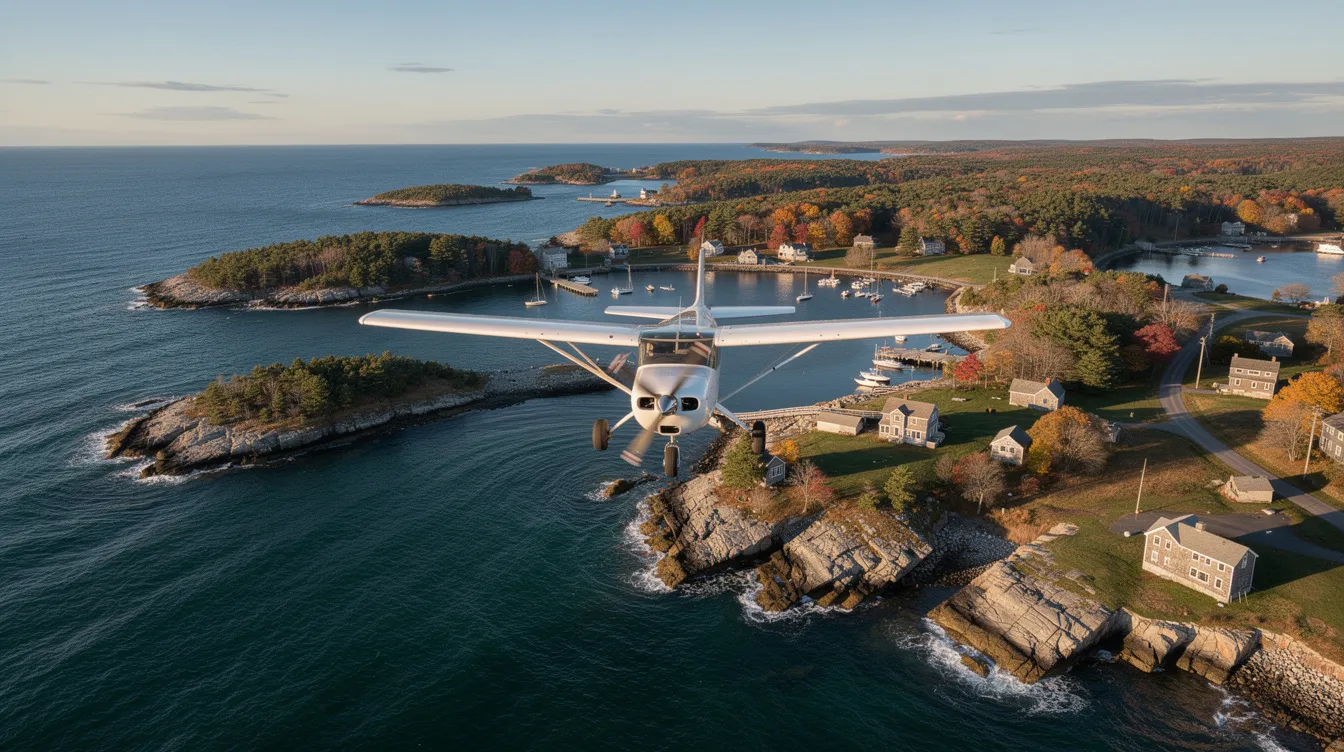
Typical use cases include quick business hops between secondary cities, island hopping in New England or the Caribbean, and remote access in Alaska, the Rockies, or the Pacific Northwest.
Charter rates as of 2025–2026 generally run $500 to $1,500 per flight hour for pistons and $2,000 to $3,000 or more per hour for turboprops.
For frequent flyers who find themselves booking these trips repeatedly, BlackJet Fractional Jet Ownership offers a more predictable and often more cost-effective alternative to ad-hoc small charter bookings.
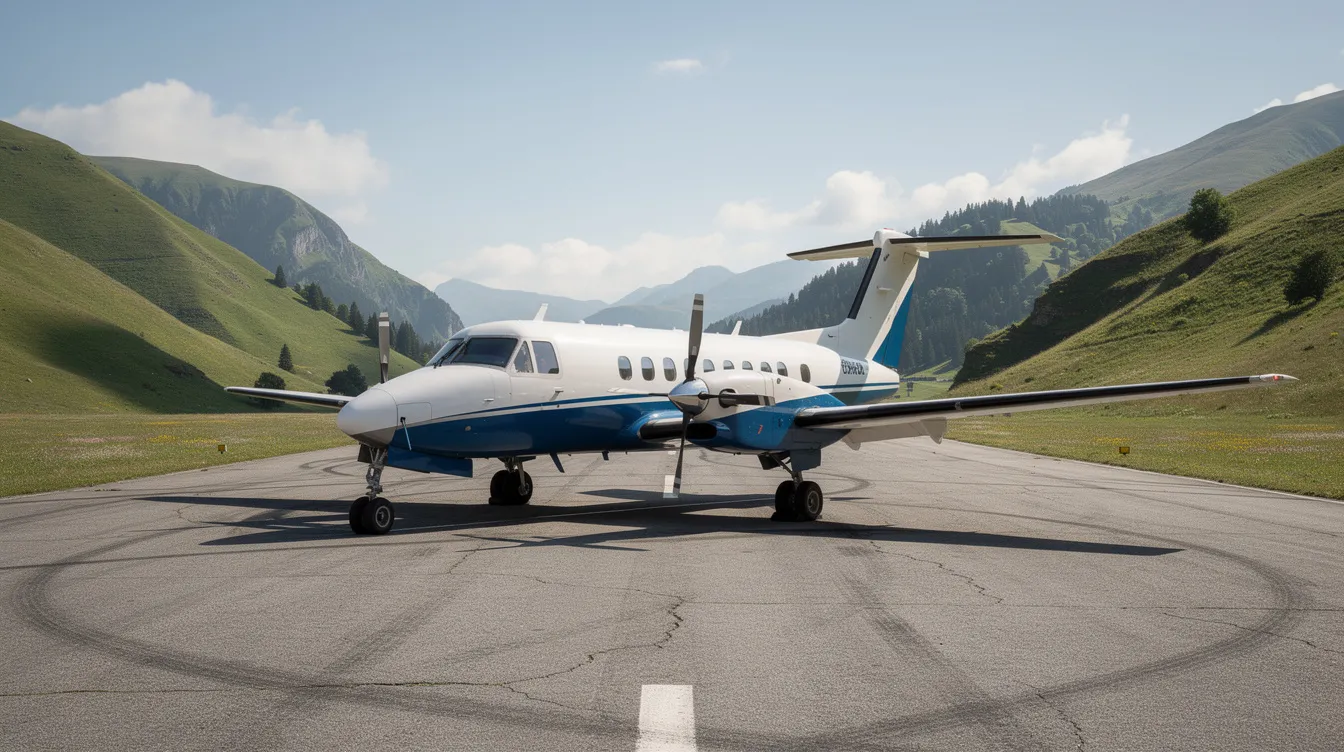
In the charter world, "small aircraft" generally refers to airframes seating two to nine passengers. They fall into three main categories:
Single-engine pistons: Cessna Skyhawk 172, Cessna 182 Skylane, Cirrus SR22, Beechcraft Bonanza G36, and the Mooney M20 series. These typically carry two to four passengers with limited baggage space and unpressurized cabins.
Light twin pistons: Piper Seneca V, Cessna 310R, Cessna 340A, and Piper Navajo/Chieftain. Twins offer engine redundancy for night or over-water routes and slightly more cabin volume, usually accommodating four to six passengers.
Small turboprops: The Pilatus PC-12 and Beechcraft King Air 200 are the workhorses of this segment. The PC-12 seats six to nine passengers, features roughly 100 square feet of luggage area, pressurized cabins, and can operate from short or unpaved runways; many aircraft in this class also use retractable landing gear to improve cruise efficiency while preserving runway versatility.
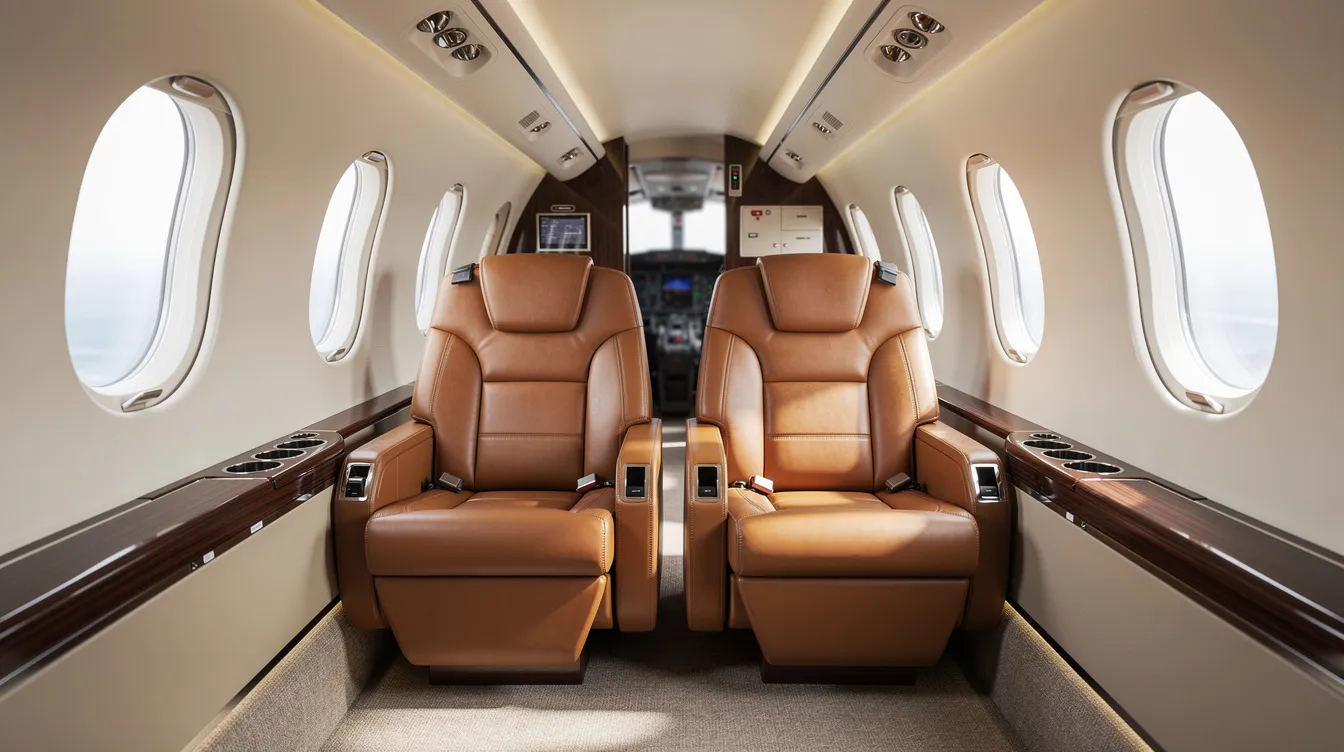
These are distinct from light jets and mid-size jets like the Citation CJ3 or Learjet 45XR. Light jets typically seat 4-6 passengers, cruise at 400 to 500 mph, and offer stand-up cabins and enclosed lavatories-features most small aircraft in the piston and turboprop categories simply do not provide.
The process is straightforward, especially for first-time private aviation users. Booking a private charter flight takes three steps:
Select your route and timing. Choose your departure city, destination, preferred date, and departure window. Specify passenger count and luggage requirements.
Receive a quote or instant pricing. Reputable operators and platforms will provide a price that covers aircraft, crew, and fuel. Unlike many jet card programs, ad-hoc small charter typically has no membership fees, but pricing can vary by date, season, and repositioning needs.
Confirm and fly. Finalize payment, receive trip confirmation, and arrive at your departure point. Private terminals allow passengers to arrive just minutes before their flight, bypassing the check-in and security rituals of commercial air travel.
Most charters can be arranged with 24 hours' notice, though peak-season routes benefit from earlier booking. Chartering a private jet allows for flexible scheduling and routes, and reputable operators run under FAA Part 135 with two pilots for most twin-engine and turbine flights. Core in-flight services typically include water and basic snacks.
Small aircraft charter excels on regional legs of 100 to 400 miles where airline schedules are sparse, connections are inconvenient, or driving takes too long. Small aircraft can operate from thousands of regional and smaller airports, putting travelers within 20 to 30 minutes of their final destination instead of routing through congested hubs.
High-value markets include:
New York to Boston or Nantucket - avoiding I-95 traffic and airport congestion at JFK or LaGuardia.
Denver to Aspen - a 40- to 50-minute turboprop flight versus a four-hour mountain drive.
Miami to Key West or Nassau - island access where commercial options are limited.
Las Vegas to regional casinos like Laughlin or Grand Canyon gateways.
Alaska bush routes and Pacific Northwest hops - where private jets can land at smaller airports, enhancing accessibility to remote communities.
Tradewind Aviation connects travelers to over 3,000 airports across its network, and private jets access over 20,000 destinations worldwide. For long-haul trips beyond roughly 1,200 miles-such as New York to Los Angeles-light jets or mid-size jets become the appropriate aircraft rather than pistons or small turboprops.
Choosing the right aircraft type depends on your route, group size, and comfort expectations. Here are the main categories:
Single-engine pistons - Cessna Skyhawk 172, Cessna 182 Skylane, Cessna 206/207 Stationair, Mooney M20, Cirrus SR22, Beechcraft Bonanza G36. These are versatile aircraft for two to four passengers on short regional hops. The Piper Matrix, a high-performance pressurized single, bridges the gap toward turboprop capability. Most lack pressurization and enclosed lavatories, making them best suited for flights under 90 minutes.
Twin pistons - Piper Seneca III/IV and V, Piper Aztec, Cessna 310R, Cessna 340A, Cessna 401/402, Piper Navajo/Chieftain. The redundancy of two engines makes these preferred for night or over-water routes. A six-seat configuration is common. They are efficient aircraft for missions where single-engine operations are restricted.
Single-engine turboprops - The Pilatus PC-12 has a range of 1,700 miles and seats up to nine passengers, making it one of the most capable small plane options for regional charter. The King Air 90 and 200 series are popular twin turboprops with pressurized cabins and strong short-field performance.
Very light jets and light jets - HondaJet, Citation M2, Citation CJ1/CJ3, Learjet 45XR, Eclipse 500. These cruise at 400 to 500 mph, offer cabin-class comfort with stand-up headroom on some models, and serve missions where speed matters more than runway flexibility. For a deeper comparison, see this guide to jets for charter.
Charter rates vary by region, aircraft age, fuel costs, and seasonal demand, but industry benchmarks provide reliable guidance. Overall, charter rates range from $300 to over $4,000 per hour depending on aircraft type:
Aircraft Category | Example Models | Passengers | Hourly Rate (2025–2026) |
|---|---|---|---|
Single-engine piston | Cessna 172, Bonanza G36, Cirrus SR22 | 2–4 | $500–$1,500 |
Twin piston | Piper Seneca, Navajo, Cessna 340A | 4–6 | $1,200–$2,000 |
Single-engine turboprop | Pilatus PC-12 | 6–9 | $2,000–$3,500 |
Twin turboprop | King Air 200/350i | 7–11 | $2,500–$4,000 |
Very light/light jet | HondaJet, Citation CJ3 | 4–6 | $3,000–$6,000 |
Turboprop charter rates typically range from $1,200 to $3,000 per hour for most missions. Private jet charter pricing starts at $5,700 per hour for larger cabin classes. For a detailed breakdown, see how much it costs to charter a small plane.
Beyond the base hourly rate, expect additional fees for repositioning (deadhead flights), landing and ramp charges, airport fees, de-icing, crew overnights, and the 7.5% federal excise tax on domestic Part 135 charter. These extras can add 25 to 35 percent or more to the final invoice. BlackJet's fractional and Reserve Fleet programs offer more transparent pricing by consolidating these variables into predictable hourly costs, and travelers considering ownership should understand the total cost of fractional jet ownership when comparing long-term options.
Set realistic expectations here. Charter flights are highly customizable,e including the choice of catering and in-flight services, but the scope depends heavily on aircraft size.
On small pistons and turboprops, in flight services typically include bottled water, soft drinks, light snacks, and sometimes pre-arranged catering from local providers.
Light jets and mid-size jets may offer more substantial catering, Wi-Fi, and occasionally a cabin attendant.
Private jets offer a more personalized travel experience, but the defining "service" on any small charter aircraft is schedule control, privacy, and departing from a private terminal instead of a crowded airline gate.
The entire cabin is reserved for charter passengers, ensuring greater privacy regardless of aircraft size. Experienced providers like BlackJet help coordinate catering, ground transportation, and special requests across both small charter aircraft and jets.
The primary differences come down to speed, comfort, and range:
Speed: Pistons cruise at 140 to 200 mph. Turboprops at 250 to 300 mph. Light jets at 400 mph or more. On a 400-mile route, a piston takes roughly 2.5 hours; a light jet does it in under an hour.
Cabin: Small pistons and turboprops generally do not have stand-up cabins. Light jets and mid-size jets offer more headroom, enclosed lavatories, and sometimes cabin class comfort approaching a small business suite.
Range: Pistons are practical to about 500 miles. Turboprops reach 1,000 to 1,700 miles. Light jets cover 1,200 to 2,500 miles nonstop.
For four to seven executives flying New York to Chicago, a light jet or mid-size jet is more time-efficient. For a Las Vegas to Laughlin casino trip, a turboprop is optimal. For a deeper look at the types of jet airplanes, compare specifications across categories.
Charter flights in small aircraft are often more cost-effective per hour but less efficient for distances beyond 400 to 500 miles. For high-frequency travelers logging 25 to 150 hours per year, BlackJet's fractional jet ownership or Reserve Fleet access delivers better predictability and comfort than repeated ad-hoc small charters.
For occasional trips, an ad hoc charter makes sense. But the economics shift when flying increases.
Fractional jet ownership means purchasing a share in an aircraft-often a 1/16 share for approximately 50 hours per year-with guaranteed access, fixed hourly costs, and professional aircraft management. For many travelers, understanding fractional jet ownership terminology and core concepts is the first step toward evaluating whether this model fits their needs. No shopping for quotes before each trip.
BlackJet's Equity Fleet provides fractional aircraft ownership with potential tax benefits under U.S. depreciation rules (consult a tax advisor for specifics). Prospective owners should also review the tax implications for fractional jet owners. Learn more about fractional jet ownership for individuals.
BlackJet's Reserve Fleet offers pay-as-you-go hours without putting an aircraft asset on the balance sheet. Pricing and access are more consistent than one-off charter bookings, and travelers weighing their options should compare fractional jet ownership vs. membership programs to decide which structure aligns with their flying habits.
Industry break-even analyses suggest that fractional ownership becomes more cost-efficient than on-demand charter when usage reaches around 75 to 100 flight hours per year. Reviewing a complete guide to the cost of fractional jet ownership can help quantify this tipping point for your specific travel profile. Below 50 hours, ad-hoc charter or Reserve Fleet access is typically the economical option. Above 100 hours, fractional ownership delivers significant savings and eliminates the administrative overhead of managing multiple charter vendors.
The days of phone-only brokerage are fading. Modern platforms now let travelers enter departure and arrival dates, passenger count, and see charter rates and available aircraft types within seconds. Instant pricing is available for over 7,000 aircraft through networks like Linear Air, which offers access to over 7,000 aircraft. A typical digital booking flow looks like this:
Enter route details and passenger count.
Review available aircraft options with transparent pricing showing taxes, fuel surcharges, crew costs, and airport fees
Confirm the trip and receive booking details
The benefit is transparency. Travelers see the full cost upfront rather than discovering additional fees after the fact. However, real-time algorithms may not reflect last-minute airspace restrictions, temporary flight restrictions, or special handling fees until a human team confirms the trip.
BlackJet leverages both digital tools and experienced aviation advisors to deliver accurate, predictable pricing for its members and fractional owners-combining the speed of instant pricing with the reliability of a dedicated team. For buyers planning ahead, understanding fractional jet ownership financing, costs, and benefits is essential to structuring the right long-term solution.
Start with the city pair and dates. Then consider whether a small aircraft, light jet, or mid-size jet is the appropriate aircraft based on distance and group size. Charter flights operate on your schedule from preferred airports, which is one of the core advantages over commercial options.
Key planning factors:
Airport selection: Thousands of smaller airports and general aviation airfields sit within 20 to 30 minutes of most U.S. destinations. Many are faster to reach than major commercial hubs.
Weather and runway conditions: Small piston aircraft require attention to runway length, surface type, and weather at both ends. Pilots and operators manage these variables, but building flexibility into departure time helps.
Seasonal demand: Winter in Colorado and summer in New England drive higher charter rates and tighter availability. Booking one to two weeks ahead during peak seasons is advisable.
Private jet charters allow for flexible scheduling and routes, but flexibility on your end-especially regarding departure windows-can unlock better aircraft options and pricing.
Here are some of the most frequently chartered regional routes where small aircraft outperform both commercial air travel and driving:
New York (White Plains) to Nantucket - approximately 45 minutes by turboprop versus multiple connections through Boston on commercial airlines. For more on flying into the region, see private plane to New York.
Denver (Centennial) to Aspen - roughly 40 to 50 minutes by turboprop, compared to a challenging four-hour mountain drive.
Miami to Key West - about 45 minutes by small plane, avoiding the long drive down U.S. Route 1.
Las Vegas to Page, Arizona, or Grand Canyon West - under an hour in a turboprop, opening access to national park gateways.
San Juan to neighboring Caribbean islands - island hopping routes where small aircraft charter is often the only practical option.
Private jets access over 20,000 airports worldwide, but many of the most compelling regional missions are best served by turboprops or well-equipped piston aircraft accessing airfields that heavy jets cannot reach.
For corporate travelers, small aircraft charter is a productivity tool, not a luxury item. As one option within broader private jet charter services, it works especially well for companies that need fast regional access without losing productive work time. Traveling via small aircraft charter allows for significant time savings by bypassing major airport congestion. Private flights can cut travel time by 50% or more on regional routes.
Key business use cases:
Multi-city site visits. Visit two or three regional offices in a single day using a small charter aircraft instead of building overnight trips around commercial schedules.
Secondary market access. Reach manufacturing plants, client locations, or project sites in towns that commercial airlines do not serve directly.
Confidentiality. Discuss sensitive transactions, M&A strategy, or intellectual property on board without worrying about neighboring passengers. Private jet charters reduce travel time significantly compared to commercial flights while providing a secure environment for work.
Corporate users often move from occasional charter to fractional ownership when flight hours exceed 25 to 50 annually. BlackJet's solutions deliver predictable budgeting and guaranteed aircraft availability, which finance teams and executive assistants appreciate.
Leisure travelers find small aircraft charter especially valuable for trips where schedule flexibility and convenience outweigh raw speed:
Ski weekends: Denver to Vail, Salt Lake City to Jackson Hole-short hops that eliminate hours of mountain driving.
Family travel: Flexible departure times around children's schedules, the ability to bring pets, and bypassing busy commercial terminals can reduce exposure to germs and viruses. Private jet travelers avoid TSA lines and crowded airports entirely-no TSA lines, no boarding groups.
Events and small groups: Four to six friends headed to a golf tournament, concert, or wedding can split charter costs and often find it comparable to last-minute first-class commercial tickets on peak weekends.
Second-home commuting: Families with seasonal homes on Nantucket, in the Adirondacks, or along the east coast who fly the same route every other weekend may find that the repetitive cost of ad-hoc charter justifies exploring fractional ownership with BlackJet.
Matching aircraft to passenger count prevents overspending on too much airplane or cramming into too few:
2–4 passengers: Most pistons handle this comfortably. Ideal for solo travelers or couples.
4–6 passengers: Twin pistons, small turboprops, or very light jets. A six-seat turboprop like the King Air 90 works well.
6–9 passengers: The Pilatus PC-12 or Piper Chieftain can accommodate this range.
10–16 passengers: Large jets or super midsize aircraft become necessary. Large cabin jets and heavy jets serve this segment.
18–200+ passengers: Group charter or airliner-type aircraft. Chartering a Boeing 737 costs between $15,000 and $30,000 per hour for large groups requiring that capacity.
You can book multiple aircraft at once, subject to availability, which allows large groups to split across two smaller planes when that is more efficient than upgrading to a single larger jet. Chartering a private jet can be more cost-effective for groups than buying individual commercial tickets, particularly for mid-size parties of four to eight. BlackJet can coordinate multiple aircraft while providing fractional or membership efficiencies for lead travelers.
Small charter aircraft have real-world constraints worth understanding:
Weather sensitivity: Piston aircraft are more affected by icing, thunderstorms, and strong crosswinds than heavier turboprops or jets. Trips may be delayed or rerouted.
Altitude and pressurization: Many small pistons fly at lower altitudes and are unpressurized, which can mean a rougher ride in turbulent conditions and routing around weather rather than over it.
Weight and balance: Passenger and baggage weight may limit range, fuel load, or seat occupancy on hot or high-altitude days. A full load departing Aspen on a summer afternoon may require reducing fuel, which shortens range.
Runway requirements: Some pistons need paved strips of 3,000 feet or more; turboprops like the PC-12 are more forgiving with short and unpaved surfaces.
Certified Part 135 operators manage these limits conservatively-sometimes swapping to a larger or more capable aircraft or adjusting departure times to maintain safety margins. BlackJet helps clients select the right aircraft type so these constraints become planning details rather than surprises.
Operating a charter service requires compliance with safety regulations and certification. In the United States, all legal charter flights operate under FAA Part 135 regulations, which impose stricter maintenance, crew training, and duty-time rules than private Part 91 flying. For fractional owners, a parallel concern is securing essential liability and insurance coverage in fractional jet ownership to protect against shared legal and financial risks.
What to look for, whether you're booking charter or signing a shared-ownership agreement, closely overlaps with the essential contract terms in fractional jet ownership that govern safety, scheduling, and cost-sharing:
FAA Part 135 certificate. This is non-negotiable. Tradewind Aviation operates under FAA Part 135 certification. International Jet maintains FAA Part 135 certification standards. FlyFlorida's operators adhere to the highest safety standards under the same framework.
Third-party safety ratings. ARGUS, Wyvern Wingman, and IS-BAO audits provide independent validation. Jettly connects clients with vetted operators meeting safety standards through similar verification.
Crew requirements. All charter flights operate with two pilots for safety on twin-engine and turbine aircraft, a significant step up from flying with a private pilot friend under Part 91.
Track records matter. NetJets has operated over 792 aircraft without a passenger fatality for decades, demonstrating that a rigorous safety culture produces results.
BlackJet only works with vetted operators and maintains rigorous safety and operational oversight for its Equity and Reserve Fleets, supported by carefully structured aircraft fractional ownership contract frameworks that define rights, responsibilities, and protections for each co-owner.
Expectations should match the aircraft size:
Cabin height: Most pistons and smaller turboprops do not have stand-up cabins. Passengers remain seated throughout the flight.
Seating layouts: A Beechcraft Bonanza or Cirrus SR22 typically has a four-seat club or tandem arrangement. The Pilatus PC-12 offers six to eight seats in club and forward-facing rows with more legroom. A Piper Navajo provides a wider cabin than most piston singles.
Noise: Modern headsets and improved cabin insulation in newer aircraft models reduce noise significantly compared to older airframes. Turboprops are generally quieter inside than piston twins.
Lavatories: Many small pistons have no lavatory. Some turboprops like the PC-12 and King Air have enclosed or curtained facilities. Light jets typically include enclosed lavatories.
For flights of 30 to 90 minutes, most passengers find even compact cabins comfortable and far preferable to the time lost navigating commercial airports.
Las Vegas is a prime example of how small aircraft charter works in practice. Weekend travelers heading to regional casinos, national parks, or nearby cities like Palm Springs or Phoenix regularly charter turboprops and light jets for trips under 300 miles.
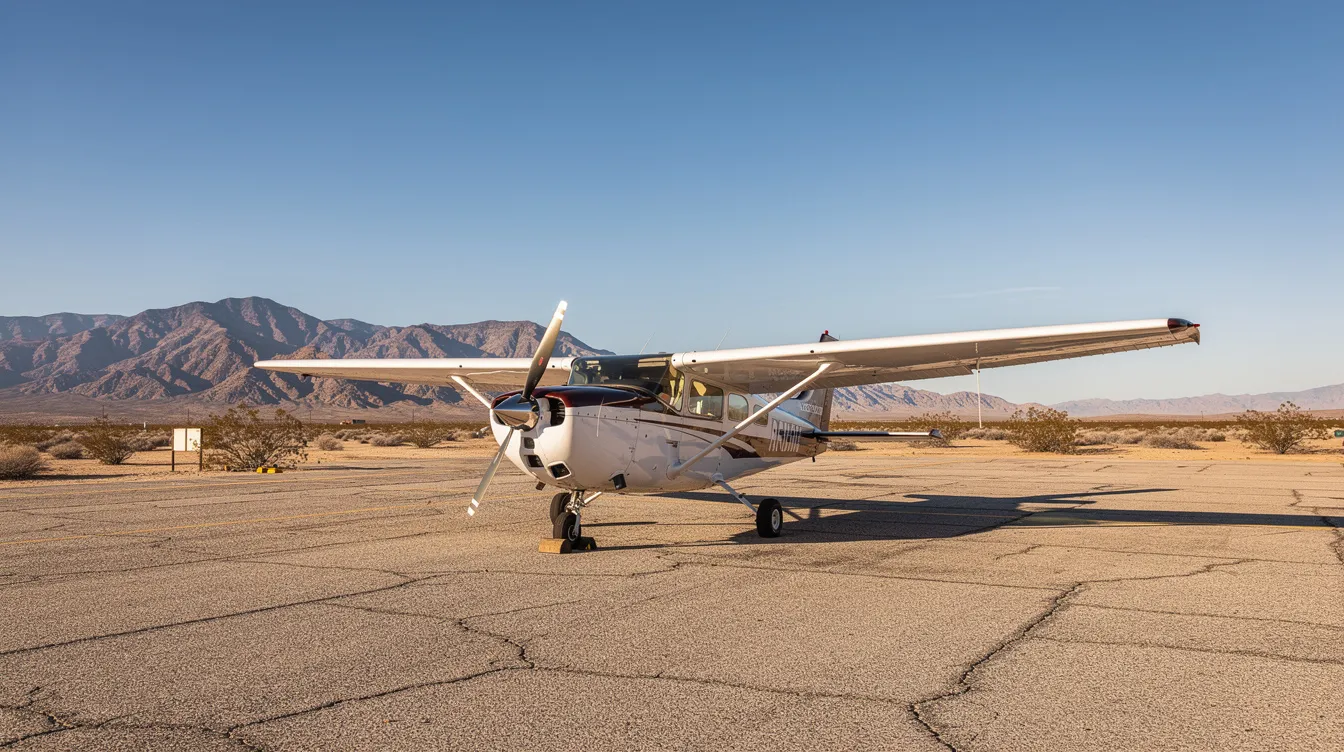
Typical patterns include Friday afternoon arrivals and Sunday evening departures, with higher charter rates and tighter availability during peak weekends and major events. Desert heat and density altitude at some regional airports make turboprops and light jets preferred over lighter piston aircraft on these routes.
BlackJet can coordinate seamless itineraries combining major-city jet flights-say, New York or Chicago to Las Vegas-with short-haul small aircraft segments to final destinations like the Grand Canyon or Sedona.
Smart planning can meaningfully reduce the cost of small aircraft charter:
Fill more seats. Flying with three to five passengers instead of solo spreads the hourly rate across the group. This is where air taxis and shared-ride concepts originated.
Avoid peak timing. Mid-week departures and non-holiday weekends typically command lower charter rates than Friday-Sunday peak periods.
Use smaller airports. Regional airfields often have lower airport fees than major hubs, and they may be closer to your actual destination.
Watch for empty leg flights. When an aircraft needs to reposition after dropping off passengers, operators sometimes sell the return leg at a steep discount. Empty leg flights can offer savings of 25-75% off standard charter rates.
Prioritize safety over price. The cheapest quote is not always the best value. Choosing reputable operators with strong safety records and proper insurance protects both passengers and budgets in the long run.
For frequent flyers, the most cost-effective approach is often a structured program. Learn more about private airplane charter prices and how they compare to fractional ownership economics.
Small aircraft charter has a natural ceiling:
Distance. Beyond roughly 400 to 500 miles, the slower cruise speed of pistons turns what should be a quick trip into a half-day affair. Turboprops or light jets become better value in terms of time savings at that range.
Frequency. Executives or teams flying several times per month quickly compound charter costs and booking overhead. Managing multiple operators, quotes, and invoices becomes its own administrative burden.
Complexity. Multi-region or international itineraries demand consistent fleet access, crew scheduling, and operational coordination that ad-hoc charter simply cannot provide reliably.
When you find yourself repeatedly chartering small aircraft-or spending more time arranging flights than flying-it is time to evaluate long-term commitments like fractional ownership. Reviewing fractional jet ownership as an investment, with its benefits and considerations, can clarify whether stepping up from on-demand charter aligns with your financial and operational goals. BlackJet Fractional Jet Ownership is designed exactly for travelers at this tipping point, especially when leveraging flexible floating fleet options in fractional ownership that balance access, cost, and scheduling flexibility.
BlackJet is not just a charter broker. It provides structured access to private aircraft through two models, similar in structure to several top fractional jet ownership programs for smart investors:
Equity Fleet: Fractional ownership of a jet share with priority access, custom aircraft sourcing, and potential tax benefits. For some users, a 1/8 fractional jet ownership structure delivering roughly 100 hours annually is a practical benchmark for right-sizing commitment. Ideal for travelers flying 75 to 150 or more hours annually on core routes.
Reserve Fleet: Pay-as-you-go hours without ownership costs, offering more consistent pricing and access than typical ad-hoc charter booking. A strong option for those in the 25 to 75 hour range.
Clients of mid-size use small aircraft charters for ultra-short regional hops while relying on their fractional share for longer, more frequent core routes. Consider a company headquartered in Chicago with plants across the Midwest: a fractional light or mid size jet share covers the Chicago-to-regional-city backbone, while occasional turboprop charters reach remote facility locations.
Benefits include guaranteed availability, predictable hourly costs, professional aircraft management, consolidated billing, and a dedicated team handling scheduling and logistics-advantages that vanish when juggling multiple charter vendors. Understanding the complete cost structure of fractional jet ownership alongside these benefits helps decision-makers choose the right model. For a comparison of how fractional stacks up against other models, see fractional ownership vs. NetJets, leasing, and jet cards.
Before committing to any charter flight, ask the right questions:
Safety and compliance:
Does the operator hold a current FAA Part 135 certificate?
What third-party safety ratings (ARGUS, Wyvern) does the operator carry?
What are the pilots' experience levels and recurrent training records?
Operations:
What are the runway requirements at both origin and destination?
What is the weather alternate plan if conditions deteriorate?
What happens if the assigned aircraft becomes unavailable?
Financial: When flying frequently enough to justify a share, it is also wise to understand how to sell or transfer a fractional jet ownership share so that your long-term exit options are clear from the start.
What is included in the quoted price: crew, fuel, landing fees?
How are de-icing, overnight fees, and international charges handled?
Are there penalties for schedule changes or cancellations?
Personalized service:
What in-flight services are available on this aircraft type?
Is Wi-Fi available on the turboprop or light jet?
Can the operator coordinate catering and ground transportation?
Working with an advisor or provider like BlackJet standardizes these checks across all flights, so you book flights with confidence every time.
The private aviation landscape offers sevmid-sizehs, and the right one depends on how you fly: Ad hoc
c small aircraft charter works well for occasional short trips, leisure travelers exploring private flights for the first time, or anyone flying fewer than 50 hours per year.
Light and mid size jet charter suits longer routes and larger parties, particularly for frequent flyers who need coast-to-coast access or travel to destinations beyond the reach of a small plane.
Jet card programs provide prepaid hours without ownership, though membership fees and hourly rates vary widely across providers operating in this vast network of private charter services.
Fractional jet ownership is the most efficient model for travelers logging 75 to 150 or more hours annually, delivering guaranteed access, predictable costs, and the operational consistency that ad-hoc charter cannot match.
Start by evaluating your annual flight hours, usual routes, typical group size, and how much budget predictability matters to your planning. BlackJet Fractional Jet Ownership can model different scenarios-combining charter, Reserve Fleet, and Equity Fleet access-to find the most efficient approach for your specific travel pattern.
Ready to explore the smarter way to fly private? Visit FractionalJetOwnership.com to request a consultation and build a personalized private aviation plan that fits the way you actually travel.
