July 7, 2026
Small jet charter refers to hiring a light jet, very light jet, or small turboprop for a specific trip, typically carrying two to eight passengers on flights of up to three or four hours. These aircraft serve as workhorses for business day-trips, weekend getaways, and time-sensitive travel across the United States and beyond, connecting cities and regions that commercial airlines often serve poorly or not at all.
For anyone researching how to charter a private jet, what it costs in 2025, or when chartering makes more sense than flying a commercial airline, this guide covers the essentials. It walks through pricing, aircraft options, charter services, logistics, and-critically-when fractional jet ownership becomes a better solution than repeatedly chartering.
BlackJet Fractional Jet Ownership specializes in both on-demand charter flights and fractional jet access for clients flying 25 to 150 hours per year. The following sections draw on that expertise to help readers make informed decisions about their private aviation strategy, whether that means a single charter trip or a structured ownership program.
A small jet charter is the on-demand hire of a private aircraft for a specific trip, operating under commercial certification such as FAA Part 135 in the United States. The aircraft in this category-light jets, very light jets, and small turboprops-are designed for short- to medium-haul missions, typically under 1,500 nautical miles.
Typical missions include business day-trips between U.S. cities like Dallas to Houston, New York to Washington, or Denver to Aspen. Leisure travelers use them for weekend getaways, and urgent trips-legal, medical, or corporate-rely on their scheduling flexibility.
Here are the key characteristics that define a small jet charter:
Seating capacity of two to eight, depending on aircraft type
Flight distance capability of roughly 1,000 to 2,000 nautical miles (light jets at the upper end)
Access to thousands of smaller airports that commercial airlines do not serve
Lower hourly operating cost than midsize, super midsize, or heavy jets
Smaller cabins and limited baggage space compared to larger charter aircraft
Faster boarding, simpler ground handling, and fewer delays than large-cabin private jet travel
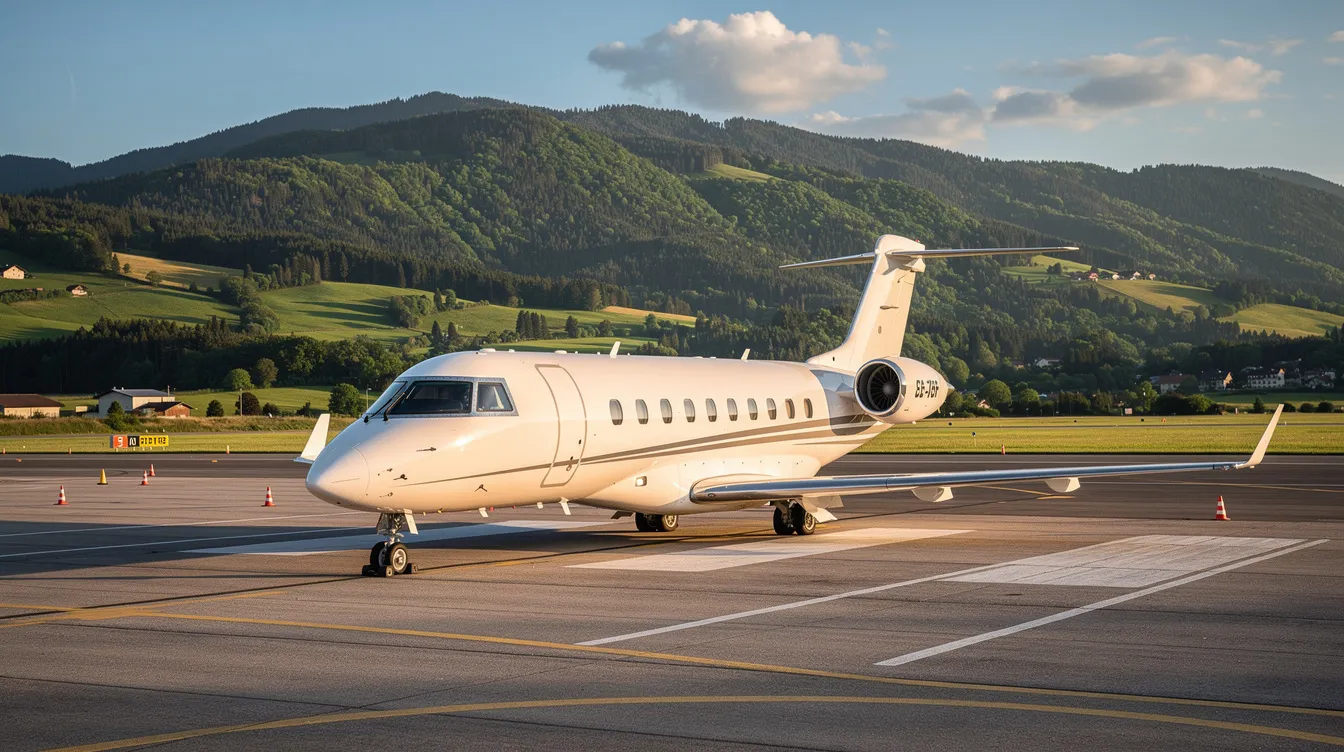
The core appeal of a small jet charter is straightforward: complete control over schedule, route, and cabin environment, combined with access to airports that get travelers closer to where they actually need to be. Private jets can save up to two hours per flight when factoring in eliminated check-in procedures, security lines, and layovers.
Private jet charters eliminate TSA lines and crowded terminals. Travelers arrive at a private terminal, walk to the aircraft, and depart-often within minutes.
Small business jets can provide greater privacy and allow for productive work during travel. A quiet cabin with Wi-Fi means executives can hold calls, review documents, or conduct secure meetings without interruption.
Small jets provide direct boarding without commercial baggage handling issues, reducing the risk of lost luggage and delays.
Private jets can significantly reduce travel time compared to commercial flights. Flying into Teterboro instead of JFK for Manhattan meetings, or using Denver Centennial instead of Denver International for ski trips, can eliminate an hour or more of ground transportation each way.
Jet charters offer high flexibility in scheduling to accommodate last-minute changes. There are no fixed timetables, no missed connections, and no overnight stays forced by airline schedules.
Charter flights allow for direct routes to smaller airports, enabling a traveler to visit multiple cities in a single day-something that is nearly impossible on commercial options.
Small jets have limited baggage space compared to larger aircraft. Travelers with oversized gear (golf clubs, ski equipment) should confirm cargo volume when selecting the aircraft.
Cost remains higher than first class on a commercial airline for a single passenger, though using a charter can be cost-effective for groups due to time savings and productivity gains.
Understanding the main aircraft categories helps travelers match the right plane to their mission. Private jets range from light jets to large cabin jets, and the small jet charter market focuses on the lighter end of that spectrum.
Very light jets (VLJs): Aircraft like the Embraer Phenom 100 or Cessna Citation Mustang seat three to four passengers comfortably. Very light jets are cost-effective for small groups of three to four passengers on short flights of one to two hours. Best for city hops with minimal luggage.
Light jets: Models such as the Phenom 300, Cessna Citation CJ3 (six to seven passengers), and Learjet 45XR offer more range and cabin space. Light jets typically seat four to six passengers for short flights, though some configurations handle up to eight. They balance speed, comfort, and cost for flights up to three or four hours.
Small turboprops: The Pilatus PC-12 and Beechcraft King Air series carry six to eight passengers. The Beechcraft King Air 350 has a range of 750 nautical miles. Turboprop planes are economical for shorter charter flights and can use runways that jets cannot, including shorter or unpaved strips.
Aircraft type directly affects charter rates, in-flight amenities, fuel consumption, and which airports are accessible. Light jets generally offer enclosed lavatories, pressurized cabins, and quieter rides, while some turboprops trade cabin refinement for rugged operational flexibility.
Charter rates for small jets average between $1,200 and $10,000 overall, depending on aircraft category and trip length. Across the broader private aviation market, charter rates range from $1,800 to $18,000 per hour when including larger aircraft classes. Here is what to expect specifically for small jet charter in 2025:
Turboprop charter rates range from $1,200 to $3,000 per hour. A turboprop hop like Denver to Aspen might cost $4,000 to $7,000 one-way.
Light jets cost between $1,200 and $3,300 per hour to charter. These rates are per aircraft, not per passenger, making them an economical option when splitting among a small group.
Los Angeles to Las Vegas (approximately 45 minutes by light jet): roughly $8,000 to $14,000 one-way. A turboprop or VLJ on the same route might come in at $5,000 to $8,000.
New York to Boston (roughly one hour by light jet): approximately $10,000 to $20,000 one-way, depending on aircraft selection and timing.
Dallas to Nashville (about two hours by light jet): an estimated $15,000 to $25,000 depending on aircraft availability and positioning.
Hourly rates generally refer to the billable flight hour, which can include positioning legs and minimum flight times. Additional costs like fuel surcharges, landing fees, and catering are often separate.
BlackJet helps clients understand and forecast annual charter spend, comparing the cost to charter repeatedly against the predictable economics of owning a fractional jet share.
A charter flight cost calculator is one of the fastest ways to benchmark what a trip might cost before speaking with an advisor. Instant pricing is available for over 7,000 aircraft through various online platforms.
Here is how a typical calculator works:
Enter the departure airport and destination airport, along with preferred dates and times.
Specify the number of passengers and any aircraft preferences (light jet, turboprop, specific model).
The tool calculates block time (flight time plus taxi), estimates fuel burn for the selected aircraft type, and applies the appropriate hourly rate.
Standard outputs typically include the base aircraft rate, basic taxes, fuel costs, and standard landing or handling fees.
Common exclusions: de-icing charges, after-hours airport fees, international customs handling, last-minute schedule changes, and premium catering requests.
Use the calculator result as a starting benchmark. Final quotes come from vetted operators who account for the specific flight details and current market demand.
BlackJet uses real charter quotes and historical data to help clients model their annual flying patterns. This analysis determines whether charter-only, a jet card, or fractional ownership is the most efficient structure for their travel needs.
Several key factors determine the final price of any charter flight, and understanding them helps travelers make smarter booking decisions.
Aircraft size and type: Newer, more capable aircraft carry higher hourly rates due to acquisition cost, insurance, and maintenance requirements.
Total flight time and block time: Longer flights burn more fuel, but even short flights carry fixed overhead for crew, ground handling, and airport fees.
Routing and repositioning: If the aircraft must fly empty to reach the departure airport (a positioning leg), that dead-heading cost is typically passed to the client.
Airport fees and infrastructure: Operations at congested airports cost more. Smaller FBOs may charge extra for handling, customs, or de-icing.
Seasonality and market demand: Holidays, major events (Super Bowl, large conferences), and peak travel seasons cause surge pricing and reduce aircraft availability.
In flight amenities and special requests: Premium catering, satellite phone access, pet accommodations, medical equipment, or extra cabin attendants all increase the total trip cost.
Fuel and operating cost volatility: Jet-A fuel prices fluctuate with oil markets, and older aircraft may burn fuel less efficiently, adding to the per-hour cost.
Positioning legs are one of the most misunderstood cost elements. The aircraft may need to fly empty to the departure airport and then return to its home base after drop-off, effectively doubling the flight time the client pays for.
Crew duty times and rest requirements are regulated by the FAA. Same-day round-trip flights or multi-leg itineraries can bump up against duty limits, potentially requiring a second crew or an overnight stay for the pilots.
Weather disruptions disproportionately affect small jet charter. Smaller airports may lack de-icing equipment, instrument landing systems, or 24-hour operations, leading to diversions or delays.
International customs procedures require advance scheduling and can restrict departure times to hours when customs officers are available, adding complexity to cross-border regional trips.
Maintenance schedules and unexpected mechanical issues can force aircraft substitution. A backup aircraft may be a different type, which can change pricing and cabin configuration.
How a trip is structured-same-day return, overnight stay, or multi-day itinerary-directly affects charter pricing. The difference can be significant, and planning ahead creates real savings.
Same-day roundtrip: The aircraft and crew wait at the destination. The client pays for both flight legs plus wait time (crew per diems, ramp or hangar parking fees). This is efficient for meetings lasting a few hours.
Overnight stay: If the traveler stays one or two nights, the aircraft may reposition home empty or remain on-site. Crew lodging and per diems apply. The return leg may be priced lower if the operator can sell the empty leg flights to another client.
Multi-day or week-long trip: One-way pricing for each leg is common. The operator typically repositions the aircraft after drop-off, and a separate aircraft may handle the return. This avoids daily wait charges.
Roundtrip pricing often runs roughly 1.6 to 1.85 times the one-way rate rather than a full double, because positioning costs are reduced when the aircraft serves both legs.
Example: A two-day New York to Chicago business trip. Flying out on Monday morning and returning Tuesday evening involves crew overnight costs in Chicago, but avoids the higher expense of keeping the aircraft idle and crewed for an extended period.
Domestic U.S. charter flights avoid customs, immigration, and overflight permits, making them simpler and faster to arrange.
International flights-even short routes like Miami to Nassau or Los Angeles to Cabo San Lucas-add customs handling fees, landing fees at foreign airports, overflight permits, and sometimes special insurance or crew visa requirements.
After-hours international handling charges apply when arriving or departing outside normal customs operating hours, which are often limited at smaller airports.
Fuel planning for international routes must account for alternate airports and extended reserves, potentially reducing payload or requiring a fuel stop.
BlackJet's advisory approach helps clients anticipate these additional fees and choose airports that minimize costs-such as selecting airports with established international handling rather than remote alternatives.
Choosing between a small jet and a larger private jet comes down to mission requirements. Chartering a Boeing 737 costs between $15,000 and $30,000 per hour, while chartering a large cabin jet starts at $10,000 per hour. A small jet charter occupies a very different cost tier.
A small jet charter is ideal for regional trips under approximately 1,200 to 1,500 miles with two to six passengers. Hourly rates start well under $3,500, and these aircraft access thousands of airports that larger jets cannot.
Midsize jets accommodate six to eight passengers for domestic travel and offer more cabin space, stand-up headroom, and longer range, suitable for coast-to-coast routes.
Super midsize jets offer greater range and comfort for longer routes, with full galleys, larger lavatories, and the ability to fly nonstop across the continental United States.
Heavy jets are designed for transcontinental or international flights with eight or more passengers, full sleeping accommodations, and significant baggage capacity.
Practical example: Boston to Toronto (roughly 350 miles) is well-suited for a light jet. New York to Los Angeles (approximately 2,500 miles) requires a super midsize or heavy jet.
Runway requirements also matter. Some larger jets need 5,000-plus feet of runway, while turboprops and VLJs can operate from shorter strips, giving access to more airports.
There is an important distinction between chartering a certified small jet under FAA Part 135 and attempting to hire a very small piston aircraft like a Cessna 172 or 182. Only Part 135 certificate holders can legally operate aircraft for commercial hire.
True piston-engine charter operations are relatively rare in the contiguous United States, outside of niche markets like Alaska bush flying, island shuttles in Florida and the Caribbean, or scenic flights in the Pacific Northwest.
The cost of maintaining Part 135 certification-pilot qualifications, maintenance programs, insurance, and safety oversight-is largely fixed. This scales poorly for very small plane operations where demand and per-trip revenue are low.
For most travelers seeking short regional trips, small turboprops or very light jets are far more practical than non-pressurized pistons. They fly faster, higher, and in a wider range of weather conditions.
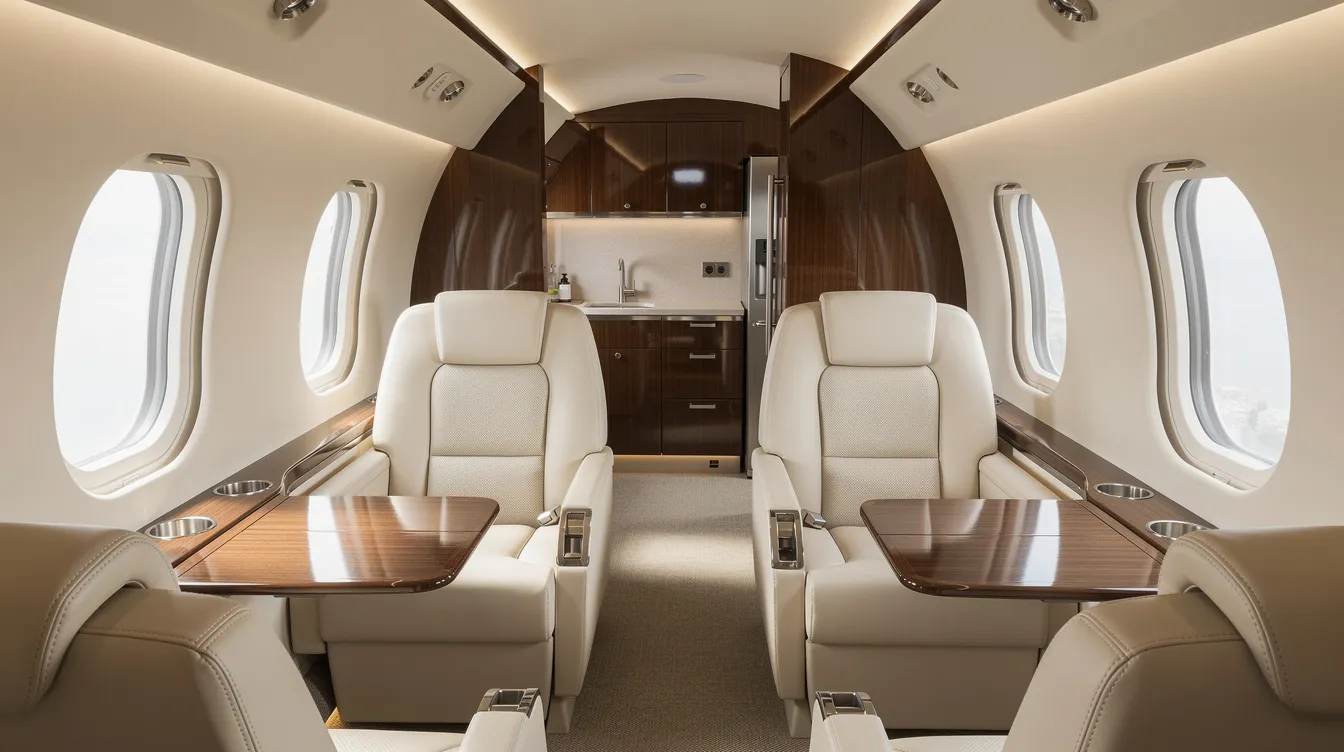
Charter flights offer personalized services, including customized meals and reduced baggage restrictions, compared to commercial airlines. Here is what to expect in the small jet charter cabin:
Leather seating with adjustable configurations is standard across most light jets and turboprops.
Enclosed lavatories are available on most light jets (Phenom 300, Citation CJ3, Learjet 45XR). Some VLJs and small turboprops have shared or fold-out lavatories, or none at all.
Cabin comfort features like Wi-Fi and lavatory availability should be considered for longer flights. Wi-Fi is available on many newer aircraft, sometimes for an additional fee.
Power outlets and USB ports are standard on modern charter aircraft, supporting in-flight productivity.
Catering ranges from light snacks and beverages to full custom menus. Travelers can request specific dietary options, premium beverages, or celebration packages when booking.
Additional services such as child seats, pet accommodations, medical equipment, and ground transportation coordination are available upon request and may carry additional fees.
Very light jets and some turboprops are best suited for hops under 90 minutes, where limited galley and lavatory facilities are less of a concern.
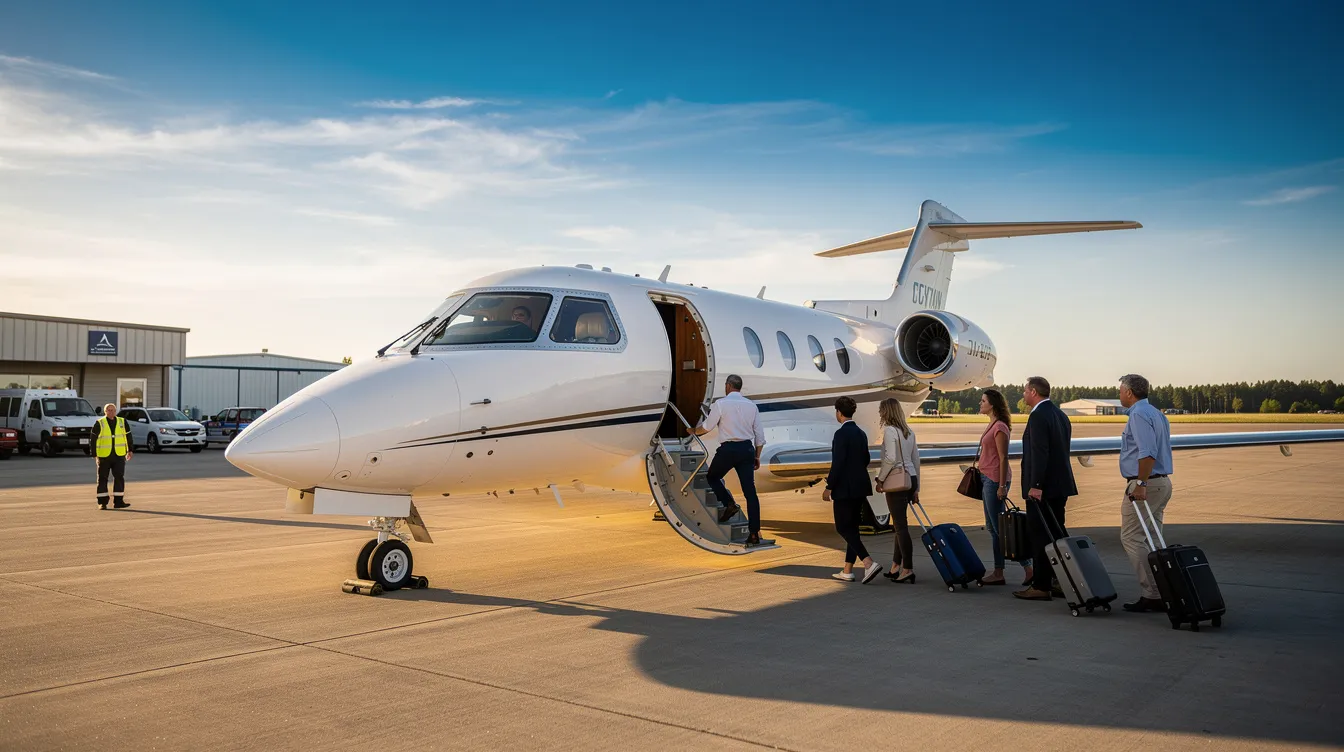
Factors to consider when choosing a small jet include passenger capacity and trip distance. Here are the practical selection criteria:
Count passengers accurately and account for luggage volume. Oversizing the aircraft inflates cost, while undersizing creates discomfort.
Match flight distance to aircraft range, factoring in headwinds and required fuel reserves. A Phenom 100 handles a 600-mile hop easily but struggles with a 1,200-mile leg at full payload.
Check runway length and elevation at both origin and destination. Hot-and-high airports reduce aircraft performance. A turboprop like the PC-12 often outperforms jets in constrained fields.
Assess cabin comfort expectations. Does the trip require a lavatory? Stand-up headroom? Low cabin noise? These preferences narrow the aircraft options.
Balance the hourly rate against the total trip cost. An older but well-maintained aircraft may cost significantly less per flight hour than a newer model while delivering a comparable experience.
For clients flying 25 or more hours per year, thinking in terms of annual flying patterns-rather than optimizing each individual trip-opens the door to fractional or reserve-fleet models that reduce overall cost.
Charter operators own and operate aircraft under a Part 135 certificate. They control crew, maintenance, and safety standards directly.
Brokers and platforms connect travelers to operators, providing multiple charter options. Quality varies widely, and broker fees can add cost without adding safety oversight.
Private jet charters offer access to over 20,000 aircraft through broker networks, but not all aircraft or operators are equally vetted. Safety ratings and certification are crucial when selecting charter operators.
Jettly connects clients with vetted operators that meet safety standards. However, travelers should independently verify operator credentials before confirming any flight.
BlackJet is different from pure brokers: it operates its own Equity Fleet, provides Reserve Fleet access, and uses charter when appropriate-combining broker-like flexibility with ownership predictability and direct safety oversight.
When evaluating any provider among the top private jet charter companies, confirm the operator's FAA certificate, insurance minimums, pilot qualifications, and maintenance history.
Small jet charter flights operate under FAA Part 135 regulations, which impose strict maintenance requirements, crew training standards, and safety oversight that do not apply to private Part 91 flights.
International Jet's aircraft meet FAA Part 135 certification standards, as do all legitimate U.S. charter operators. Travelers should always verify this certification before booking.
All charter flights with International Jet are operated by experienced pilots. Industry best practices call for minimum pilot flight hours well above regulatory minimums, along with recurrent simulator training.
Airshare has received IS-BAO Stage 3 and ARGUS Platinum designations, representing some of the highest independent safety audit standards in general aviation.
NetJets operated over 792 aircraft without a passenger fatality for over 50 years, demonstrating that rigorous safety management systems work at scale.
A 2024 FAA final rule mandates Safety Management System (SMS) compliance for all Part 135 operators by May 28, 2027, raising the safety baseline across the industry.
Before confirming any charter aircraft, ask for the operator's safety ratings, recent audit results, insurance certificates, and pilot qualification summaries.
Booking a private jet typically takes under 4 hours from initial inquiry to confirmed flight. Private jet charters can be booked 24/7 online through most operators and platforms. The booking process involves searching routes, selecting aircraft, and confirming flights.
Define trip requirements: departure and arrival cities, dates, approximate times, number of passengers, and any special needs (pets, oversized luggage, medical equipment).
Request quotes from multiple sources or use an online charter flight calculator to establish a cost benchmark. Compare aircraft options across different categories.
Review quotes carefully. Confirm what is included (aircraft, crew, fuel, landing fees) and what carries additional costs (catering, de-icing, repositioning, after-hours fees).
Examine cancellation policies and terms. Charter services provide flexible scheduling with no long-term commitments, but cancellation windows and refund policies vary by operator.
Prepare passenger information: full names matching government IDs, identification requirements for international flights, pet documentation, and any accessibility needs.
Confirm and pay. Most operators accept wire transfer, credit card, or pre-funded account balances. Confirmation typically includes flight details, crew information, FBO location, and ground transportation options.
Typical lead times range from same-day for urgent private flights to one to two weeks for optimal aircraft selection and pricing.
Base quotes typically include the aircraft, professional crew, standard fuel for the planned route, basic landing fees at departure and destination, and light cabin refreshments.
Crew costs (salaries, training, per diems) are built into the hourly rate for most operators.
Common extras that may not appear in the base quote: de-icing (winter operations), premium catering beyond snacks, Wi-Fi data surcharges on some aircraft, hangar or overnight parking fees, and international handling or customs fees.
Repositioning costs-flying the aircraft empty to the departure point-are sometimes included, sometimes quoted separately. Ask explicitly.
Airport fees vary by location. Busy FBOs at major metropolitan airports charge more than rural or less-trafficked facilities.
Transparent pricing means the client understands every line item before signing. Any reputable operator provides a complete cost breakdown, not just a headline hourly rate.
On-demand small jet charter is one of several ways to access private aviation. Each model suits a different usage profile, and understanding the differences helps travelers avoid overpaying.
On-demand charter: Pay per trip with no ownership commitment. Ideal for travelers flying fewer than 25 hours per year. Highest per-hour cost but zero fixed obligations.
Jet card programs: Pre-purchase blocks of hours at fixed or tiered charter rates. Good for 25 to 50 hours annually. Offers some price predictability and booking priority.
Aircraft leasing: Long-term lease of a specific aircraft, with the lessee covering operating costs. Suited for very specific mission profiles or high annual usage.
Fractional jet ownership: Purchase a share in a specific aircraft type. Provides priority access, potential tax benefits, and a predictable cost structure. Most efficient for 25 to 150 hours per year-the sweet spot where ad-hoc charter becomes expensive but full ownership is unnecessary.
Full aircraft ownership: Highest commitment. Capital investment, depreciation, crew, insurance, hangar, and management costs are all borne by the owner. Only justified at very high annual usage or for specialized missions.
BlackJet's Equity Fleet and Reserve Fleet models are designed for travelers who have outgrown ad-hoc charter but do not want the burden-or the full cost-of owning an entire aircraft.
A CEO flying three to four times per month between fixed city pairs (e.g., New York to Washington, Dallas to Houston) will spend significantly less per flight hour under a fractional share than booking an ad-hoc charter each time, while also enjoying guaranteed aircraft availability.
A regional sales team logging 50 to 100 charter hours annually can consolidate those hours under a fractional program, locking in predictable per-hour pricing and avoiding the surge rates that hit during peak market demand periods.
A family with regular seasonal travel-ski trips in winter, coastal getaways in summer-benefits from priority access during the exact weeks when charter aircraft are hardest to find and most expensive.
Industry data indicates that for super midsize cabins, fractional ownership becomes cost-efficient versus charter once annual usage reaches approximately 75 to 100 hours per year.
BlackJet's Equity Fleet allows clients to purchase a share in a specific aircraft type, with management, scheduling, and maintenance handled entirely by BlackJet. The Reserve Fleet offers pay-as-you-go access with more predictable pricing and availability than open-market charter, without requiring an ownership stake.
Potential tax benefits of fractional aircraft ownership (depreciation, operating expense deductions) can further reduce effective hourly costs, depending on jurisdiction and usage. Consult a tax advisor for specifics.
Start by cataloging annual travel patterns: how many trips, which city pairs, average passengers per flight, and seasonal peaks.
Estimate the average flight hour per trip on each route. A New York to Boston run is roughly one hour; Dallas to Nashville is closer to two.
Multiply trips by average hours to project total annual flight hours. This single number determines which access model-charter, jet card, or fractional-is most efficient.
Compare the projected annual charter spend (hours multiplied by average hourly rates plus repositioning and fees) against fractional share economics (acquisition cost amortized, monthly management fees, and occupied hourly rate).
Factor in non-financial value: guaranteed availability during holidays, consistent aircraft type, and reduced booking friction over dozens of annual trips.
BlackJet provides customized analyses combining historical charter invoices, route data, and forecasted needs to identify the most efficient ownership structure for each client.
For companies with distributed operations or executives covering multiple markets, small jet charter and fractional programs can function as a strategic travel tool rather than just a convenience.
Executive roadshows and investor meetings across three or four cities in a single day become feasible with a private charter. A small jet charter provides exclusive use of the cabin for secure meetings, allowing sensitive discussions to happen in transit rather than only at the destination.
Plant visits, facility inspections, and client meetings in locations not well served by commercial airlines-think small manufacturing towns, energy sites, or rural corporate campuses-are far more practical by private aircraft.
Small jet charters offer flexibility and efficiency for business travel, reducing overnight hotel stays, eliminating layovers, and compressing multi-day commercial itineraries into single-day missions.
Group charters for small executive teams of four to six people often represent a cost-effective alternative to buying multiple last-minute first-class tickets, especially when accounting for time savings and productivity.
Corporations can combine an ad hoc charter with BlackJet's fractional solutions to create a tiered travel strategy: fractional shares for the most frequent routes and charter for occasional or unpredictable trips.
Family ski trips are among the most common personal use cases: Denver to Aspen, Los Angeles to Telluride, or San Francisco to Lake Tahoe. A light jet or turboprop avoids the connecting-flight hassle and gets families to the slopes hours faster.
Summer home travel-New York to Nantucket, Chicago to Harbor Springs, San Francisco to Bend-benefits from direct access to smaller airports near vacation properties.
Leisure travelers and families traveling with young children appreciate flexible departure times, the ability to bring car seats and strollers without airline restrictions, and the privacy of a dedicated cabin.
Traveling with pets is straightforward on private charter: animals stay in the cabin with the family rather than in cargo, and there are no breed or size restrictions beyond what the cabin can accommodate.
Family vacations to destinations like Las Vegas, San Juan, or Cabo San Lucas are simplified when the entire group travels together on one aircraft, avoiding the logistics of coordinating commercial connections.
BlackJet can blend personal and business usage under one structured program while keeping reporting and tax documentation clear for clients who use their aircraft shares for both purposes.
Charter flights can use thousands more smaller airports compared to commercial airlines. In the United States alone, there are over 5,000 public-use airports, compared to roughly 500 served by scheduled airlines. Small jets can land closer to final destinations by using smaller airports.
Fly into Westchester County (HPN) instead of JFK for New York's northern suburbs, saving 60 to 90 minutes of ground transportation. Or use Naples Municipal instead of Miami International for southwest Florida destinations.
Mountain resort access is transformed: Aspen, Telluride, Jackson Hole, and Sun Valley all have airports that light jets and turboprops can use, while commercial service is limited or seasonal.
Runway length and airport services determine which aircraft types can operate safely. Turboprops like the PC-12 handle shorter runways and higher elevations better than jets, influencing the recommendation for mountain or remote destinations.
Smaller airports typically feature a private terminal (FBO) with dedicated parking, quick security, and concierge-level service-no terminal crowds, no long walks, and no baggage carousels.
Smart airport selection can significantly reduce total trip time and ground transportation costs, sometimes making the overall journey faster and less expensive than it appears when looking only at air taxis or flight time.
Sustainable Aviation Fuel (SAF) is increasingly available at major FBOs, and some operators offer SAF as a standard or optional fuel choice. Its use can reduce lifecycle carbon emissions by up to 80 percent compared to conventional jet fuel.
Smaller, modern jets and turboprops are more fuel-efficient per passenger mile on short routes than older, larger aircraft-especially when seats are filled. A full Phenom 300 on a 500-mile route burns less fuel per person than a half-empty heavy jet on the same trip.
Carbon offset programs are offered by many charter operators and brokers, allowing environmentally conscious travelers to compensate for flight emissions through verified environmental projects.
BlackJet can help clients choose efficient aircraft types and participate in offset initiatives while still meeting schedule and comfort requirements.
Most operators charge a minimum of one to two hours, even for very short hops. This covers fixed costs like crew, ground handling, and airport fees.
Many light jets can fly nonstop up to approximately 1,200 to 1,500 miles. Very light jets are typically limited to around 1,000 miles. Range depends on payload and wind conditions.
A light jet typically accommodates 50 to 70 cubic feet of baggage-enough for four to six passengers with standard carry-on and checked bags, but not ideal for oversized sporting equipment without advance planning.
Yes. Most charter operators allow pets in the cabin. Confirm breed, size, and any documentation requirements at the time of booking.
Policies vary by operator but commonly allow free cancellation up to 24 to 72 hours before departure. Cancellations inside that window may incur partial or full charges.
Booking a private jet typically takes under four hours. Same-day departures are possible for urgent flights, though aircraft options may be more limited.
Yes, though international flights require additional planning for customs, immigration, and overflight permits, and may incur higher costs.
BlackJet offers two primary models: the Equity Fleet, where clients purchase a fractional share in a specific aircraft type with priority access and potential tax advantages, and the Reserve Fleet, which provides pay-as-you-go hours with predictable access and transparent pricing-no ownership required.
Frequent small jet charter clients can transition into a fractional share to secure guaranteed aircraft availability during peak periods (holidays, major events, ski season) and stabilize hourly costs that otherwise fluctuate with market demand.
BlackJet manages aircraft scheduling, maintenance requirements, and crew, removing the operational burden of aircraft management while giving clients the control and flexibility they expect from private charter.
The transition from an ad hoc charter to a structured program does not have to be all-or-nothing. Many BlackJet clients start with the Reserve Fleet to test the model, then move to an Equity Fleet share as their annual hours and confidence grow.
For clients flying a diverse fleet of routes-mixing business and personal, domestic and international-BlackJet's advisory team builds a customized plan that combines ownership, reserve hours, and selective charter to optimize both cost and availability.
Aviation experts at BlackJet analyze each client's historical travel data to determine the crossover point where fractional ownership becomes more cost-effective than continued charter booking.
Small jet charter delivers speed, privacy, and access to regional trips that commercial flying simply cannot match. For travelers who fly frequently-25 to 150 hours per year-fractional jet ownership through BlackJet can unlock further savings, guaranteed availability, and predictable costs that ad-hoc charter does not provide.
Evaluate current travel patterns: total annual hours, most common routes, seasonal peaks, and how often charter availability or pricing has been a frustration.
Request a personalized comparison from BlackJet that models on-demand charter, jet card, and fractional ownership scenarios based on actual travel data-not industry averages.
Take the next step toward a smarter private aviation strategy.
Ready to explore the smarter way to fly private? Visit FractionalJetOwnership.com to learn how fractional ownership can transform your travel experience, review case studies, and request a tailored private aviation plan.
