July 21, 2026
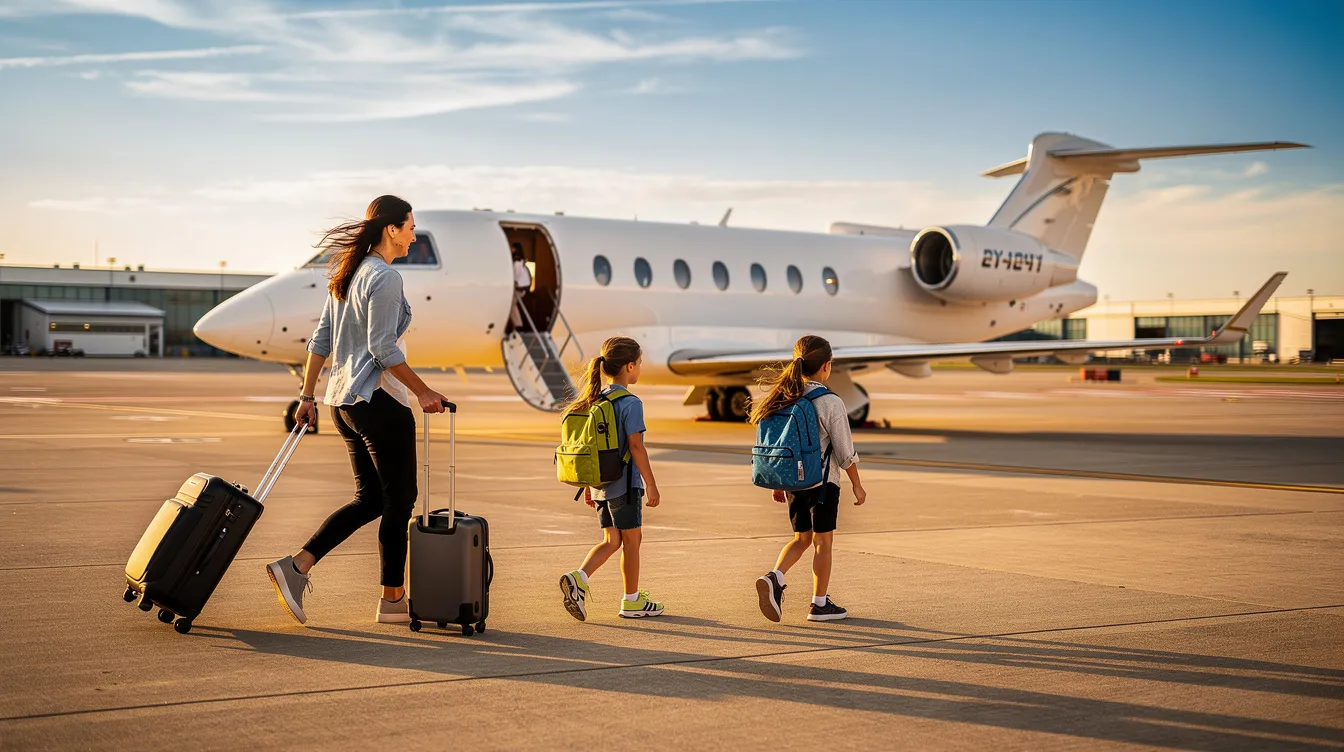
This guide is for families exploring private aviation options to maximize comfort, safety, and efficiency in their travels. Choosing the best private plane for family travel is one of the most personal decisions in aviation. It depends on how far you typically fly, how many passengers you carry, what you can budget annually, and whether someone in the household holds a pilot certificate. Family travel by private plane comes with unique needs—such as time savings, comfort, flexibility, and the ability to accommodate children, pets, and extra luggage—that make the right aircraft choice especially important. This guide breaks down the top family airplane options for 2026, from affordable piston singles to professionally flown fractional jets, so every family can find the right fit.
The "best" aircraft depends entirely on mission, budget, and whether the reader wants to own a plane, pilot it personally, or access private aviation services like fractional ownership. Here are the top recommendations by category.
Piper PA-32 Cherokee Six/300: A classic six-seat family airplane with double rear doors, huge baggage access, and easy loading for kids and gear. The Piper Cherokee Six can seat up to six passengers comfortably and cruise at speeds around 160 knots.
Cessna 182 Skylane: A rugged four-seat single-engine workhorse with an excellent safety record and strong useful load for its class. The Cessna 182 Skylane can cruise at speeds around 140 knots.
Cirrus SR22 / SR22T: Modern technology meets a whole-aircraft recovery parachute, making it ideal for safety-focused owner-pilots. The Cirrus SR22T has been the best-selling personal aircraft since 2003.
Diamond DA50 RG: A new-generation fuel-efficient piston single with a roomy cabin, retractable gear, and modern avionics.
Pilatus PC-12 NGX: A pressurized single-engine turboprop- the "flying SUV"-ideal for larger families and long-range trips up to 1,800 nautical miles.
Daher TBM 960: The fastest single-engine turboprop, blending performance, fuel efficiency, and modern safety systems including autoland.
HondaJet Elite II: A quiet, fuel-efficient light private jet with over-the-wing-mounted engines, excellent for 3–5 passenger family trips of 500–1,000 nm.
Embraer Phenom 300E or Citation CJ4 Gen2 (via fractional programs): The best all-round family jets for those who prefer not to buy an entire airplane.
Families flying 25–150 hours per year often find the sweet spot of cost and convenience through fractional jet ownership with providers such as BlackJet Fractional Jet Ownership rather than purchasing a whole plane. The rest of this article explains how to choose based on safety, total cost, mission profile, and access model.
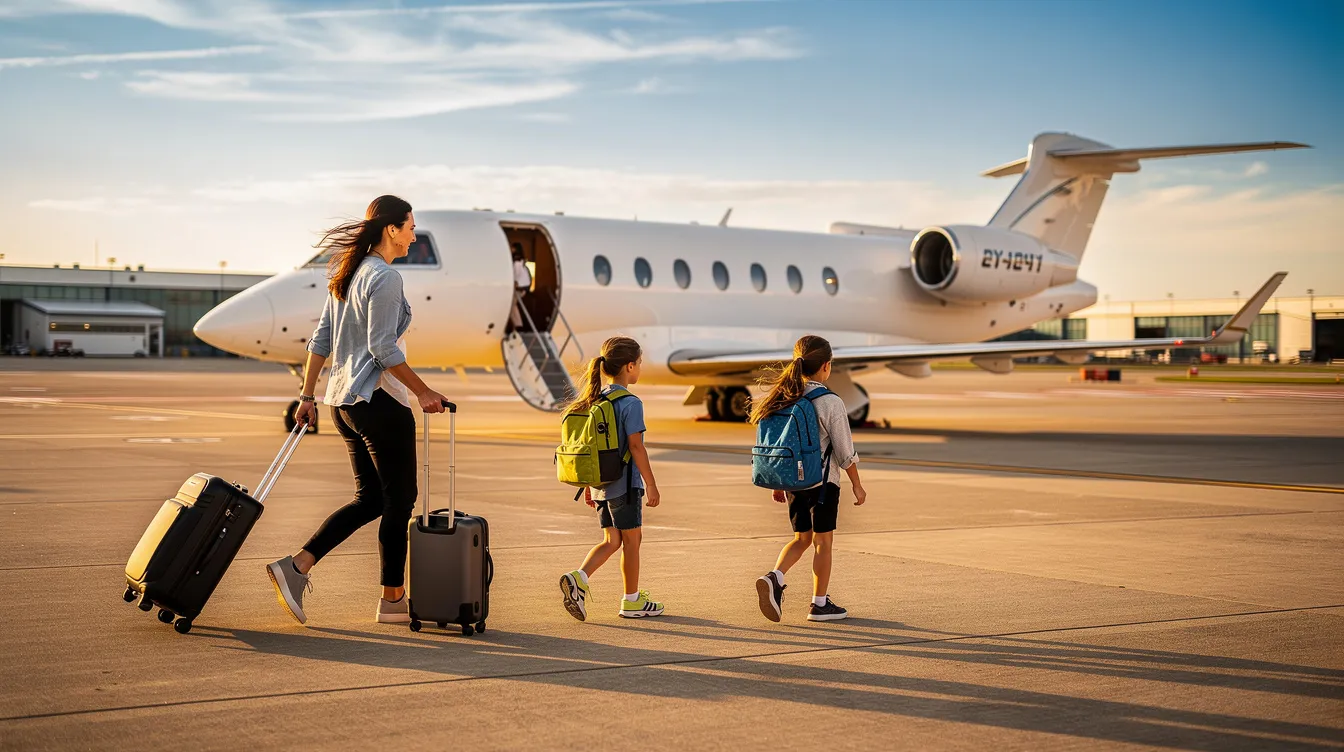
Private planes for family travel prioritize safety, comfort, and space above all else.
A "best" private plane for family travel in the United States or internationally depends on trip length, travel frequency, the number of seats needed, budget, and whether someone in the family will serve as pilot in command. Private aviation allows access to over 5,000 smaller airports that commercial flights cannot reach, so the aircraft you choose shapes where you can go.
Core decision filters include:
Mission profile: Typical leg length (200 nm weekend hops vs. 1,000+ nm cross-country vacations), climate, and departure airports.
Passenger mix: How many adults vs. children, pets, and baggage you routinely carry. Selection of private planes depends on cabin comfort, safety, luggage capacity, and airport accessibility.
Access model: Full ownership, fractional aircraft ownership, jet membership programs, or pay-per-trip charter.
Pilot vs. passenger: Whether the buyer is an owner-pilot or intends to use professional crews.
Families flying 40–80 hours per year often start with an owner-flown single-engine aircraft (Cherokee Six, Cessna 182, SR22), while those flying 80–150 hours and valuing schedule control may lean toward fractional jets with predictable availability.
"Best" also includes non-technical factors: cabin noise levels influence comfort during flights, particularly with children aboard. Lavatory availability and ease of boarding older relatives matter too.
The sections below move from specific family airplane models to cost analysis and private aviation program options like BlackJet Fractional Jet Ownership's Equity Fleet and Reserve Fleet.
Regardless of aircraft type, the same core criteria apply when comparing private planes for families. Private planes for family travel prioritize safety, comfort, and space above all else.
Safety and certification: Airframe reliability, modern avionics, de-icing capability, and operator or pilot training standards. Major safety factors include FAA certification, experienced crew, and independent safety audits.
Range and efficient performance: The ability to complete typical trips nonstop, takeoff and landing performance at preferred airports, and climb capability over terrain. Maximum range determines whether you need fuel stops or can fly direct.
Cabin layout and comfort: Seat count, club seating vs. forward-facing, noise levels, pressurization, and whether there is an enclosed lavatory. Spacious enclosed lavatories are especially valuable on longer trips with families. Cabin comfort includes room to move around and relax during flights, and modern aircraft with lower cabin altitudes reduce fatigue and dehydration for passengers.
Fuel efficiency and environmental impact: Gallons per hour, use of modern technology such as FADEC, and compatibility with sustainable aviation fuel. Exceptional fuel efficiency reduces both operational costs and environmental footprint.
Total cost of ownership or access: Purchase price or share price, hourly operating costs, hangar space, regular maintenance, insurance, and fractional jet ownership financing considerations.
Resale and fleet flexibility: How easy it is to sell the airplane later-or in the used aircraft market-or, in fractional programs, how easy it is to swap aircraft sizes per trip, including how to approach selling your fractional jet ownership share.
BlackJet Fractional Jet Ownership helps clients model these factors over a 3–5 year horizon to avoid over- or under-buying aircraft capability.
Piston singles are often the first step into private aviation for pilot-owners, combining lower initial purchase prices with flexibility for weekend and regional family trips. For new pilots looking to build hours while traveling with the entire family, these small aircraft offer an accessible entry point.
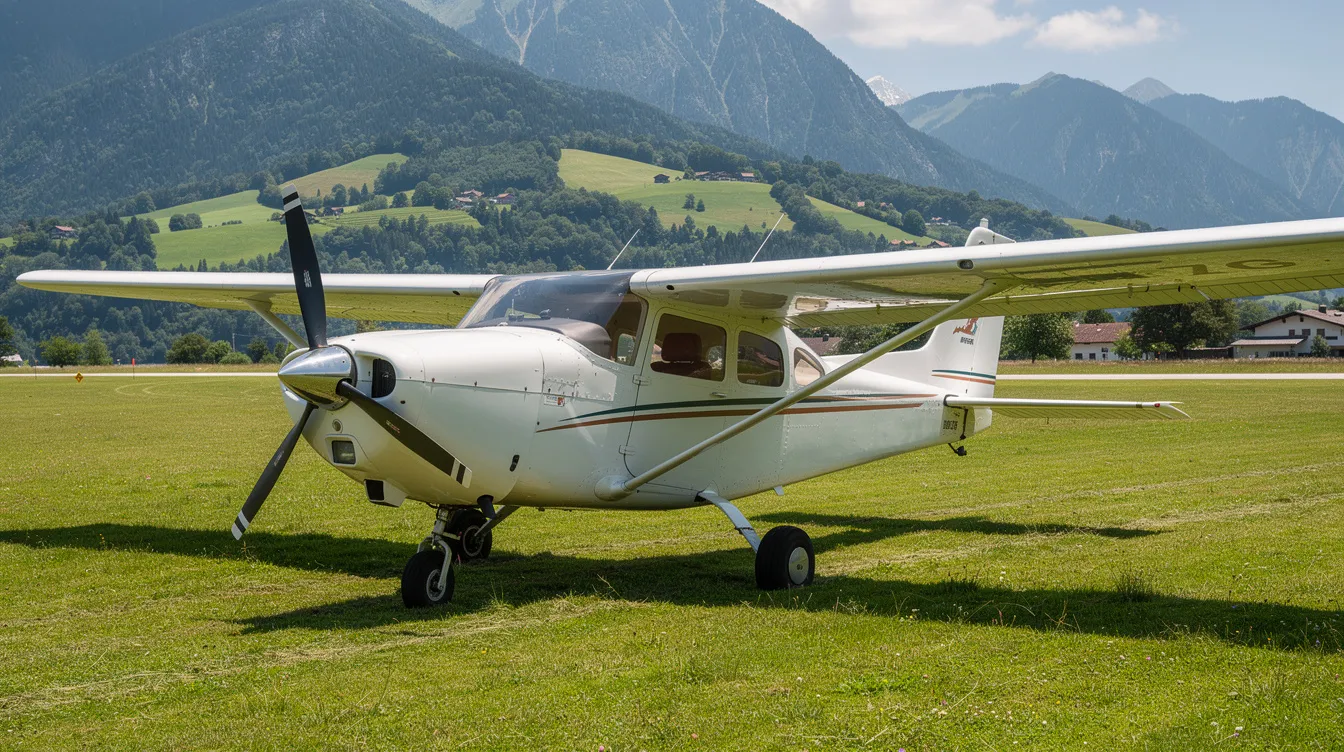
Piper PA-32 Cherokee Six/300: The Cherokee Six is a six-seat airplane with wide double rear doors, generous baggage space, and a cruising speed of around 135–140 knots (some variants reach 160 knots). Many buyers and pilots call it the "minivan of the skies." It handles 400–600 nm family trips with ease and is a great plane for hauling kids, dogs, and luggage. The Piper Cherokee Six can seat up to six passengers comfortably.
Beechcraft A36 Bonanza: A premium-feel high-performance singles platform with club seating, a large side door, and faster cross-country speed around 165–170 knots. The Beechcraft A36 Bonanza has a maximum range of over 800 nautical miles. Later 1980s–2000s models remain popular on the used aircraft market.
Cessna 182 Skylane: High-wing visibility, forgiving handling, and the ability to operate from shorter strips make the Cessna a reliable family airplane. Expect a realistic 130–140 knot cruise for 3–4 passengers. The Cessna 182 Skylane can carry a maximum range of 900–940 nm, making it one of the best small aircraft for regional family travel.
Cirrus SR22/SR22T: The Cirrus SR22 has been the best-selling plane for years, and the SR22T includes a whole-aircraft recovery parachute system- the Cirrus Airframe Parachute System- that gives families a unique blend of speed and safety. Synthetic vision and a modern glass cockpit appeal to tech-minded pilot-owners. Best for missions under 800 nm.
Diamond DA50 RG: A 2024–2026 era composite single piston with a roomy cabin, retractable gear, modern avionics, and exceptional fuel efficiency. Its aircraft design uses less fuel per hour than many competitors, making it a compelling choice for upscale family flying.
These aircraft are usually owned outright, but some families use a piston single as a complement to fractional jet access for longer or weather-critical trips where more power and pressurized comfort are needed.
Single-engine and twin turboprops bridge the gap between pistons and jets, providing pressurized comfort, higher speed, and more seats while remaining relatively fuel efficient. They are a complex aircraft class that rewards experienced pilots or professional crews.
Pilatus PC-12 NG/NGX: A proven single-engine turboprop seating 6–8 in executive layouts, with a huge cargo door, over 1,800 nm range with four passengers, and short-field performance ideal for ski trips, beach vacations, and remote airstrips. Larger jets can accommodate strollers, sports gear, and multiple suitcases-but the PC-12's cargo door rivals many jets for load capacity. Learn more about turboprop charter rates to compare access costs.
Daher TBM 940/960: The TBM 960 achieves cruise speeds up to 330 knots, making it the fastest single-engine turboprop flying. It features a pressurized cabin, club seating for six, and sophisticated safety systems like HomeSafe autoland-appealing to pilot-owners stepping up from SR22-level aircraft. Its top speed and blending performance with fuel efficiency make it a standout model.
Cessna 208 Caravan: Rugged, utility-focused, with a large cabin and suitability for adventure family vacation travel with kids and outdoor gear. Not the fastest, but the ability to operate from unimproved strips is unmatched among other aircraft in its class.
Beechcraft King Air 250/350: Twin-turboprop redundancy, multi-mission capability, and interior space for larger or extended families, though at higher operational costs.
While some owner-pilots fly turboprops themselves (an instrument rating and turbine training are essential), many families prefer to access aircraft like the PC-12 or King Air via charter or fractional programs rather than taking on full ownership complexity. New turboprop aircraft have annual costs of $150,000–$250,000, a factor that pushes many families toward shared access models.
For non-pilot families or those prioritizing flight time savings on 500–1,500 nm trips, professionally flown light and midsize jets often provide the best combination of speed, cabin comfort, and schedule control. Private jets save 4–6 hours per round trip compared to commercial flights, and private jets eliminate security lines and layovers entirely.
Cirrus Vision Jet: A single-engine personal jet with parachute and autoland, seating for up to 5 adults plus 2 small children. Best for 500–800 nm trips at a lower cost than traditional light jets.
HondaJet Elite II: The HondaJet Elite II features over-the-wing-mounted engines for reduced cabin noise-a significant advantage for families with young children. Its maximum range reaches approximately 1,547 nm with four passengers, and max cruise speed hits 422 knots. Baggage capacity of 62 cubic feet handles family luggage easily.
Embraer Phenom 300E: Among the most popular light jets in the United States and globally, with a comfortable stand-up center cabin for 6–8 passengers and excellent runway performance for smaller airports. A leading choice in best private jet comparisons.
Cessna Citation CJ3+ / CJ4 Gen2: Reliable performance, a strong support network, and balanced range of 1,700–2,100 nm make these ideal for family vacations from New York to the Rockies or Florida without fuel stops.
Praetor 500 or Challenger 3500: Upper midsize examples providing more passenger capacity and range for coast-to-coast or Caribbean missions. For reference, aircraft at the top of the spectrum like the Bombardier Global 7500 have a range of 7,700 nautical miles, while the Gulfstream G700 features five distinct living areas and the Embraer Lineage 1000E has five expansive cabin zones-though these serve a very different mission and budget class.
Private jets range from single-engine turboprops to large-cabin intercontinental aircraft, and these light-to-midsize models are generally accessed via fractional jet ownership, jet card programs, or on-demand charter rather than individual whole-airplane purchases.
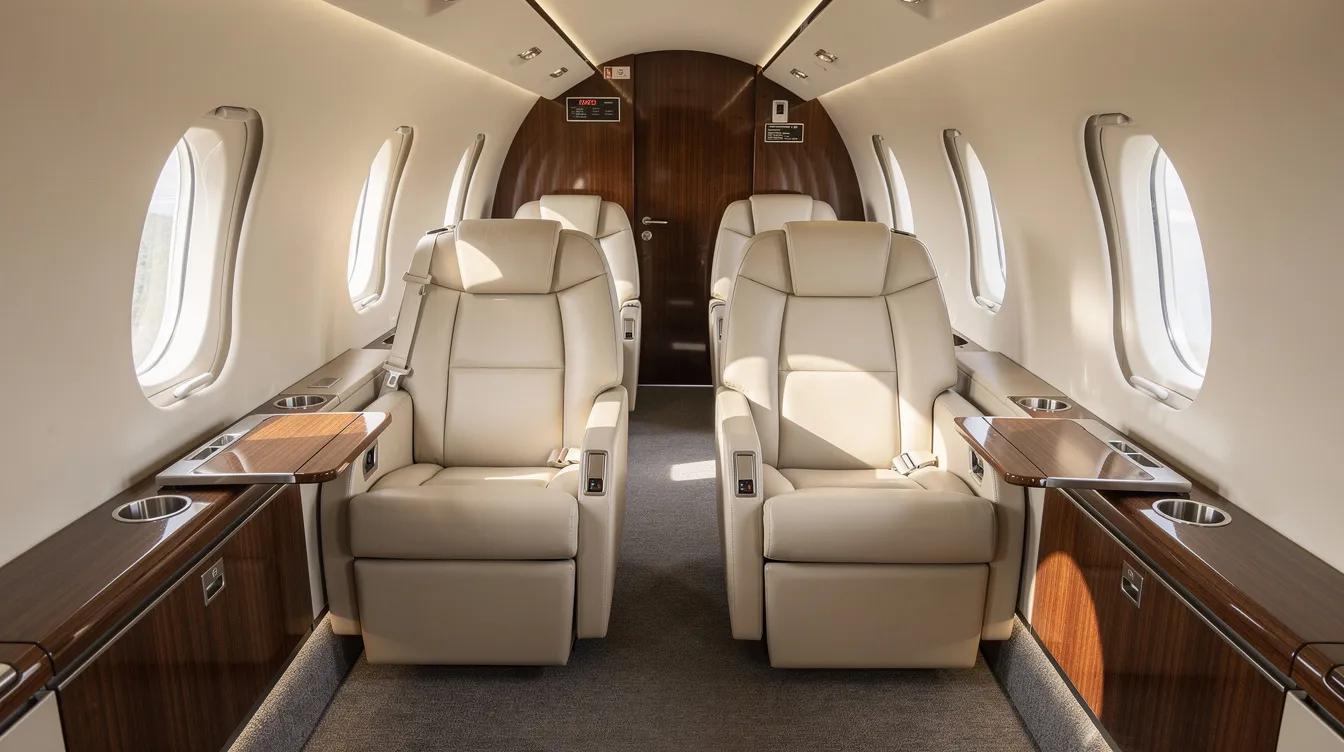
For families, the safest private plane is less about brand and more about technology, maintenance standards, and how each flight plan is executed. Safety is determined more by the operator and maintenance than by aircraft model alone.
Avionics: Glass cockpits (Garmin G1000/G3000, Collins Pro Line), synthetic vision, terrain awareness, and traffic advisory systems reduce pilot workload and increase situational awareness. These modern avionics suites have become standard across most current-production aircraft.
Safety systems: Whole-airframe parachutes (Cirrus), autoland technology (Cirrus Vision Jet, TBM 960, select Gulfstream and Embraer jets), and advanced autopilots provide layered protection. The Cirrus SR22T includes a whole-aircraft recovery parachute system that has saved hundreds of lives.
Flight plan discipline: Professional operators and experienced owner-pilots use detailed flight planning-weather analysis, alternate airports, full fuel reserves, performance calculations-to enhance safety on every family trip. A thorough flight plan accounts for terrain, weather deviations, and passenger needs.
Certification and audits: ARGUS, Wyvern, and IS-BAO ratings matter for charter and fractional fleets. BlackJet Fractional Jet Ownership partners only with operators that meet rigorous safety benchmarks.
Crew experience: Families should favor two-pilot operations on larger jets and well-trained single-pilot operations on smaller aircraft. Crew currency and recurrent training are non-negotiable.
Modern smaller aircraft, when maintained and flown correctly, can approach airline-level safety for typical family missions. The combination of modern technology, disciplined operations, and proper training creates a safety environment that rivals commercial flights.
The purchase price is only one part of the equation. The total cost of flying a family airplane or private jet includes fixed expenses, variable costs, and-for access programs-membership or management fees.
Piston singles (Cessna 182, Cherokee Six, SR22): Late-model used aircraft range from roughly $200,000 to $500,000; new SR22T models exceed $900,000. Used high-performance piston aircraft cost approximately $30,000–$80,000 annually to operate, covering fuel costs, hangar space, regular maintenance, and insurance.
Turboprops (PC-12, TBM): Acquisition prices sit in the several-million-dollar range. New turboprop aircraft have annual operational costs easily exceeding $150,000–$250,000 for actively flown aircraft, driven by fuel, crew, and maintenance.
Light jets (HondaJet, Phenom 300E, CJ3+): Purchase prices span roughly $3–10 million. Direct hourly costs often run $2,200–$3,500 plus fixed overhead. New light jet aircraft incur annual costs over $500,000. For a full breakdown, see this guide on types of private jets and prices.
Fractional jet ownership: Share purchase (e.g., 1/16 or a 1/8 fractional jet ownership stake in an aircraft) requires $300,000–$1.5 million upfront depending on aircraft class, plus monthly management fees of $8,000–$35,000 and hourly occupied rates of $4,500–$10,500. This spreads capital and fuel costs across multiple owners. Learn how to calculate total cost.
Jet membership / Reserve Fleet programs: BlackJet Fractional Jet Ownership's pay-as-you-fly Reserve Fleet access requires no capital outlay for aircraft equity, making it ideal for families that want predictable pricing without asset risk. Jet Cards are more economical than ownership below 100 flight hours annually.
Families flying under about 100 hours per year seldom benefit from full aircraft ownership. A mix of charter, jet cards, or fractional shares typically delivers a lower total cost and higher dispatch reliability. Ownership makes sense for families flying over 200 hours annually, where fixed costs can be amortized effectively.
Fractional jet ownership means purchasing a share of a professionally managed jet in exchange for a contracted number of flight hours per year. It eliminates the burden of owning your own plane outright while preserving many ownership benefits.
From a family perspective, the comparison breaks down as follows:
Capital commitment: A fractional share requires a lower upfront investment than buying an entire jet, with more diversified risk across the fleet, which is why many view fractional jet ownership as an investment in both time savings and flexibility.
Predictable access: Guaranteed aircraft availability for peak holiday travel and busy weekends, with options to upsize or downsize per trip based on passenger capacity needs.
Professional management: Maintenance, crew, scheduling, and regulatory compliance are handled entirely by the provider-no need to coordinate regular maintenance or crew schedules yourself, particularly in floating fleet fractional ownership models where aircraft are dynamically positioned to meet demand.
Tax benefits: Potential depreciation and tax treatment advantages for U.S. business owners using aircraft for eligible business travel, along with nuanced tax implications for fractional jet owners. Return on investment for fractional ownership includes custom aircraft sourcing and tax benefits.
Flexibility for mixed missions: The ability to fly different private jets (light vs. midsize) depending on whether the trip is a short family hop or a longer cross-country business trip.
BlackJet Fractional Jet Ownership offers two distinct pathways:
Equity Fleet: Clients own a share in a specific jet model (e.g., Phenom 300E or CJ3+), gaining equity, priority access, and potential tax advantages. This model suits families who expect to fly consistently and want to understand the economics of owning vs. leasing and how fractional jet ownership compares with membership programs.
Reserve Fleet: A membership-style model with no ownership stake, offering guaranteed access and fixed hourly pricing. High-frequency travelers favor fractional ownership for greater predictability than chartering, and the Reserve Fleet extends that predictability without asset exposure.
Families already owning a piston or turboprop-like a Cherokee Six or TBM-often use fractional jets as a complementary tool for longer, weather-sensitive, or schedule-critical routes where they need more speed and range.
Real-world scenarios make it easier to understand which private planes work best for specific family travel patterns. A commercial flight from New York to Chicago takes 5–7 hours door-to-door; private flights can complete a 500–800 nm trip in just 2–3 hours.
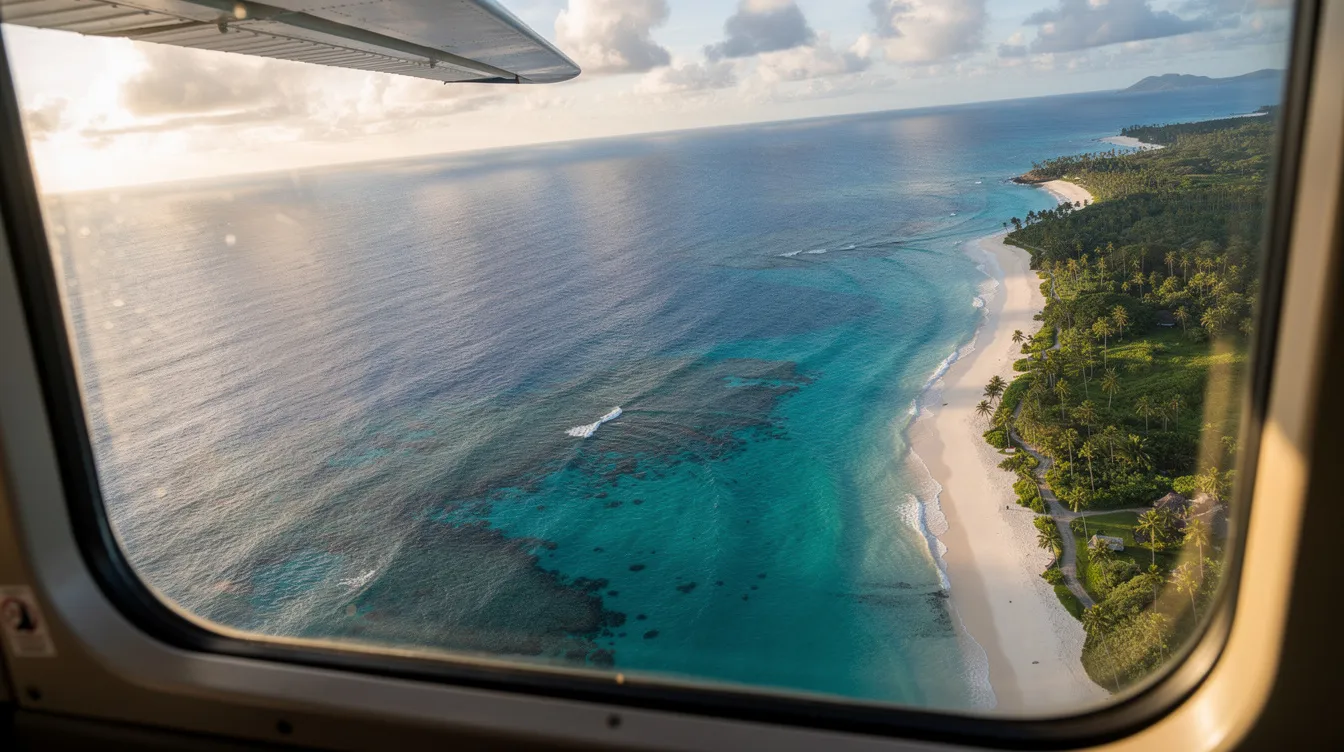
Regional weekend trips (250–400 nm): Two adults, two kids, and luggage for two nights. The Cessna 182 Skylane, Piper Cherokee Six, or Cirrus SR22 are ideal fits. Operating costs stay low; these aircraft operate from smaller local airports, and flight time rarely exceeds 90 minutes. You can fly to a lake house or beach destination without the hassle of commercial flights.
Cross-country U.S. vacations (800–1,800 nm): Four to six passengers heading from New York to Colorado, Florida, or California. The Pilatus PC-12, TBM 960, Phenom 300E, and Citation CJ3+/CJ4 shine here. Pressurized comfort, a lavatory, and the ability to complete nonstop legs of 1,000+ nm make the family vacation seamless. Private flights at this range deliver the most dramatic time savings.
Island or ski holidays: Travel from the Northeast to the Caribbean or Rocky Mountain resort towns demands strong runway performance and weather capability. The PC-12, King Air, and midsize jets under fractional or charter access handle short runways and high-altitude airports that many other aircraft cannot safely operate from.
Multi-city family-and-business tour: A parent combining investor meetings with family stops across several cities needs flexible routing. Turboprops and light jets accessed through BlackJet's Equity or Reserve programs allow itinerary changes without the constraints of owning a single airplane. Private aviation allows access to over 5,000 smaller airports, keeping each destination within reach.
BlackJet advisors can map a family's last 12–24 months of travel into an optimized aircraft and access plan tailored to actual trip patterns.
Families must decide whether they want the lifestyle of owning and possibly piloting an airplane, or the simplicity of professional private jet services. Both paths serve family travel well, but the trade-offs differ significantly.
Ownership pros:
Full control over schedule-the plane is always available and configured to your preferences
Pride of ownership and the potential training and bonding experience for pilot-parents and kids looking to build hours
The ability to operate spontaneously without booking through a provider
Ownership cons:
Significant capital tied up in a depreciating asset, with exposure to market value swings on the used aircraft market
Time and attention required for regular maintenance, hangar space logistics, regulatory compliance, and maintaining pilot currency with an instrument rating
Fuel costs, insurance, and overhaul reserves add up whether you fly or not
Private aviation service pros (fractional, jet cards, charter):
Access to a fleet of private jets with professional crews and no maintenance burden
The ability to right-size aircraft per trip-light jet for a couple's weekend, midsize for the entire family
Higher dispatch reliability and fractional ownership offer predictable access to private jets without full ownership hassles
Service cons:
No direct equity in the aircraft for membership-only models
Ongoing program fees regardless of usage patterns
Less "hands-on" aviation lifestyle for those who enjoy piloting
Many families adopt a hybrid approach: owning a single engine or turboprop as a "family airplane" while relying on BlackJet Fractional Jet Ownership for longer, international, or schedule-critical trips requiring a more capable aircraft.
These are the questions BlackJet advisors hear most often from high-net-worth families and business owners exploring private aviation for the first time.
Modern private aviation, when operated by reputable providers with ARGUS Platinum or Wyvern Wingman certification, approaches airline-level safety. Safety is determined more by the operator and maintenance program than by aircraft model. Families should prioritize crew quality, maintenance transparency, and technology like synthetic vision over brand prestige alone.
Under 50–75 hours annually, charter or a jet membership program typically delivers the best value. Between 75 and 150 hours, fractional ownership hits the sweet spot of cost and convenience. Above 200 hours, full ownership or co-ownership of your own plane may make financial sense. Jet Cards are more economical than ownership below 100 flight hours.
On the used aircraft market, older Cessna 182s, Piper Cherokee Six models, or Grumman Tigers can be acquired for $80,000–$200,000 with annual operating budgets of $30,000–$80,000. These are practical aircraft for regional family travel and for new pilots looking to gain experience.
Not practically. The HondaJet Elite II's range of approximately 1,547 nm requires at least one fuel stop for transatlantic crossings, and its passenger capacity limits payload for ultra-long missions. Families needing transatlantic capability should look at super-midsize or large-cabin jets-the Bombardier Global 7500, with a range of 7,700 nautical miles, represents the top of that class.
Begin with an initial consultation with a fractional or membership provider to understand your budget and typical missions. Trial charters let you experience different aircraft classes before committing capital. For aspiring pilot-owners, discovery flights at local flight schools are the best first step.
BlackJet Fractional Jet Ownership offers personalized cost and aircraft comparisons for families at every stage of the decision process.
There is no single "best private plane for family" travel. The right answer depends on mission profile, budget, safety priorities, and whether the reader wants to own, co-own, or simply access private jets without the complexity of full ownership.
The main paths are clear: owner-flown pistons like the Cherokee Six or Cessna 182 for regional family flying, step-up turboprops like the PC-12 and TBM for longer range and pressurized comfort, and professionally flown jets accessed via fractional ownership or membership for maximum convenience.
Evaluate total cost, fuel efficiency, cabin comfort, and modern technology rather than chasing maximum speed or prestige. The best family airplane is the one that matches how you actually travel.
Gather 12–24 months of your family's travel data—routes, dates, passenger counts—as input for a personalized flight plan and aircraft recommendation. This single step prevents the most common mistake in private aviation: buying more (or less) aircraft than you need.
Ready to find the right fit for your family? Visit FractionalJetOwnership.com to explore BlackJet Fractional Jet Ownership's Equity Fleet and Reserve Fleet options, or request a one-on-one consultation with an aviation advisor.
BlackJet Fractional Jet Ownership serves as a trusted, data-driven advisor helping families design smarter, safer, and more efficient private aviation strategies—whether the goal is a first family airplane or a fleet-backed jet program that scales with your life.
