August 21, 2026
Private jet rental costs range from $2,300 to $23,000 per hour in 2026, depending on aircraft type, mission length, and booking model. That range is wide because private jets operate under a multi-layered pricing structure that varies by booking type, aircraft category, seasonal demand, and dozens of line-item fees that rarely appear in headline quotes. This guide breaks down every component of the cost to fly private, compares access models from ad hoc charter to fractional ownership, and identifies where informed travelers can reduce spend without cutting corners on safety or experience.
Private jet rental prices in 2026 start around $1,500 per hour for turboprops and climb past $20,000 per hour for ultra-long-range jets and VIP airliners. The total cost of any given flight depends on aircraft size, route distance, taxes, repositioning, and optional services.
Here are the 2026 ballpark hourly ranges by aircraft category:
Turboprops and very light jets: $1,500 to $3,000 per hour for regional hops under two hours, carrying 4 to 9 passengers on models like the King Air 350 or HondaJet.
Light jets: $2,500 to $5,500 per hour for short flights up to roughly three hours, seating 4 to 7 passengers on aircraft such as the Phenom 300 or Citation CJ3.
Midsize jets: $4,000 to $11,000 per hour for longer trips, with more cabin room and coast-to-coast capability.
Super midsize jets: $8,000 to $12,500 per hour, covering 3,000 to 4,000+ nautical miles nonstop with stand-up cabins.
Heavy jets (large cabin): $8,500 to $22,000 per hour for international travel and transcontinental missions.
Ultra long range jets: Often exceeding $20,000 per hour on intercontinental routes like New York to London, with aircraft such as the Gulfstream G650 or Bombardier Global 7500.
VIP airliners: $18,000 to $23,000 per hour for large-group or head-of-state configurations on aircraft like the ACJ320 or Boeing BBJ.
A short 1.5-hour hop on a light jet might total $8,000 to $15,000 once fees and taxes are included. A transatlantic crossing on a large-cabin aircraft routinely exceeds $80,000 to $120,000 one-way.
On-demand charter flights offer flexibility with no long-term commitment, but pricing varies from quote to quote. Fractional jet ownership and membership programs, like those offered by BlackJet Fractional Jet Ownership, provide more predictable hourly rates, guaranteed aircraft availability, and potential tax benefits for regular flyers. The right model depends on how often you fly and whether comparing quotes or overall flight prices matters more than pricing certainty.
A round-trip business-class ticket from New York to Chicago costs roughly $1,200 to $1,800 per person in 2026. Chartering a light jet for the same route costs $8,000 to $12,000 total for the entire aircraft, not per seat.
Private aviation pricing is based on the entire aircraft rather than individual seats. That distinction changes the math. Four executives sharing that $12,000 charter pay $3,000 each. Factor in same-day round-trip capability (no overnight hotel), direct access to smaller airports closer to meetings, and zero time spent in security lines, and the effective cost per productive hour narrows. If each executive's time is valued at $1,000 per hour, saving 3 to 4 hours of door-to-door travel time per person on a commercial alternative recovers $12,000 to $16,000 in collective productivity.
Sharing costs among passengers reduces per-person rates to levels closer to last-minute business-class fares, especially on shorter domestic flights. Private jet travel is rarely cheaper than commercial on a pure ticket-to-ticket comparison. But for teams traveling together or executives running multi-city days, the schedule control, airport flexibility, and privacy can justify the premium.
Many BlackJet Fractional Jet Ownership clients move to fractional aircraft ownership not because they want a luxury perk, but because they need time efficiency and scheduling reliability that ad hoc booking cannot guarantee.
The total private jet charter cost is more than the hourly rate on a quote sheet. Final quotes for private jet charters often include additional logistical fees that can add 15% to 30% to the base number. Here is what makes up that total:
Core inclusions in the base hourly rate:
Aircraft usage (block time for engines, airframe, and systems)
Crew members' salaries, training, and standard flight-duty costs (pilots, sometimes a cabin attendant)
Standard fuel consumption for the mission
Maintenance reserves for scheduled inspections and parts
Hull and liability insurance covering aircraft and passengers
Variable add-ons billed separately:
Airport landing fees, which typically range from $100 to $1,500 per flight, depending on the airport authority and the weight of the aircraft
Ramp fees and ground handling charges at the FBO
Crew overnight expenses for trips spanning multiple days (crew overnight fees range from $200 to $600 per crew member per night)
Repositioning (ferry) flights if the aircraft must fly empty to reach your departure airport
Taxes and government charges:
A 7.5% federal excise tax on many U.S. domestic flights, applied to the transportation portion of the fare
Domestic segment fees of $5.30 per passenger per leg
International head taxes, customs, and immigration fees for overseas routes
Optional services:
Upgraded in-flight catering and bespoke services, which may lead to additional charges
Premium Wi-Fi on aircraft where bandwidth is metered
Ground transportation and concierge coordination
Pet transport, deep cleaning, and special cabin requests
Clients pay billable flight time, not just the minutes they spend airborne in the cabin. Understanding this distinction prevents surprise invoices.
Billable time includes taxi-out from the ramp to the runway and taxi-in after landing. Operators typically round to the nearest tenth of an hour (six-minute increments) or to the nearest 15 minutes. At a busy airport like Teterboro, taxi time alone can add 15 to 25 minutes to a flight that is only 50 minutes in the air.
Positioning legs add billable hours when the aircraft is not already located at your departure airport. If a light jet must fly 45 minutes empty from its base to your departure point, that ferry time appears on the invoice. Aircraft positioning fees apply whenever the jet must be moved to serve a flight.
Minimum charges often apply for short flights to cover operational costs. Light jets commonly carry a two-billable-hour daily minimum. Midsize and super midsize jets may require 2.5 to 3 hours. Short-leg fees apply to flights under 60 minutes, where actual air time falls well below the minimum.
A numerical example: a 50-minute flight with 20 minutes of combined taxi time produces about 1.2 billable flight hours. But if the aircraft's daily minimum is 2.0 hours, the client is billed for 2.0 hours. At a $5,000 per hour rate, the invoice reads $10,000, not $4,167. This is how a "per hour" rate translates into actual trip cost.
Private jet hourly rates vary by aircraft category and distance. The table below reflects 2026 charter market ranges. These are retail rates clients see on quotes, not operator cost-of-ownership figures.
Turboprops: $2,300 to $3,500 per hour. Aircraft like the King Air 350 and Pilatus PC-12 carry 4 to 9 passengers on regional missions under two hours. Ideal for short-field airports and trips under 500 nautical miles. (See turboprop charter rates)
Very light jets: $2,900 to $4,600 per hour. Models include the Phenom 100, HondaJet, and Vision Jet. Best for 2 to 4 passengers on flights under 2.5 hours.
Light jets: $3,500 to $7,000 per hour. The Phenom 300, Citation CJ3, and CJ4 seat 4 to 7 passengers and handle missions up to roughly three hours. (Light jets overview)
Midsize jets: $4,700 to $7,500 per hour for standard domestic sectors. These aircraft offer stand-up cabins, enclosed lavatories, and coast-to-coast range with one fuel stop.
Super midsize jets: $8,000 to $12,500 per hour. Challengers 350 and Citation Longitude types cover 3,000 to 4,000+ nautical miles nonstop. (Why super midsize jets dominate fractional fleets)
Large jets: $8,500 to $17,000 per hour. Heavy jets handle transcontinental and some transatlantic missions with full amenities. (Heavy jets overview)
Ultra-long-range jets: $15,000 to $25,000 per hour, with rates on premium aircraft like the Gulfstream G700 or Global 7500 capable of exceeding $20,000 per hour on intercontinental routes.
VIP airliners: $18,000 to $23,000 per hour for configurations like the ACJ320 or BBJ, used for large delegations or head-of-state missions.
Private jet rental costs range from $2,300 to $17,000 per hour across the most commonly chartered categories. VIP airliners push that ceiling past $23,000.
A Friday-to-Sunday ski weekend: depart Van Nuys (KVNY) Friday afternoon, land Aspen (KASE) for dinner, return Sunday evening. The aircraft is a light jet.
Block time per leg: approximately 1.8 hours, including taxi
Billable hours: 2 legs at ~2.0 hours each (rounded up to daily minimums), plus potential repositioning of 1.0 to 1.5 hours if the aircraft is not based in Los Angeles. Total: roughly 5.0 to 5.5 billable hours.
Hourly rate: $5,000 per hour (mid-range for a light jet)
Base flight cost: 5.5 hours x $5,000 = $27,500
Landing and handling fees at KVNY and KASE: $1,000 to $2,000 combined
Crew overnights for 2 nights: $600 to $1,200 per night for two pilots = $1,200 to $2,400
Federal excise tax (7.5%): approximately $2,000
Fuel surcharges (if applicable): $500 to $1,500
Estimated total: $30,000 to $35,000 all-in.
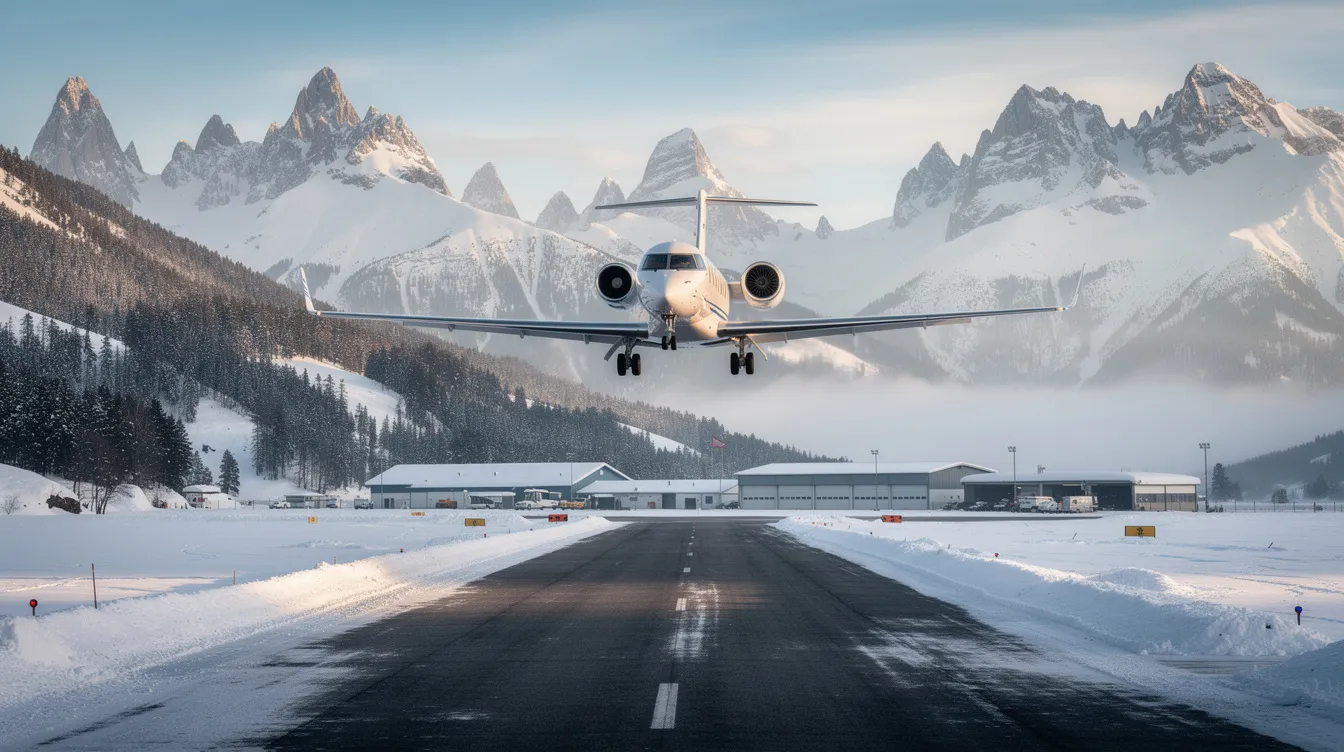
Under a BlackJet Reserve Fleet program, the same itinerary benefits from pay-as-you-go occupied hourly rates, typically lower than ad hoc charter quotes, with fewer surprise add-ons. Repositioning within the fleet network is often absorbed or reduced, pulling the total closer to $22,000 to $28,000 depending on timing and availability.
Transatlantic flying privately showcases the cost dynamics of ultra long range aircraft at their most transparent.
Route: Teterboro (KTEB) to London Farnborough (EGLF), one-way, on a Gulfstream G650 or Bombardier Global 7500. Flight time runs 6.0 to 7.0 hours eastbound (westbound adds 30 to 60 minutes due to headwinds).
At an average hourly rate of $15,000 for an ultra long range jet, a 6.5-hour crossing produces a base cost of $97,500.
Additional fees on this route include:
UK and EU handling and landing charges: $2,000 to $5,000
Overflight fees (transatlantic airspace): $500 to $2,000
International flights incur a $23.40 head tax per passenger departing from or arriving in the U.S.
Crew overnight costs if the jet remains in Europe: $1,200 to $3,600 for a three-pilot crew over several nights
Fuel surcharges on long-haul flights where Jet-A pricing varies by continent
Estimated one-way total: $105,000 to $130,000. Multi-city European itineraries or repositioning the aircraft back to the United States would raise that figure. For a deeper breakdown of transatlantic costs, see the cost to fly private jet to Europe.
Base hourly rates typically cover the aircraft, crew, fuel (sometimes with a surcharge mechanism), and insurance. Everything else depends on the contract and the operator.
Usually included:
Aircraft usage for the contracted flight hours
Pilots and cabin crew during the mission
Standard fuel for the route (subject to surcharge adjustments if fuel prices spike)
Basic onboard amenities: water, light snacks, standard cabin supplies
Hull and liability insurance
Commonly excluded and billed separately:
De-icing, which can vary from $1,500 to $15,000 depending on aircraft size and conditions
Hangar fees during winter layovers or overnight parking in cold-weather airports
Premium or custom catering beyond basic provisions
Premium Wi-Fi data usage on aircraft with metered satellite connections
Pet transport fees or post-flight deep cleaning
Many travelers may choose to add optional services during private flights, and those additions appear as line items
Domestic U.S. private flights typically include a 7.5% federal excise tax along with per-segment fees added to the base rate. BlackJet Fractional Jet Ownership structures both its Equity and Reserve Fleets around transparent, upfront pricing to minimize post-flight surprises. Occupied hourly rates and management fees are defined in the contract before a share is purchased or a membership begins, and a clear understanding of fractional jet ownership terms and definitions helps prospective owners decode those agreements.
Government taxes and fees add a measurable layer to every private flight, domestic or international.
A 7.5% federal excise tax applies to U.S. domestic flights on the transportation portion of most charter and certain fractional program invoices. On a $30,000 domestic charter, that is $2,250 in FET alone. The IRS outlines these rates in the instructions for Form 720.
Domestic segment fees add $5.30 per passenger per leg. A four-passenger, two-leg round trip adds $42.40. On multi-leg itineraries with several stops, this accumulates.
International trips carry additional charges. Flights departing or arriving international destinations incur customs, immigration, and country-specific handling fees. International flights incur a $23.40 head tax per passenger on U.S. departures or arrivals. Routes to Alaska and Hawaii may carry separate international departure or arrival taxes depending on routing.
For business users, costs tied to fractional aircraft ownership may qualify for different tax treatment. Fractional shares can be depreciated under MACRS over five years, and in 2026, bonus depreciation remains at 20% for qualified business-use assets. Maintenance, management fees, and occupied hour costs may also be deductible where business use exceeds 50%. Consult a tax advisor for specifics; resources on the tax implications for fractional jet owners can frame the right questions as the window for bonus depreciation is narrowing.
Not every private charter provider discloses every fee before the flight. These are the costs that most often catch first-time flyers off guard.
Aircraft repositioning: Positioning fees apply when aircraft must be moved for a flight. If a jet flies 90 minutes empty to reach your departure city, that leg appears on the invoice at the full hourly rate.
Short leg fees: Flights under 60 minutes often trigger minimum billing, so a 40-minute hop is charged at the 2-hour daily minimum.
Fuel surcharges: Fuel surcharges can increase flight costs depending on Jet-A fuel prices. During volatile oil markets, surcharges of 10% to 20% above base rate are common.
Peak day surcharges: Private jet prices increase during peak travel seasons and holidays. Events like the Super Bowl, Art Basel, or major ski weekends can push rates 20% to 40% above standard quotes.
Airport handling fees: Airport handling fees vary based on location and demand. Two FBOs at the same airport may charge different ramp fees, parking rates, and ground service prices.
Seasonal and weather costs add another layer:
De-icing costs range from $1,500 to $15,000 depending on aircraft size and icing conditions.
Overnight hangar fees to protect the aircraft from frost or snow at mountain airports.
Weather-driven diversions that create unplanned fuel burns and additional landing fees.
Ancillary surprises include last-minute ground transportation, catering upgrades requested by passengers en route, Wi-Fi data overage charges, and international overflight permits for routes through restricted airspace.
BlackJet Fractional Jet Ownership builds its programs around predictable pricing models and proactive disclosure of trip-specific extras before departure, not after.
The same aircraft category can vary by thousands of dollars in total trip cost depending on mission details. Private jet hourly rates depend on aircraft size and capability, but several other variables move the final number.
Routing and airport selection: Using regional airports or smaller airports closer to your destination can reduce landing fees and taxi times. But remote departures may increase positioning distance. Flight distance and the availability of direct flight routes affect fuel burn and total billable time.
Aircraft age and condition: A newer aircraft with advanced avionics and a recently refurbished cabin carries a premium. Aircraft age can increase rental rates by $100 to $1,000 per hour compared to an older airframe of the same type.
Operator standards: Safety certifications, crew training programs, and maintenance quality all influence what operators charge. A personal aircraft managed by a Part 91 owner has a different cost structure than a Part 135 charter fleet meeting Federal Aviation Administration commercial standards.
Time of year and day of week: Midweek departures in off-peak months produce lower quotes. Seasonal demand during holidays, school breaks, and event weekends pushes availability down and rates up.
Fuel prices: Longer flights consume more fuel, increasing costs. Jet-A pricing varies by region and fluctuates with oil markets, so two identical missions a month apart may carry different fuel components.
Passenger count and configuration: While private aviation charges by the aircraft, passenger count can affect catering, ground handling, and weight-related fees.
This section consolidates the per-hour numbers for quick reference.
Turboprops: $2,300 to $3,500 per hour
Very light jets: $2,900 to $4,600 per hour
Light jets: $3,500 to $7,000 per hour
Midsize jets: $4,700 to $7,500 per hour (standard domestic); midsize jets range from $4,000 to $11,000 per hour for longer trips
Super midsize jets: $8,000 to $12,500 per hour
Large jets: $8,500 to $17,000 per hour
Ultra long range jets: $15,000 to $25,000 per hour
VIP airliners: VIP airliners charge $18,000 to $23,000 per hour
The "per hour" figure assumes a certain level of annual utilization by the operator and bundles both fixed costs (crew salaries, insurance, hangar) and variable costs (fuel, maintenance reserves) into a single retail rate.
There is a gap between an operator's actual cost per billable flight hour and the retail charter rate clients see on quotes. Operators build margin, broker fees, and risk premiums into the retail number. Fractional jet ownership clients at BlackJet often see more predictable per-hour structures aligned with their contracted annual flight hours, because the ownership model removes broker markups and market-rate volatility. (Compare fractional jet ownership programs)
Selecting the right aircraft category is one of the largest levers in controlling private jet costs. Oversizing the aircraft wastes hourly rate premium on cabin space and range that goes unused.
Light jets work best for 4 to 7 passengers on flights of 1 to 3 hours. Models like the Phenom 300 and Citation CJ3 cover missions up to about 1,500 nautical miles. Light jets usually cost $2,500 to $5,500 per hour for short flights, making them the most efficient aircraft for city pairs like New York to Miami, Dallas to Denver, or Los Angeles to San Francisco.
Midsize and super midsize jets seat 6 to 9 passengers o3- 3 to 5-hour flights. A midsize jet handles Dallas to New York or Los Angeles to Chicago without a fuel stop. Super midsize jets push nonstop range to 4,000+ nautical miles, opening sectors like Miami to London or New York to Bogota.
Large cabin and ultra long range jets carry 8 to 14 passengers on 6 to 14-hour flights. These are the aircraft for New York to Dubai corporate roadshows, Los Angeles to Tokyo board meetings, or multi-stop transatlantic itineraries. Heavy jets cost between $8,500 to $22,000 per hour for international travel, and ultra-long-range variants sit at the top of that range.
Right-sizing the aircraft means matching passenger count, baggage needs, and flight distance to the smallest capable category. BlackJet advisors analyze client travel patterns to recommend the optimal aircraft category and avoid paying for unused capacity. (Explore fractional aircraft types)
One-way private jet charters are not half the price of a round trip. The economics of repositioning make one-way pricing one of the most misunderstood areas in private jet pricing.
When a client books a one-way charter, the aircraft must either return empty to its base or reposition to its next customer. That ferry leg is a cost the operator must recover. Positioning fees apply whenever the aircraft must be moved, and for one-way bookings, those fees can push the price to 70% or 80% of a full round trip.
Round-trip pricing is more efficient when the aircraft can remain overnight at the destination with modest crew and parking costs, then fly the return leg the next day. The operator recovers revenue on both legs, and the client avoids paying for an empty repositioning flight.
Opportunities exist to reduce one-way costs. Empty leg flights can save up to 75% off standard rates when a jet is already repositioning and the timing aligns with your schedule. Booking floating-fleet aircraft, those already positioned near your departure or destination within a large fleet network, can save up to 30% on one-way rentals; understanding floating fleet options in fractional ownership clarifies how these models capture those efficiencies.
Fractional jet ownership programs handle repositioning within their fleet network. Owners and members benefit from more predictable round-trip and multi-city pricing because the fleet's scheduling system minimizes empty legs internally, spreading that cost across the ownership group rather than billing it entirely to one client.
Three access models serve the private aviation market, each suited to a different usage level and risk tolerance.
On-demand private jet charter offers trip-by-trip flexibility with no long-term commitment. Clients pay the market rate for each flight, which fluctuates with aircraft availability, fuel prices, and seasonal demand. Best for travelers needing fewer than 25 flight hours per year or flying to unpredictable destinations. The tradeoff is price variability and no guarantee of aircraft availability during peak periods. (Understanding private airplane charter prices)
Jet card programs provide pre-paid blocks of hours (typically 25 to 50 hours) at fixed or tiered hourly rates. Jet membership fees can provide fixed hourly rates and guaranteed aircraft availability within the program's fleet. Jet cards remove some pricing uncertainty but often carry peak-day blackout restrictions, aircraft category limits, and expiration windows that reduce flexibility.
Fractional jet ownership means purchasing a share (1/16 or 1/8 are common) of a specific aircraft. The owner receives a contractual number of annual hours, priority scheduling, and an occupied hourly rate defined in the ownership agreement. BlackJet Fractional Jet Ownership offers both Equity Fleet (ownership shares with tax benefits) and Reserve Fleet (membership-based access without equity), and many clients use fractional jet ownership financing options to structure the upfront share purchase. (Understanding the cost of fractional jet ownership)
Approximate annual usage thresholds where each model tends to be most cost-effective:
Under 25 hours/year: Ad-hoc charter or occasional empty leg bookings
25 to 50 hours/year: Jet cards or BlackJet Reserve Fleet membership
50 to 150 hours/year: Fractional ownership (Equity Fleet)
150+ hours/year: Full ownership or large fractional share
Beyond a certain annual usage level, fractional ownership reduces the effective private jet cost per hour compared to repeat ad-hoc charter bookings.
The typical BlackJet Equity Fleet client is a corporation or individual flying 50 to 150 hours per year on recurring routes. They value scheduling priority, the ability to call on backup jets when the primary tail is in maintenance, and a fixed occupied hourly rate that does not swing with market conditions.
Cost advantages of fractional ownership over charter include:
Lower per-hour occupied costs than comparable on-demand private charter quotes for the same aircraft type
No need to manage a full aircraft: crew hiring, training, hangar leases, insurance procurement, and maintenance scheduling are handled by the management company
Access to backup jets within the fleet when the primary aircraft is unavailable
Monthly management fees that are fixed and predictable, not variable by trip
U.S. tax benefits add to the financial case. Aircraft owners holding fractional shares can depreciate their ownership stake under MACRS over five years if business use exceeds 50%. In 2026, bonus depreciation at 20% remains available. Maintenance, management, and operating costs attributable to business flights may also be deductible, but owners should also evaluate liability and insurance coverage in fractional ownership to ensure their assets and personal exposure are properly protected.
For travelers not yet ready for equity commitment, BlackJet's Reserve Fleet pay-as-you-go model offers predictable access and fixed hourly rates without capital outlay. (Fractional ownership cost breakdown)
Full private jet ownership involves purchase price, annual fixed costs, and variable operating expenses. Here is how the three models compare at a high level.
Factor | Full Ownership | Fractional Ownership | Ad-Hoc Charter |
|---|---|---|---|
Capital outlay | $4M to $75M+ (new light to ultra long range) | Fraction of purchase price (1/16 or 1/8 share) | None |
Annual fixed costs | Hangar, crew salaries, insurance, training, maintenance reserves: $500K to $2M+/year | Management fee + proportional fixed costs: varies by share size | None |
Per-hour operating cost | $2,500 to $15,000+ (fuel, maintenance, fees) | Occupied hourly rate per contract | Retail market rate ($2,300 to $23,000+/hr) |
Scheduling control | Total | High priority, backup fleet access | Subject to availability |
Price predictability | Moderate (fuel and maintenance vary) | High (contractual rates) | Low (market-driven) |
Tax depreciation | Yes (if >50% business use) | Yes (proportional share, if >50% business use) | No |
Operational burden | Full (owner manages or hires management) | Minimal (management company handles operations) | None |
For a deeper look at whata full purchase entails, see how much it costs to purchase a private jet.
Fractional ownership occupies the middle ground: meaningful capital commitment with proportional benefits, minimal operational burden, and cost predictability that neither full ownership nor charter can match fo50-the 50 to 150-hour-per-year traveler, which is why many flyers evaluate fractional jet ownership as an investment rather than a pure expense.
Private jet hourly rates vary by geography. The same Challenger or Gulfstream can cost 15% to 25% more per hour in South America, the Middle East, or Australia than in the continental United States.
Regional cost drivers include:
Fuel logistics: Jet-A fuel prices in remote or island locations can run 40% to 60% above U.S. Gulf Coast pricing due to transportation and refining costs.
Maintenance facility density: In the U.S. and Western Europe, competition among maintenance providers keeps costs lower. In regions with fewer certified shops, aircraft operators pay a premium for inspections and repairs.
Airport fee structures: Landing and handling fees at some European and Asian airports are two to three times the cost of equivalent U.S. FBOs.
Local regulatory requirements: Overflight permits, cabotage rules, and crew visa requirements in certain countries add administrative and financial costs.
The United States and Western Europe typically offer the most competitive private charter pricing due to high aircraft density and a mature private aviation market. Clients planning multi-region travel should work with advisors at BlackJet Fractional Jet Ownership to anticipate regional premiums when building an annual private aviation budget.
These are practical strategies, not theoretical. Each one reduces total spend on private flights without changing the quality of the flight experience.
Right-size the aircraft. Booking a super midsize jet for two passengers on a 90-minute flight wastes capacity. Match passenger count and range needs to the smallest capable aircraft category. The hourly rate difference between a light jet and a large jet can exceed $10,000 per hour.
Fly on flexible dates. Booking 30 to 60 days in advance offers the best pricing options. Midweek departures in non-holiday periods produce lower quotes because fleet utilization is lower and operators are willing to discount.
Use secondary airports. Using secondary airports can lower landing and ramp fees. In the New York area, Republic (KFRG) or Morristown (KMMU) often charges less than Teterboro. In Los Angeles, Burbank or Long Beach offers alternatives to Van Nuys.
Take advantage of empty legs. Empty leg flights, where a jet is already repositioning, can save up to 75% off standard rates. The tradeoff is limited schedule flexibility, but for travelers with adaptable timing, the savings are real.
Share flights and consolidate trips. Bringing business partners or family on the same aircraft spreads the cost across more passengers. Consolidating three separate day trips into one multi-stop itinerary over two days reduces total flight hours and repositioning.
Use a structured program for frequent travel. Travelers flying 50+ hours per year almost always pay less through fractional ownership or a reserve fleet program than through repeat charter bookings, because contractual rates are lower than retail market pricing.
Building an annual private air travel budget reveals patterns that per-trip thinking obscures.
Example annual cost tiers using a midsize jet as the baseline:
Annual Usage | Ad-Hoc Charter (est.) | Fractional Ownership (est.) |
|---|---|---|
25 hours/year | $175,000 to $250,000 | Not cost-effective at this volume; Reserve Fleet or jet cards preferred |
75 hours/year | $525,000 to $750,000 | $400,000 to $550,000 (occupied hours + management fee, excluding share purchase) |
125 hours/year | $875,000 to $1,250,000 | $625,000 to $850,000 (occupied hours + management fee, excluding share purchase) |
Adding up trips that seem isolated, a weekend ski trip, quarterly board meetings, monthly plant visits, and summer family travel, often reveals that a client flying "occasionally" is actually logging 60 to 100 hours per year. At that level, a structured program is more economical than sporadic bookings.
BlackJet advisors build projections from a client's actual travel history, comparing charter, jet cards, and fractional solutions side by side while benchmarking against top fractional jet ownership programs in the broader market. (Understanding the total cost of fractional jet ownership)
Consider both direct costs (flight hours, fees, taxes) and indirect savings: productivity during travel, overnight hotel stays avoided, and schedule compression that frees up business days.
Most light jets carry a two-hour daily minimum, so a one-hour flight is billed at two hours. At $3,500 to $5,500 per hour for a light jet, expect $7,000 to $11,000 before taxes and fees. Turboprops and very light jets typically cost $1,500 to $3,000 per hour and may have lower minimums.
Yes. Repositioning, short-leg fees, fuel surcharges, de-icing, peak-day premiums, and international permit fees are common additions that do not appear in initial hourly rate quotes. Always request an all-in estimate before confirming.
No. Both corporations and affluent individuals purchase fractional shares. BlackJet's Equity Fleet serves C-suite executives, family offices, and entrepreneurs alongside corporate flight departments. The key qualifier is consistent annual usage of 50 to 150 hours, not entity type.
Booking 30 to 60 days in advance generally produces the best private charter options and pricing. For peak periods (holidays, major sporting events, ski season), booking 60 to 90 days out is advisable. Last-minute bookings during high-demand windows can carry premiums of 20% to 40%.
Yes. Both Equity and Reserve Fleet clients can access international trips, though international flights incur additional fees, including head taxes, overflight permits, and foreign handling charges. BlackJet coordinates these logistics as part of trip planning.
The choice of private jet service provider affects safety, client experience, and total private jet cost over time. A lower headline rate from an unfamiliar operator can result in higher true costs through hidden fees, maintenance delays, and scheduling gaps.
Key evaluation criteria:
Safety ratings and audit history (ARG/US or Wyvern certification status)
Operational control: does the provider operate aircraft directly, or broker exclusively through third-party fleets?
Fleet depth: Can the provider offer backup aircraft when the primary tail is unavailable?
Transparency in quoting: does the provider disclose all fees before commitment, or reveal them post-flight?
Responsiveness of scheduling teams, especially for short-notice or multi-leg trips
Brokers who rely entirely on third-party fleets cannot control crew standards, maintenance schedules, or cabin condition. Ownership and membership platforms that manage or control aircraft directly offer more consistency.
BlackJet Fractional Jet Ownership provides structured Equity and Reserve Fleets, predictable access, and advisor-led trip planning for both individuals and corporate flight departments. Prospective clients should review sample contracts, cancellation terms, and cost escalation provisions before committing to any long-term private aviation agreement, paying special attention to essential contract terms in fractional jet ownership that govern scheduling, resale, and exit options.
Understanding the full picture of private jet costs transforms private aviation from an opaque luxury into a plannable business and lifestyle tool. The hourly rate is the starting point, not the finish line. Taxes, fees, repositioning, minimums, and seasonal pricing all shape the real number on an invoice.
For travelers flying privately 25 to 150 hours per year, fractional jet ownership and structured membership programs reduce per-hour costs and eliminate the guesswork of ad-hoc private jet charter pricing. The math favors structure over spontaneity once annual usage crosses the 50-hour threshold.
Evaluate your past 12 to 24 months of travel. Count the commercial flights that required overnight stays, the meetings missed due to connection delays, and the productivity lost in airport terminals. Consider how much time and money a tailored private aviation plan could save.
Ready to see the numbers for your own travel pattern? Visit FractionalJetOwnership.com to request a personalized private jet cost analysis and speak with a BlackJet Fractional Jet Ownership advisor.
The smartest way to fly private is to treat it as a strategic tool, one that earns its cost back in time, flexibility, and control over your own schedule.
