July 7, 2026
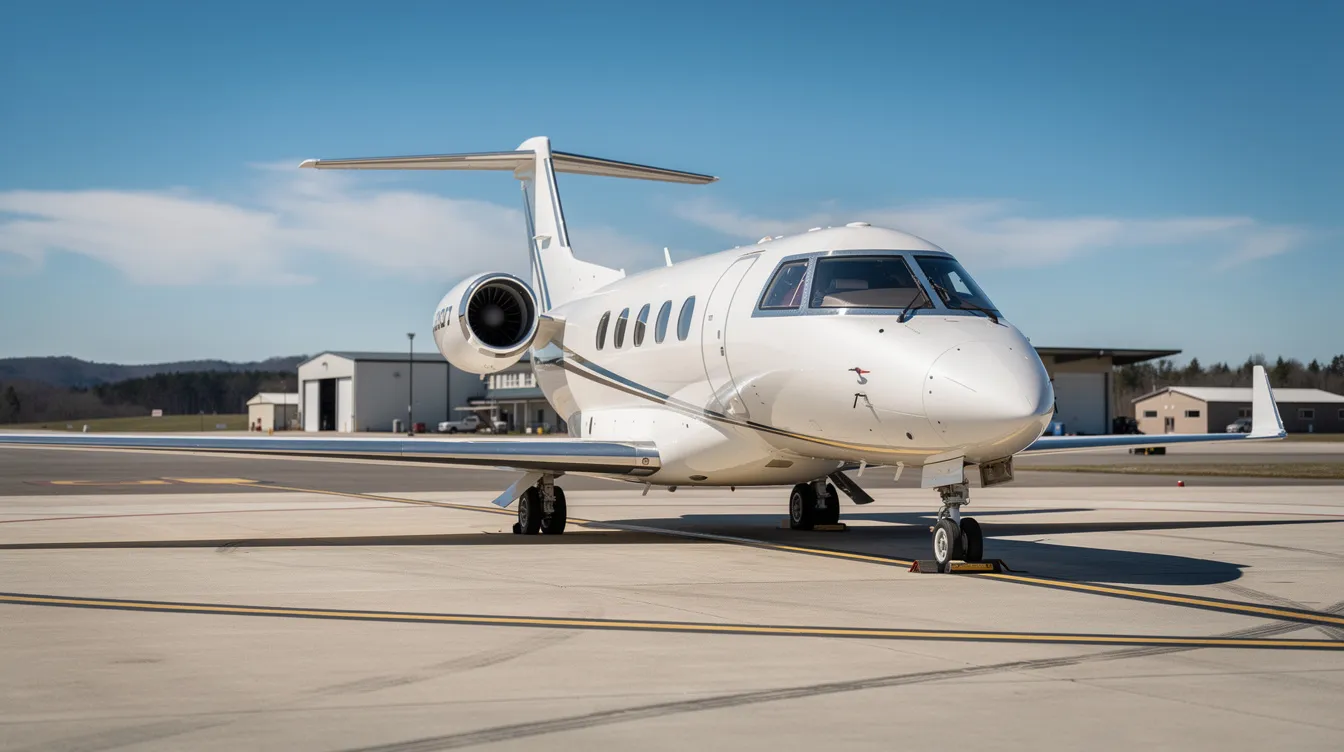
Light jet charter remains one of the most practical ways to fly private across the United States and throughout North America. Light jets strike a balance between speed, cost, and comfort that makes charter flights on these aircraft appealing to executives, entrepreneurs, and families alike. For trips up to roughly 1,500 nautical miles-or about three hours of nonstop flight time-a light jet often represents the most efficient private aviation solution available.
This guide covers everything travelers need to evaluate before booking:
The aircraft types that fall under the light jet category and how they compare to other classes
Real-world cost per flight hour in 2024–2025
Popular models, cabin specs, and ideal mission profiles
How on-demand jet charter compares with fractional ownership through BlackJet Fractional Jet Ownership
Whether planning a next trip for business or leisure, the goal is to help readers make an informed, cost-effective decision rather than simply choosing the first quote that appears.
A light jet is a small business jet typically seating 6 to 8 passengers, designed for regional and short-to-mid-range missions. These aircraft combine respectable cruise speed, moderate cabin size, and enough range to connect most major U.S. city pairs nonstop-without the operating expense of larger platforms.
Understanding where light jets sit relative to other types of jet airplanes is essential:
Very light jets (VLJs) generally carry 4–5 passengers with a range around 800–1,200 nautical miles. They work well for ultra-short-distance legs but offer limited baggage and cabin space.
Light jets seat 6–8 passengers with a typical range of 1,200–1,800 nm and cruise speeds of 400–460 knots. They cover routes like New York–Miami, Dallas–Aspen, and Los Angeles–Denver nonstop.
Mid-sized jets can accommodate 8 to 10 passengers and offer greater range and cabin volume for longer missions.
Heavy jets are ideal for transcontinental flights, with ranges exceeding 3,000 nm, larger cabins, and significantly higher operating costs.
For comparison, commercial airliners can seat 18 to 200 passengers but operate on fixed schedules and hub-based networks. Light jets sit in a "sweet spot" for travelers who need flexibility and privacy on regional trips without paying for cabin space they won't use.
Light jets are ideal for trips typically under 3 hours, making them a natural fit for same-day business meetings, weekend getaways, and multi-stop itineraries that would be impractical on commercial options.
Common use cases include:
Day-trip meetings: A CEO flies from Chicago (Midway) to Toronto (Billy Bishop) for morning meetings and returns the same evening-roughly 350 nm each way.
Weekend leisure: A group of four departs Denver for Jackson Hole on Friday afternoon for a ski weekend, returning Sunday night.
Tech corridor hops: Executives shuttle between San Jose and Seattle for back-to-back investor meetings, avoiding layovers and airline delays.
Family vacations: A family of five flies from Miami to the Turks and Caicos Islands for a long weekend, accessing a smaller airport minutes from their resort.
Regional travel circuits: A private equity investor visits portfolio companies in Houston, Oklahoma City, and Dallas in a single day.
Private jets allow for flexible scheduling around business needs, which means departures shift to match meeting end times rather than fixed airline timetables. Chartering a private jet allows for flexible departure times and routes, and for small groups of 2–6 travelers, the cost per person can be competitive with premium commercial cabins. Light jets are effective for small teams traveling together on short haul trips where speed and privacy matter most.
In 2024–2025, chartering a light jet generally costs between $4,000 and $6,000 per hour in the U.S., though pricing can dip to around $3,500 per hour for older airframes or off-peak routes. Across the broader private jet charter market, charter rates range from $1,800 to $18,000 per hour depending on aircraft type. For smaller aircraft, chartering a small plane costs $300 to over $4,000 per hour, while Boeing 747 charters cost between $25,000 and $40,000 per hour at the end.
Flight time is the primary basis for the cost calculation of charters, not passenger count. The hourly rate covers the aircraft itself, so a group of five splitting a $5,000-per-hour light jet pays roughly $1,000 per person per flight hour.
Here's how light jet charter rates compare across categories:
Aircraft Type | Typical Hourly Charter Cost (USD) | Passenger Capacity | Typical Range (nm) |
|---|---|---|---|
Small Plane | $300 – $4,000 | 2 – 6 | Varies by model |
Very Light Jet (VLJ) | $2,500 – $3,500 | 4 – 5 | 800 – 1,200 |
Light Jet | $3,500 – $6,000 | 6 – 8 | 1,200 – 1,800 |
Turboprop | $2,000 – $3,500 | 6 – 9 | Up to 1,000 |
Mid-sized Jet | $3,200 – $6,000 | 8 – 10 | 2,000 – 3,000 |
Heavy Jet | $5,400 – $11,000+ | 10 – 16+ | 3,000+ |
Boeing 747 | $25,000 – $40,000 | 150 – 400 | Intercontinental |
Light jets are more cost-effective for shorter trips compared to larger jets. Many operators impose a 1- to 2-hour minimum per leg, meaning a short hop like New York to Boston (roughly 200 nm) may still be billed at two hours. Instant pricing tools help compare private jet options quickly, but travelers should always confirm what's included before comparing quotes. Look for best prices by requesting multiple proposals and confirming whether fuel surcharges and handling are bundled into hourly rates.
Several key factors drive the final price of any private jet charter beyond the base hourly rate:
Route length and mission profile: Longer flights burn more fuel and accumulate more crew duty time. Flight distance directly affects total cost.
Aircraft category and age: Newer light jets with modern avionics and lower fuel consumption command higher charter rates than older airframes with higher maintenance requirements.
Positioning (deadhead) legs: If the aircraft must reposition from its home base to the client's departure airport, that ferry flight adds cost. Booking empty-leg flights can offer significant discounts when your itinerary matches an aircraft's repositioning route.
Airport fees and handling: Landing fees, ramp charges, and FBO handling at busier airports increase the bill. International charter flights along international routes-such as U.S. to the Bahamas, Mexico, or the Caribbean-add customs, overflight fees, and handling surcharges.
Seasonal and market demand: Peak periods like Christmas–New Year week, Presidents' Day ski weekends, the Super Bowl, and Art Basel Miami push pricing well above average. Market demand during these windows compresses aircraft availability.
Special requests: Catering, pets, oversized baggage (skis, golf clubs), de-icing in winter, and crew overnight stays all generate additional fees.
Whether flying to popular destinations domestically or considering international flights to places like Saint Martin, the Caicos Islands, or even remote regions such as South Sudan or Western Sahara, understanding these cost drivers ensures there are no surprises on the invoice.
Selecting the most suitable aircraft means matching the airplane to the mission-not simply choosing the cheapest or most impressive option.
Very light jets like the Embraer Phenom 100 and Cessna Citation Mustang are built for short-distance legs under 300–400 nm with 1–4 passengers and minimal luggage. They offer the lowest per-hour cost among jets but have limited cabin height, restricted baggage space, and lower cruise speed.
Light jets such as the Citation CJ3+ and Phenom 300 handle missions of 800–1,800 nm with 4–8 passengers, offering a suitable aircraft for most regional and mid-range routes. They cruise faster, carry more luggage, and typically include an enclosed lavatory.
Turboprops-the Pilatus PC-12 and King Air 250 being prime examples-cruise at 250–300 knots with lower operating costs. Turboprops are economical for flights under 1,000 miles and excel at short-field operations where jet access may be limited.
VLJ - Best when: flying very short legs with 1–4 people, minimal luggage, and the tightest budget.
Light Jet - Best when: covering 1,000–1,800 nm with 4–8 passengers who want speed, comfort, and privacy for business and leisure.
Turboprop - Best when: runway access is constrained, budget is the priority, or the route is under 500 nm and speed is less critical.
The U.S. and global charter markets feature a handful of light jet models that dominate booking requests. Specifications and interiors vary by operator and year, but the models below represent the mainstream aircraft options travelers will encounter. BlackJet Fractional Jet Ownership typically focuses on comparable or newer aircraft types in its Equity and Reserve Fleets, ensuring clients access modern, well-maintained platforms.
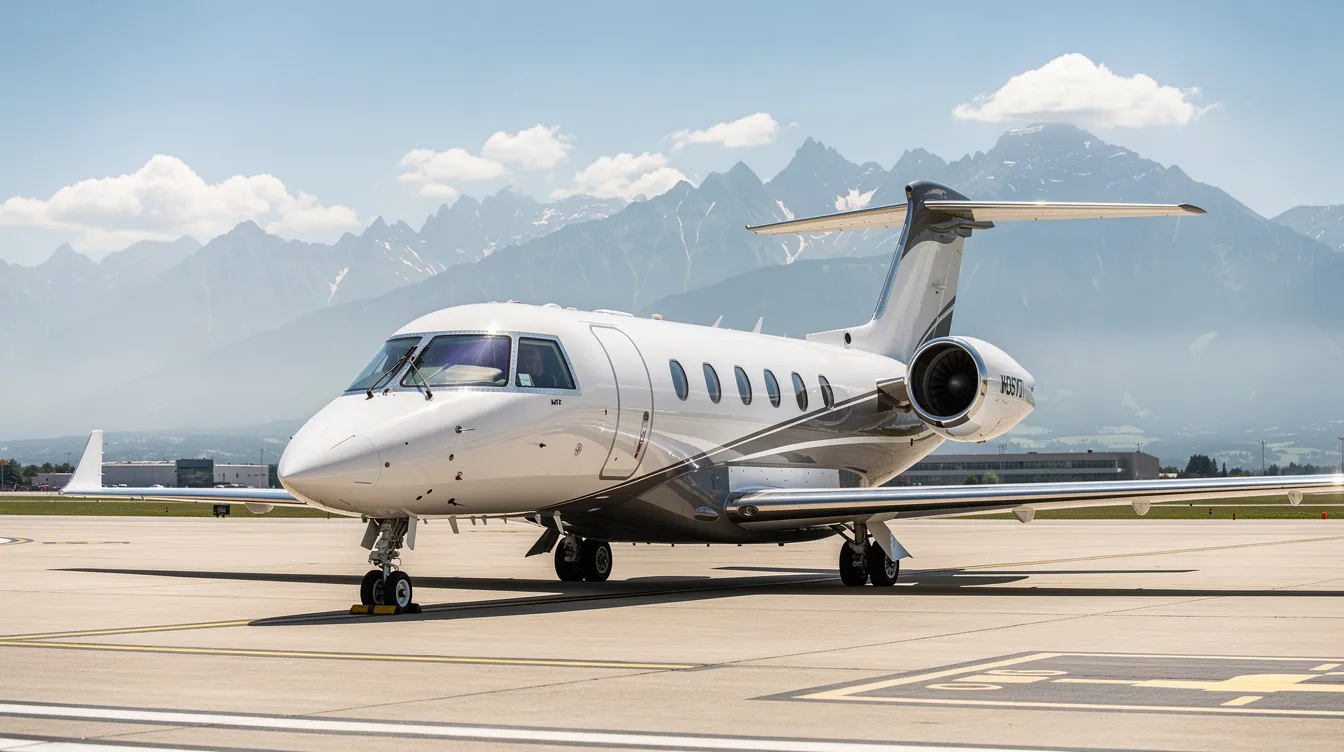
The Embraer Phenom 300 series has been one of the world's best-selling light jets for over a decade. The updated 300E variant pushes performance further with a maximum cruise speed near Mach 0.80 (approximately 464 knots) and an NBAA IFR range of roughly 2,010 nautical miles with a typical passenger load.
Seating capacity: 6–8 passengers
Cabin dimensions: approximately 4.9 ft height × 5.1 ft width, 324 cu ft volume
Baggage: roughly 84 cu ft-enough for several roller bags, golf clubs, or ski gear
Typical charter pricing: around $4,000–$6,000 per flight hour in the U.S.
Ideal missions for the Phenom 300E include nonstop flights such as New York–Miami (~950 nm), Dallas–Chicago, or Los Angeles–Denver with full luggage. It serves both business and leisure travelers who want the speed and range of a light jet without stepping up to a midsize aircraft type.
Cessna's CitationJet line is a backbone of the light jet charter market. The CJ3+ and CJ4 are the most commonly chartered variants, offering a proven combination of reliability, efficiency, and moderate operating cost.
Passengers: 6–8 seats depending on configuration
Average range: approximately 1,500–2,000 nm (CJ4 at the upper end)
Cruise speed: 415–450 knots (~480–515 mph)
Typical hourly rates: within the $3,500–$5,500 band for most U.S. routes
Charter clients often choose CJ3+ or CJ4 models for cost-effective regional business flights such as Houston–Atlanta or Phoenix–San Francisco. Many CJ variants are certified for single-pilot operations, but private jet charter services almost always staff two pilots per flight for safety and insurance compliance.
The Learjet 45, introduced by Bombardier in the late 1990s, earned a reputation as one of the fastest aircraft in its class. The Learjet 75 followed with upgraded engines, avionics, and improved cabin amenities.
Passengers: up to 8
Range: approximately 1,900–2,100 nm
Cruise speed: often exceeding 530 mph (Mach 0.81 on later variants)
Service ceiling: up to 51,000 ft
Learjets are favored for time-sensitive charter flights between major business centers-New York–Chicago, Los Angeles–Seattle, or Washington, D.C.–Boston. Cabin height and luggage space can be slightly tighter than some newer competitors, which may matter for tall passengers or those carrying bulky sports gear.
The Hawker 400XP is a classic light jet seen frequently in U.S. charter fleets, often at more accessible price points than newer models.
Passengers: 6–7 seats
Range: approximately 1,150–1,300 nm
Cruise speed: around 450 knots (~518 mph)
Charter pricing: roughly $3,000–$4,200 per hour depending on airframe age
The 400XP is well-suited to shorter private flights like Dallas–New Orleans or Boston–Washington, D.C. Slightly older airframes keep hourly charter rates on the lower end of the light jet band, appealing to cost-conscious travelers seeking a private charter without a premium price tag.
Some aircraft blur the line between light and midsize categories but regularly compete for the same charter missions:
Citation XLS/XLS+: A stand-up cabin and strong baggage capacity at a modest premium over pure light jets, popular for luxury jets for charter.
Embraer Legacy 450/500: Super-light or light-midsize platforms with 6 ft+ cabin height, more volume, and higher hourly cost.
HondaJet Elite: A newer VLJ-plus option for very short routes with 1–4 passengers, offering exceptional fuel efficiency but limited seating capacity and range.
These models may offer a stand-up cabin or more baggage space at a modest premium in cost per flight hour, making them worth considering when passenger comfort is a priority.
The real advantage of a light jet becomes clear when measuring total door-to-door travel time rather than just flight duration. Light jets typically cruise at 400–460 knots (about 460–530 mph), covering most U.S. regional routes in 1–3 hours. The average range for well-loaded light jets falls between 1,200 and 1,800 nautical miles, with top performers like the Phenom 300E pushing past 2,000 nm.
Light jets provide access to thousands of smaller airports that commercial airlines do not serve. Many light jets can depart from runways as short as 3,500–4,000 feet, opening up over 5,000 airports across the United States compared to roughly 500 served by major carriers. Private charters provide access to smaller airports, avoiding congestion at large hubs.
Consider a New York–Miami trip: commercial flights require arriving 1.5–2 hours early, navigating security, and transferring from a hub airport. A light jet charter can improve efficiency by reducing door-to-door travel time significantly. Light jets allow passengers to board within 15 minutes of arrival at the FBO, and travelers can skip TSA lines and crowded terminals with private jets. Private jets can significantly reduce travel time compared to commercial flights-direct flights from satellite airports eliminate connections. On average, traveling privately saves an average of two hours per flight compared to commercial options.
Range: ~1,200–2,000 nm for light jets; VLJs ~800–1,200 nm
Cruise speed: ~400–460 knots (light jets), lower for turboprops and VLJs
Runway requirements: Many light jets use runways of 3,500–5,000 ft, enabling access to smaller airports near final destinations
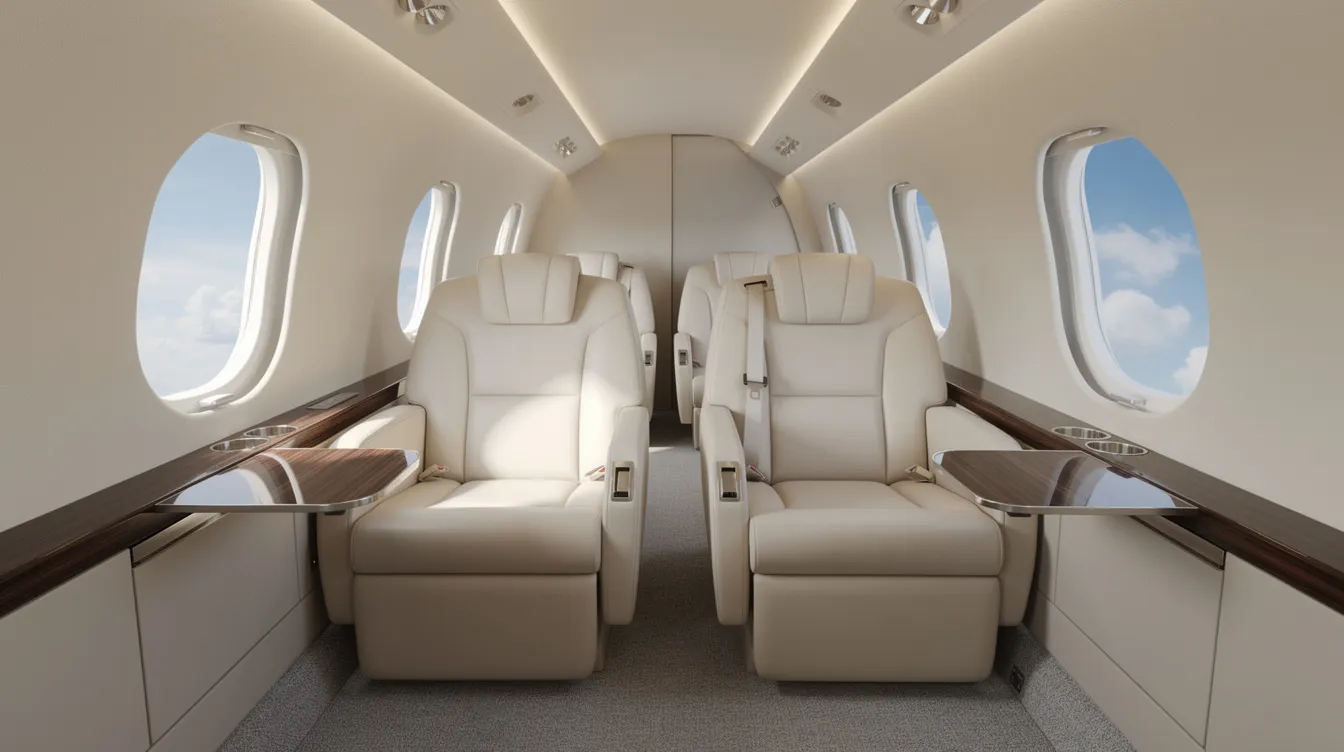
Light jet cabins are designed for functionality and comfort on flights lasting 1–3 hours. Most feature club-style leather seating for four passengers (two pairs facing each other), with additional forward or aft seats bringing capacity to 6–8. Cabin height typically runs about 4.7–4.9 ft and width about 4.8–5.1 ft. Standing fully upright isn't possible in most models, but the seating experience is substantially more spacious than commercial economy or even first class.
Seating: Club-four layout with 1–2 additional seats; seating capacity varies by model
Lavatory: Most light jets include an enclosed or semi-enclosed lavatory; some VLJs have only a curtained facility
Baggage: Typical allowance combines internal and external holds for approximately 50–90 cu ft-enough for several roller bags, garment bags, and often golf clubs or skis. However, light jets often have weight and luggage limitations that travelers should confirm before departure. Private jets can accommodate larger luggage compared to commercial flights, but space is finite.
Amenities: Power outlets (USB and AC), Wi-Fi available on many U.S. charter aircraft, refreshments, and quiet pressurized cabins. Private jets provide a quiet environment with amenities like Wi-Fi, making the cabin productive for work or relaxing.
Business use cases:
Executives visit multiple cities in one day-for example, a Houston–Oklahoma City–Dallas circuit-returning home the same evening. Light jets are particularly advantageous for time-sensitive meetings where missing a connection could cost a deal.
Exclusivity in travel allows for confidentiality in business discussions. Strategy sessions happen in-flight without concern about neighboring passengers.
Travelers can skip TSA lines, avoid crowded commercial spaces, and maintain productivity throughout the trip. The time savings add up: for travelers flying 25–150 flight hours per year, reclaiming 4–6 hours per trip translates to weeks of recovered time annually.
Leisure use cases:
Long-weekend trips from New York to Nantucket, Miami to the Bahamas, or Los Angeles to Napa with friends and family vacations that don't require overnight layovers.
Flying private to popular destinations for seasonal getaways, ski trips, beach weekends, or multi-stop itineraries that would require multiple connections on commercial airlines.
Passengers can avoid crowded commercial spaces and enjoy privacy that commercial options simply cannot replicate. Traveling with multiple team members can make light jet charters competitive with first-class tickets when the cost is divided across 4–6 travelers.
Most light jets comfortably seat 4–7 passengers for group charter flights. Eight seats are available in some configurations, but cabin space and luggage capacity tighten noticeably with a full load. Light jets are effective for small teams traveling together on regional routes where speed and efficiency outweigh cabin size.
When groups exceed 6–7 people-or carry heavy, oversized luggage-stepping up to a super-light or midsize jet makes sense. For context, mid-sized jets can accommodate 8 to 10 passengers with more room for baggage and movement.
Planning tips for group charters:
Share the full itinerary early, including all legs and ground transport needs
Specify passenger count and luggage types (golf bags, skis, trade show materials)
Confirm pet policies and any catering preferences at least 48 hours in advance
Compare charter quotes against fractional options for recurring group travel
Ask operators about backup aircraft in case of mechanical delays, especially if you're considering programs that use a floating fleet model in fractional ownership to maximize availabili.ty
For recurring travel (monthly board meetings, quarterly visits), fractional jet ownership as a cost-effective alternative delivers more predictable access and pricing than booking ad-hoc group charters each time
The fundamental difference is straightforward: on-demand private jet charter is a pay-as-you-fly model with no long-term commitment, while fractional jet ownership involves purchasing a defined share of an aircraft with guaranteed availability and ongoing management.
BlackJet Fractional Jet Ownership is designed for travelers flying roughly 25–150 hours per year who want more predictability than pure charter but less commitment than full aircraft ownership, and many prospective clients benefit from first reviewing a fractional jet ownership glossary of key terms so the model and its jargon are easier to compare against charter. It offers two primary models:
Reserve Fleet: On-demand access to private jets on a pay-as-you-go basis, with scheduling and safety standards managed by BlackJet. Ideal for flexible travelers who aren't ready for equity commitment.
Equity Fleet: True fractional aircraft ownership with an upfront share purchase, priority access, custom aircraft sourcing, and potential U.S. tax benefits for fractional jet owners (with CPA guidance).
For travelers flying only a handful of hours annually-say, under 25-pure light jet charter typically remains more economical since fractional programs carry fixed costs regardless of usage. But for consistent flyers, the advantages of guaranteed scheduling, consistent aircraft quality, and transparent pricing through a structured program often outweigh the convenience of ad-hoc booking.
On-demand charter charges by the flight hour plus additional fees for positioning, handling, catering, and crew expenses. Financing a fractional jet ownership share introduces a different cost structure: fractional programs combine an upfront share purchase, a monthly management fee, and an occupied hourly rate that is typically lower than charter pricing for comparable aircraft.
Consider three scenarios for a typical U.S. traveler:
~25 hours/year: Ad-hoc charter at $4,500/hr totals roughly $112,500 in flight costs plus fees. A fractional share's upfront capital and monthly management fees would likely exceed charter costs at this volume. Charter wins.
~50 hours/year: Charter cost climbs to approximately $225,000 plus surcharges during peak periods. A fractional share's first-year cost-including capital-may be comparable or slightly higher, but subsequent years drop as the upfront investment is amortized. Opting for a structure like 1/8 fractional jet ownership with around 100 hours per year illustrates how predictable hourly pricing and guaranteed aircraft access begin to offset the higher initial outlay.
~100+ hours/year: Charter costs can exceed $450,000 annually with peak surcharges and repositioning inefficiencies. Fractional ownership's fixed costs are spread across more hours, typically yielding a lower effective cost per hour, plus equity in the aircraft and potential tax depreciation.
BlackJet can help prospective clients model their own historic itineraries to determine whether charter, a jet card, or fractional ownership makes more financial sense for their specific travel needs.
The crossover point generally falls around 25–50 flight hours per year, depending on route patterns, peak-period usage, and how much value a traveler places on guaranteed access.
Benefits that tip the balance toward fractional ownership include:
Priority access during peak periods when ad-hoc charter availability is scarce
Consistent aircraft type and cabin standard on every flight
Potential U.S. tax deductions and bonus depreciation for qualified business travel (with CPA advice), all of which should be evaluated alongside the essential contract terms in fractional ownership agreements
Equity ownership with residual value upon exit, plus the ability to plan for selling a fractional jet ownership share when your travel needs change
Stable, predictable hourly cost versus fluctuating charter rates
Typical profiles where fractional shines:
A CEO commuting between two cities weekly, accumulating 75–150 hours per year
A private equity firm with frequent portfolio company visits across scattered locations
A high-net-worth family splitting business and leisure trips year-round across the United States, weighing fractional jet ownership versus membership programs to balance flexibility with guaranteed access.s
BlackJet's Equity Fleet allows these clients to select aircraft categories that mirror light jet charter missions while gaining ownership benefits, similar to the structures used by leading fractional jet ownership programs
Booking a private jet can be done in four simple steps, though the specifics vary by provider. Private jet charters are best booked 2–4 weeks in advance for optimal aircraft selection and the best deals on pricing, though same-day departures are often available at a premium.
Here's a practical checklist:
Submit a quote request with dates, departure and arrival airports, passenger count, and luggage details
Receive aircraft options with quoted hourly rates-confirm whether pricing is all-inclusive or carries additional fees for fuel, handling, and catering.
Sign the charter agreement and submit a deposit; confirm the specific aircraft type and tail number.
Provide ground transportation needs, catering preferences, and special requests (pets, sports equipment, additional services) at least 24–48 hours before departure.
Verify the operator's Part 135 certificate, insurance, and crew qualifications, and understand how liability coverage works in fractional jet ownership structures if you plan to move beyond ad-hoc charte.r
Ask about cancellation and change policies, minimum hours per leg, and backup aircraft availability.
Private charters offer access to over 20,000 aircraft worldwide, so there is almost always a suitable aircraft available. Platforms and brokers connect users to large fleets for charter, expanding the pool of options significantly.
Safety should never be an afterthought when selecting private jet charter flights. In the United States, reputable operators fly under Part 135 certification, which mandates rigorous safety standards for pilot qualifications, maintenance requirements, duty time limits, and operational procedures.
Beyond the FAA certificate, look for third-party audit credentials. Programs like ARGUS, Wyvern, and IS-BAO indicate that an operator voluntarily submits to external safety review-a strong signal of commitment to standards. For a deeper look at safety benchmarks, see this guide to the safest private jet options.
Questions to ask any provider before booking:
Does the operator hold a current FAA Part 135 certificate?
What third-party safety audits are in place (ARGUS, Wyvern, IS-BAO)?
What are the minimum pilot experience and recurrent training requirements?
What is the maintenance history and age of the private aircraft being offered?
What insurance levels are carried per flight?
Whether flying via charter or fractional ownership, who operates the aircraft and what safety programs govern the operation?
Demand for light jet charter surges during predictable windows throughout the year, affecting both availability and pricing:
Year-end holidays: Christmas through New Year's Day-among the tightest booking windows of the year
Winter ski weekends: Presidents' Day and MLK weekends drive heavy demand to mountain destinations
Major events: Super Bowl, Art Basel Miami, Masters Tournament, major conferences
Spring and summer breaks: School holiday periods and summer vacation weeks
On-demand light jet charter during peak days may carry surcharges or require flexible timing to secure preferred aircraft. Fractional programs often guarantee access with advance notice but may impose peak-day pricing adjustments or limited blackout periods. BlackJet structures access terms to help frequent travelers plan around the busiest travel dates while retaining flexibility. Travelers seeking the best deals during these periods should book early and remain flexible on departure times.
Light jets consume significantly less fuel per flight hour than heavy jets or large-cabin aircraft, but private aviation still carries a carbon footprint worth addressing.
Practical steps travelers can take:
Ask providers about Sustainable Aviation Fuel (SAF) availability and pricing for your route
Maximize passenger loads-flying 5–6 people instead of 2 on the same aircraft improves per-passenger efficiency
Plan itineraries to minimize deadhead repositioning legs; fractional ownership or planned flying tends to produce fewer empty repositioning flights than sporadic charter usage.
Inquire about carbon offset programs offered by operators or third-party providers.
Fuel consumption profiles continue to improve with newer engine technology, and the industry's SAF supply chain is expanding. Choosing operators with sustainability policies is one of the most impactful decisions a frequent flyer can make.
Many sophisticated flyers adopt a blended approach rather than relying on a single access model. Light jets handle regional trips efficiently, while midsize or super-mid jets serve longer missions, and heavy jets come out only for coast-to-coast or international routes.
BlackJet can help build a strategy that combines fractional shares, Reserve Fleet access, and occasional supplemental charter flight solutions:
Core regional routes: A fractional light jet share, structured around a well-drafted aircraft fractional ownership contract, covers weekly commutes and recurring business travel
Occasional larger missions: Charter a super-mid or heavy jet for quarterly international board meetings or large-group events
Unpredictable needs: Reserve Fleet access fills gaps when schedules shift or an unplanned trip arises
This approach keeps aircraft matched to the mission-avoiding the cost of flying private on a heavy jet for a 400 nm hop-while ensuring predictable access for the flights that matter most.
Before committing to any quote, use this checklist:
Is the operator certified under Part 135 (or equivalent for international flights)?
What safety audits does the operator hold?
What is the age, maintenance history, and aircraft type being offered?
Is the quoted price per flight hour with additional fees, or fully inclusive?
How are wait time, de-icing, and overnight crew costs handled?
What is the cancellation and change policy?
What is the baggage capacity, and can the aircraft accommodate skis, golf clubs, or oversized items?
Is Wi-Fi provided? What power outlets are available?
Is the quoted aircraft guaranteed, or subject to substitution?
What is the minimum flight time per leg?
For anyone considering 25+ hours of annual flying: what fractional ownership or membership options are available, such as BlackJet's Reserve Fleet or Equity Fleet?
For frequent flyers who find themselves repeatedly booking ad-hoc light jet charter, BlackJet Fractional Jet Ownership offers a structured alternative tailored to specific travel needs.
The Reserve Fleet provideson-demandd access without equity commitment. BlackJet manages scheduling, vets operators, and ensures consistent safety and service standards-ideal for travelers who want the benefits of a managed program with the flexibility of pay-as-you-go pricing.
The Equity Fleet is true fractional ownership. Clients purchase a share in an aircraft, gain priority access, and benefit from transparent pricing with predictable hourly costs. For those using the aircraft for qualified business travel, U.S. tax benefits, including bonus depreciatio,n may apply (with professional advice). For a detailed look at the financial structure, explore BlackJet's guide to fractional jet ownership costs.
Advantages include:
Predictable availability, even during peak travel periods
Tailored scheduling and aircraft management handled by BlackJet
Aircraft selection close to the light jet category for regional missions, with the option to access larger aircraft when needed for specific travel requirements
Consistent cabin quality, maintenance standards, and crew professionalism across every flight
Scenario 1 - The Law Firm (75 hours/year): A mid-market law firm flew approximately 75 hours per year on ad-hoc light jet charters across the Southeast. Holiday travel and last-minute bookings pushed their effective hourly rates well above average, and aircraft quality varied from trip to trip. After moving to a 1/16 fractional share, the firm gained priority scheduling, consistent aircraft, and a predictable cost per flight hour. By year two, total costs were lower than their previous charter spending despite the upfront capital investment.
Scenario 2 - The Family (40–60 hours/year): A family of five combined business travel (the founder's weekly hops between two cities) with leisure trips during school breaks across the United States. Their unpredictable schedule made full fractional ownership feel premature, so they opted for BlackJet's Reserve Fleet model. They gained managed scheduling, vetted aircraft, and reliable access without tying up capital-while keeping the door open to transition into the Equity Fleet as their usage stabilized.
Scenario 3 - The Executive (120 hours/year): A technology executive flying 120+ hours annually on regional routes upgraded from scattered charter bookings to a fractional share supplemented by Reserve Fleet hours for overflow. Fixed costs spread across high utilization yielded a materially lower cost per hour than ad-hoc charter, and guaranteed availability during peak periods eliminated the stress of last-minute sourcing.
Light jet charter offers an efficient, flexible, and cost-effective way to access private aviation for regional trips under three hours. With the ability to fly on your schedule, avoid commercial airport hassles, and access thousands of smaller airports, light jets provide unmatched convenience for business and leisure travelers alike. Understanding the true costs and mission profiles helps ensure you select the right aircraft and avoid surprises.
For frequent flyers or those seeking greater predictability, BlackJet Fractional Jet Ownership presents a compelling alternative. Whether through the flexible Reserve Fleet or the equity-based Ownership Fleet, fractional programs combine the benefits of guaranteed availability, consistent aircraft quality, and potential tax advantages with lower operational complexity than full ownership.
Ultimately, the choice between light jet charter and fractional ownership depends on your travel frequency, budget, and need for flexibility. BlackJet Fractional Jet Ownership stands ready to guide high-net-worth individuals and executives through this decision-making process, delivering tailored solutions that optimize your private aviation experience.
Ready to explore the smarter way to fly private? Visit FractionalJetOwnership.com to learn how fractional ownership can transform your travel experience.
